#Sponsored

Monday, April 13, 2020

The untold origin story of the N95 mask. The most important design object of our time was more than a century in the making.


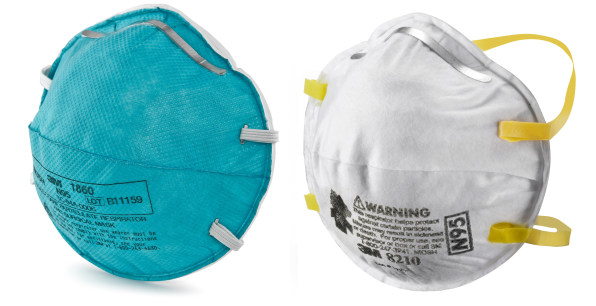
It’s hard to think of a symbol of COVID-19 more fraught than the N95 respirator. The mask fits tightly around the face and is capable of filtering 95% of airborne particles, such as viruses, from the air, which other protective equipment (such as surgical masks) can’t do. It’s a life-saving device that is now in dangerously short supply. As such, it has come to represent the extreme challenges of the global response to COVID-19.

How did a flimsy polymer cup become the most significant health device of the 21st century? It all started in 1910 with a little-known doctor who wanted to save the world from one of the worst diseases ever known.

THE FIRST MASKS WERE ABOUT STOPPING SMELL
Going back even further—long before we understood that bacteria and viruses could float through the air and make us sick—people improvised masks to cover their faces, says Christos Lynteris. Lynteris is a senior lecturer at the Department of Social Anthropology at the University of St. Andrews, who is an expert in medical mask history.

He points to Renaissance-era paintings where people cover their noses with handkerchiefs to avoid illness. There are even paintings from Marseilles in 1720, which was the epicenter of the bubonic plague, that show gravediggers and people handling bodies with cloth around their faces, even though the plague was spread by the bites of fleas that traveled on rats.

“It was not meant to be against the contagion,” says Lynteris of the practice. “The reason these people were wearing cloth around their mouths and noses was, at the time, they generally believed diseases like the plague were miasma, or gases emanating from the ground. It wasn’t to protect you from another person, they believed plague was in the atmosphere—corrupt air.”
The theory of miasma is what drove the design of the infamous plague masks seen across Europe in the 1600s, which would be worn by doctors who identified the plague and marked the infected by tapping them with a stick. These elongated masks resembled large bird beaks and had two nostril ports at the edge of the mask that could be loaded with incense. People thought that by protecting themselves from the smell of the plague, they’d be protected from the plague itself.
“The stench causes disease. This [thought] continued all the way to the early 19th century,” says Lynteris. (It’s worth noting that, 200 years later, a French physician named Antoine Barthélemy Clot-Bey argued that the bird-like plague masks themselves were responsible for the spread of the plague because they made people scared, and a frightened body was at greater risk for disease.)
By the late 1870s, scientists learned about bacteria. Miasma fell from fashion as the modern field of microbiology emerged. And yet, what came next looked a whole lot like what came before—minus the creepy birds. “We often think of scientific paradigm shifts leading to breaks, but all the technologies used against germs by the end of the 19th century were [riffs] on technologies from miasma.”

A GLORIFIED HANDKERCHIEF

Doctors started wearing the first surgical masks in 1897. They weren’t much more than a glorified handkerchief tied around one’s face, and they weren’t designed to filter airborne disease—that’s still not the point of surgical masks today. They were (and are) used to prevent doctors from coughing or sneezing droplets onto wounds during surgery.
This distinction between a mask and a respirator is important. It’s why healthcare professionals are upset that they’re being instructed to wear surgical masks when respirators are unavailable. Masks are not only made of different materials; they fit loosely on the face, so that particles can come in from the side. Respirators create an airtight seal so they actually filter inhalation.

THE FIRST MODERN RESPIRATOR IS BORN FROM PLAGUE—AND RACISM.
In the fall of 1910, a plague broke out across Manchuria—what we know now as Northern China—which was broken up in politically complex jurisdictions shared between China and Russia.
“It’s apocalyptic. Unbelievable. It kills 100% of those infected, no one survives. And it kills them within 24 to 48 hours of the first symptoms,” says Lynteris. “No one has come across something like this in modern times, and it is similar to the descriptions of Black Death.”
What followed was a scientific arms race, to deduce what was causing the plague and stop it. “Both Russia and China want to prove themselves worthy and scientific enough, because that would lead to a claim of sovereignty,” says Lynteris. “Whomever is scientific enough should be given control of this rich and important area.”
The Chinese Imperial Court brought in a doctor named Lien-teh Wu to head its efforts. He was born in Penang and studied medicine at Cambridge. Wu was young, and he spoke lousy Mandarin. In a plague that quickly attracted international attention and doctors from around the world, he was “completely unimportant,” according to Lynteris. But after conducting an autopsy on one of the victims, Wu determined that the plague was not spread by fleas, as many suspected, but through the air.
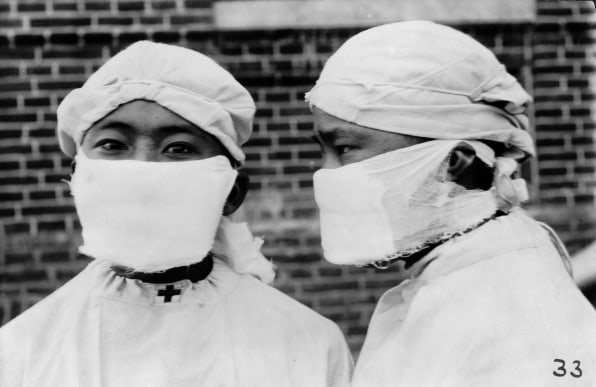
Expanding upon the surgery masks he’d seen in the West, Wu developed a hardier mask from gauze and cotton, which wrapped securely around one’s face and added several layers of cloth to filter inhalations. His invention was a breakthrough, but some doctors still doubted its efficacy.
“There’s a famous incident. He’s confronted by a famous old hand in the region, a French doctor [Gérald Mesny] . . . and Wu explains to the French doctor his theory that plague is pneumonic and airborne,” Lynteris says. “And the French guy humiliates him . . . and in very racist terms says, ‘What can we expect from a Chinaman?’ And to prove this point, [Mesny] goes and attends the sick in a plague hospital without wearing Wu’s mask, and he dies in two days with plague.”
Other doctors in the region quickly developed their own masks. “Some are . . . completely strange things,” Lynteris says. “Hoods with glasses, like diving masks.”
But Wu’s mask won out because in empirical testing, it protected users from bacteria. According to Lynteris, it was also a great design. It could be constructed by hand out of materials that were cheap and in ready supply. Between January and February of 1911, mask production ramped up to unknown numbers. Medical staff wore them, soldiers wore them, and some everyday people wore them, too. Not only did that help thwart the spread of the plague; the masks became a symbol of modern medical science looking an epidemic right in the eye.
Wu’s mask quickly became an icon through international newspaper reports. “The mask was a very novel thing . . . it had an effect of strangeness, which the press loved, but you imagine a black-and-white photograph with a white mask—it reads well,” says Lynteris. “It’s a marketing success.”
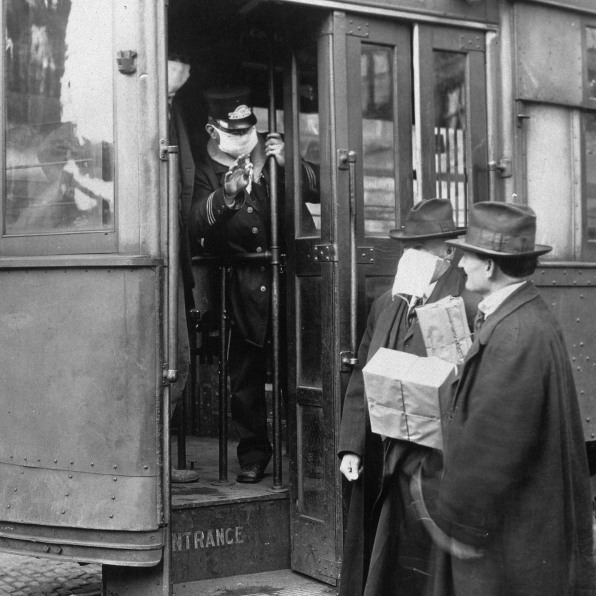
When the Spanish flu arrived in 1918, Wu’s mask was well-known among scientists and even much of the public. Companies around the globe increased production of similar masks to help abate the spread of flu.

THE N95 IS MADE FOR INDUSTRIES BUT ARRIVES JUST IN TIME TO HOSPITALS

The N95 mask is a descendant of Wu’s design. Through World War I and World War II, scientists invented air-filtering gas masks that wrapped around your entire head to clean the air supply. Similar masks, loaded with fiberglass filters, began to be used in the mining industry to prevent black lung.
“All the respirators were these giant, gas mask-looking things,” says Nikki McCullough, an occupational health and safety leader at 3M, which manufactures N95 respirators. “You’d wash them out at night and you could wear them again.”
This equipment saved lives, but it was burdensome, and a large reason why were the filters. The fiberglass required a lot of effort to breathe, and the full head enclosures were hot to wear. By the 1950s, scientists began to understand the dangers of inhaling asbestos, but people working with asbestos preferred not to wear bulky respirator masks. Imagine working in construction in 85-degree heat and having your head wrapped in rubber to protect yourself from an invisible threat.
Around the same time, a former décor editor for House Beautiful magazine named Sara Little Turnbull began consulting with the 3M’s giftwrap division. To make stiff ribbons, the company had developed a technology to take melted polymer and air-blast it into a fabric of tiny fibers. Turnbull realized a greater potential for this process, though, and she began experimenting with the material for shoulder pads, leveraging connections in the fashion industry for advice. Then in 1958, she gave a presentation at GM simply titled: “Why,” which explained why 3M should go into this business of non-woven products in a bigger way. She presented over 100 product ideas for the technology, and was assigned to design a molded bra.
But the late ’50s were tough for Turnbull, who spent a lot of time visiting sick family members in hospitals. She lost three loved ones in quick succession. And out of that grief came a new invention: A “bubble” surgical mask that 3M released in 1961, that yes, takes its inspiration from the cup of a bra. When 3M learned it couldn’t block pathogens, the mask was re-branded as a “dust” mask.
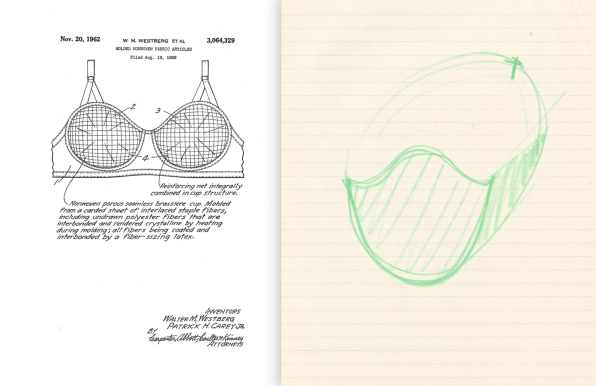

Of course, it was hard to build standards around something that didn’t even exist yet—for medicine or workplace safety. By the 1970s, the Bureau of Mines and the National Institute for Occupational Safety and Health teamed up on creating the first criteria for what they called “single use respirators.” The first single-use N95 “dust” respirator as we know it was developed by 3M, and approved on May 25, 1972. (Turnbull herself consulted on this line into the 1980s—and for many other corporate clients including General Mills, Ford, Corning, and Revlon.) Instead of fiberglass, the company repurposed that technology it had developed for making stiffer gift ribbons into a proper filter. Under a microscope, “they look like somebody dropped a bunch of sticks—and they have huge spaces between them,” says McCullough.
As particles, whether silica or viruses, fly into this maze of sticks, they get stuck making turns. 3M also added an electrostatic charge to the material, so even smaller particles find themselves pulled toward the fibers. Meanwhile, because there are so many big holes, breathing is easy.
The longer you wear an N95 respirator, the more efficient it becomes at filtering out particles. More particles just help filter more particles. But breathing becomes more difficult over time as those gaping holes between the fibers get clogged up with particles, which is why an N95 respirator can’t be worn for more than about eight hours at a time in a very dusty environment. It doesn’t stop filtering; it just prevents you from breathing comfortably.
N95 respirators were used in industrial applications for decades before the need for a respirator circled back to clinical settings in the 1990s with the rise of drug-resistant tuberculosis. HIV had a lot to do with its spread across immunocompromised patients, but tuberculosis infected many healthcare workers, too. To stop its airborne spread, N95 standards were updated for healthcare settings, and doctors began wearing them when helping tuberculosis patients. Even still, respirators are rarely used in hospitals to this day because it’s only outbreaks like COVID-19 that necessitate so much protection.
As Lynteris and many others point out, the respirator never really faded from significance in China. Wu went on to found China’s version of the CDC, narrowly miss winning a Nobel Prize, and be featured in many biographies (including his own autobiography). More recently, during the SARS outbreak, people in China wore facial protection to prevent the spread of illness. Then as pollution took over cities like Beijing, they wore respirators to filter pollution.
The N95 respirator isn’t perfect. It isn’t designed to seal well to the face of children or those with facial hair, and if it doesn’t seal, it doesn’t work as advertised. Furthermore, the N95 variants that are worn in high-risk operating rooms don’t have an exhalation valve, so they can get particularly hot to wear.
But the N95 respirator evolved over hundreds of years in response to multiple crises. That evolution will only continue through and beyond the COVID-19 pandemic. McCullough says that 3M is constantly reevaluating the N95 respirator, tweaking everything from its filters to its ergonomics. “My mom would say they look pretty much the same [as in 1972], but we want them to look simple so they’re easy and intuitive to use,” says McCullough. “We’re always improving the technology. We have thousands of scientists at 3M working on [it].”

The WHO vs coronavirus: why it can't handle the pandemic


Attacked by Trump and ignored by many of its most powerful members, the World Health Organization is facing a major crisis – just at the moment we need it most. 
By 
lf, like me, you have been confined to your home, glued to the news and nursing ever greater anxiety about the state of the world, you have probably become familiar with the sight of the World Health Organization’s director general, Tedros Adhanom Ghebreyesus, and his daily press briefings. Tedros, as he is known, is a calming presence in the midst of the crisis. Flanked by an international cast of scientists, he always seems confident that if we have hope, listen to the experts and pull together, we will get through this.
Lose yourself in a great story: Sign up for the long read email
 Read more
Watching this reassuring spectacle, it is possible to imagine a world in which every nation respects the WHO’s authority, follows its advice and lets it coordinate the flow of information, resources and medical equipment across national boundaries to areas of greatest need.
That is not the world we live in. “The W.H.O. really blew it. For some reason, funded largely by the United States, yet very China centric,” tweeted Donald Trump on 7 April, summing up just one of the many lines of criticism the WHO is currently facing. It is not just Trump – even some of the WHO’s supporters in government, academia and NGOs argue that since the start of the coronavirus crisis, it has caved in to nationalist bullies, praised draconian quarantine measures and failed to protect the liberal international order of which it is a linchpin. “You’ve got a situation where it looks like WHO doesn’t want to exercise its authority,” said David Fidler, a fellow in global health at the Council on Foreign Relations and a regular consultant to the WHO.
Meanwhile, the WHO is desperately struggling to get its 194 member states to actually follow its guidance. The WHO’s leaders are “very frustrated,” said John MacKenzie, a virologist and adviser on the WHO’s emergency committee. “The messages come out loud and clear, and some disregard the warnings. The US largely did, the UK largely did.”
On 11 March, the day Tedros declared the coronavirus a pandemic, he spoke darkly of “alarming levels of inaction” from many countries. Pressed by journalists to name them, Mike Ryan, the usually no-nonsense Irish trauma doctor who heads the WHO’s Covid-19 response, demurred. “You know who you are,” he said, adding that “we don’t criticise our member states in public”.
There is a simple reason for this. For all the responsibility vested in the WHO, it has little power. Unlike international bodies such as the World Trade Organization, the WHO, which is a specialised body of the UN, has no ability to bind or sanction its members. Its annual operating budget, about $2bn in 2019, is smaller than that of many university hospitals, and split among a dizzying array of public health and research projects. The WHO is less like a military general or elected leader with a strong mandate, and more like an underpaid sports coach wary of “losing the dressing room”, who can only get their way by charming, grovelling, cajoling and occasionally pleading with the players to do as they say.
The WHO “has been drained of power and resources”, said Richard Horton, editor of the influential medical journal the Lancet. “Its coordinating authority and capacity are weak. Its ability to direct an international response to a life-threatening epidemic is non-existent.”
At the same time, the international order on which the WHO relies is fraying, as aggressive nationalism becomes normalised around the world. “All the previous rules about global norms, public health and understanding of what’s expected in terms of an outbreak has crumbled,” said Lawrence Gostin, director of the WHO Collaborating Center on National and Global Health Law. “None of us know where this is leading.”

The WHO was born during the moment of hopeful internationalism that followed the chaos of the second world war. The idea of global collaboration in fighting disease was not new – in the 19th century, at periodic International Sanitary Conferences, countries had standardised quarantine procedures for cholera and yellow fever – but the WHO constitution, adopted in 1948, envisioned a far grander global mission, nothing less than “the attainment by all people of the highest possible levels of health”.
One of the WHO’s favourite success stories is the role it played in eliminating smallpox, a disease that was still killing millions each year in the 50s, despite the existence of a vaccine. Although the WHO worked on immunisation research, its most vital role was organisational and diplomatic. In 1959, it convinced the Soviet Union to manufacture 25 million vaccine doses, which the WHO would distribute. Not to be left behind, the US donated millions of dollars to vaccination programmes, both directly and through the WHO. By the late 60s, every nation in the UN was sending a detailed weekly report to WHO headquarters on their number of smallpox cases and recent progress. And in 1979, WHO declared smallpox eradicated, a first in world history. The WHO didn’t provide the most money, immunise the most people, or invent key technologies such as the bifurcated needle, but it is hard to imagine smallpox having been defeated without it.
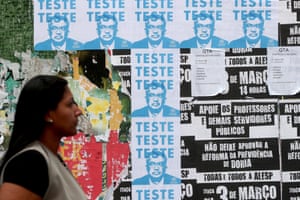
Posters of WHO chief Tedros Adhanom in Sao Paulo, Brazil last week.
If the story of smallpox eradication shows the WHO acting as something like an international ministry of public health, it doesn’t explain its current position as an emergency service, surveying the world for disease outbreaks and springing into action to contain them. That is a more recent addition to its portfolio, which came after a period, in the 80s and 90s, when the WHO seemed to be losing its earlier dynamism. The diseases it was partly created to address – smallpox, yellow fever and the plague – had either been eradicated or were in decline, and it was slow to identify new threats such as HIV/Aids. Under the leadership of Dr Hiroshi Nakajima, from 1988 to 1998, the organisation stagnated, and some member states complained about poor management and alleged petty corruption.
Two things happened at the turn of the century that would shape the WHO we now see tackling the Covid-19 crisis. In 1998, the fiery former prime minister of Norway, Dr Gro Harlem Brundtland, was elected director general. And in 2002, a farmer in China’s Guangdong province became sick with a deadly, never-before-seen respiratory disease that quickly spread among the hospital staff who had treated him, and went on to become the first pandemic of the newly globalised 21st century: one that arose suddenly, had no treatment or cure, and spread with the speed and reach of international business.
Given the WHO’s sprawling structure, vague mandate and reliance on diplomacy, its director general holds immense power to shape it. Even before she took on the role, Brundtland was comfortable on the world stage. “I was already a political leader, and I was used to this kind of authority,” she told me. Like her friend Kofi Annan, the charismatic UN leader, Brundtland believed that international bodies should be prepared to lead when necessary, rather than being bossed around by powerful nations. “If the job is to direct and coordinate global health, it’s not a question of what one or several governments ask you to do,” she said. “We are working for humanity.”
Brundtland pushed the WHO to use its local contacts, diplomatic channels and the emerging internet to locate potential outbreaks, all of which made the organisation less reliant on national governments for information. Within just a few years, this strategy proved its worth. In November 2002, when the Chinese government became aware of the first cases of a novel respiratory disease, later named Sars, it failed to alert the WHO. But, as part of Brundtland’s new approach, WHO staff were monitoring Chinese medical message boards and news media anyway, and were aware of what was then thought to be an atypical pneumonia outbreak. Adding to their suspicions, on 10 February 2003, David Heymann, who was then executive director of the WHO’s communicable diseases cluster, received an email from the son of a former WHO staff member in China warning of a “strange contagious disease” that had already killed 100 people, but which was “not allowed to be made known to the public”. The WHO took the information it had to China, which made its first official report to the WHO the next day.
Although the WHO had no formal powers to monitor and censure its members, Brundtland wasn’t shy about doing so anyway. In the ensuing months she would accuse China of withholding information, claiming that the outbreak might have been contained “if the WHO had been able to help at an earlier stage” and exhorting the Chinese to “let us come in as quickly as possible!” With remarkable speed, China fell in line and shared its data with the WHO. “After her statements to China, no other countries hesitated,” said Heymann.
In March 2003, as the disease spread – reaching Hong Kong, Vietnam and then Canada – for the first time in its history, the WHO issued advice against travelling to affected areas. (Before then, the decision to advise on travel had always been left up to member states.) Despite having no formal powers to ground planes, the measures worked. “Passengers and flights dropped dramatically as soon as we issued the recommendations,” said Heymann.
Brundtland’s approach was not always popular, and some bridled under this new upstart WHO. “It wasn’t just China,” Brundtland told me. “The mayor of Toronto [Mel Lastman] flew to Geneva to tell us take down the travel recommendation – while at the same time he was not containing the outbreak. He had people with Sars riding around the subway, no contact tracing, no following up. He couldn’t accept we were telling him what to do!”
The WHO’s response to Sars was considered a huge success. Fewer than 1,000 people worldwide died of the disease, despite it reaching a total of 26 countries. The pandemic was defeated not with vaccines or medicines, but with NPIs, or “non-pharmaceutical interventions” in WHO parlance: travel warnings, tracking, testing and isolating cases, and a huge information-gathering operation across multiple countries, all made possible by the WHO’s willingness to wield authority that it had, in a sense, created simply by speaking it into existence. “Brundtland did things the WHO had no authority doing. She just did them,” said Fidler. “She sort of used Sars as a way to test drive some very radical changes.”
“After Sars, the WHO’s position was essentially: that was great, let’s formalise it,” said Clare Wenham, a professor of global health policy at LSE. In 2005, the WHO drew up a new version of the International Health Regulations (IHR), the central legal document that all member states are bound by. According to Fidler, the updated IHR, which is in force to this day, is a radical document. It asks its members to prepare for public health threats according to standards set by the WHO, and to report any outbreaks and all subsequent developments. It also allows the WHO to declare a public health emergency of international concern (or PHEIC, pronounced, incredibly, “fake”), using its own information, over the objection of any single country. During an emergency, countries are expected to take the lead from the WHO’s guidelines and report any deviations to the organisation. All of these requirements, bar the reporting of outbreaks, were new.
But the document stopped short of giving the WHO real power if states refuse to comply. “The WHO isn’t Nato, it’s not the security council,” said Gian Luca Burci, who was the WHO’s legal counsel until 2018. The US, fixated on bioterrorism after 9/11, supported giving the organisation some extended powers, but was opposed by Brazil, Russia, India and China, which were wary of US influence. There was a general reluctance to hand an international organisation any more power. “WHO members were happy with the actions that were taken during Sars, but there was definitely a sense afterward of ‘What if that was us in China’s spot?’,” explained Catherine Worsnop, a professor at the University of Maryland School of Public Policy. In short: thanks for stopping the pandemic, but we don’t want to be told what to do.
If the WHO has seemed at times weak or tentative – very un-Brundtland-like – in its handling of the coronavirus crisis, it is partly because of its bruising experiences during the past decade. From 2009 onwards, the WHO faced condemnation from the press and the international community for its handling of successive crises, all during a decade when the financial and diplomatic order that sustained it began to break down.
First, there was the outbreak of H1N1, or “swine flu”. The novel influenza virus was discovered in Mexico in March 2009, and by June, when the WHO declared a pandemic, there were more than 28,000 cases in 74 countries. Over the next year, the WHO coordinated the global response – less aggressively than during Sars – and on 10 August 2010, it declared the pandemic over. Almost immediately, the WHO’s approach came under scrutiny. The death toll – 18,500 confirmed deaths worldwide – was far lower than initially expected, particularly given the disease reached more than 200 countries. “Suddenly you have people saying: ‘Wait a minute, you really cried wolf on this,’” says Wenham. The media and several prominent European politicians demanded inquiries as to whether the WHO had mistakenly rung the alarm, and “cost huge amounts of money and frightened people unnecessarily”, as Paul Flynn, the former Labour MP who chaired one of the inquiries, told the Times in 2010.
To this day, opinions are split as to whether H1N1 was a crisis headed off, or a false alarm. “The WHO is always at risk of being criticised as doing too much or too little,” said Keiji Fukuda, the former WHO assistant director general who led the H1N1 response. Most of the former WHO staff and academics I spoke with agreed, proposing some version of the following as an iron law of public health: act slowly and you will be criticised for failing to stop preventable deaths; act aggressively and stop an outbreak before it becomes serious, and you will be accused of having overreacted. (After all, in the latter case, nothing too bad happened, so what was the big deal in the first place?)
Fidler, who largely approves of WHO’s quick action during H1N1, believes that the backlash led the WHO, which was then under the command of director general Margaret Chan, to become too tentative about calling for action in the future. This was a period when the fallout from the 2008 financial crisis was also starting to take its toll on its budget. “There was a big funding shortfall,” said Andrew Cassels, director of strategy at the WHO between 2008 and 2013. “Cuts made to the emergency response programmes, personnel cuts.” The funding gap stood at nearly $300m in 2012. Entire offices were shut, including a team of social scientists working on pandemic response.
When the Ebola outbreak struck west Africa in 2014, the combination of the WHO’s greater caution and reduced budget resulted in disaster. In contrast to the previous pandemic, this time the WHO was slow to act, and was widely perceived to have lost control of the situation. In the end, the US and several other nations deployed more than 5,000 military personnel at the request of the affected countries, and an ad-hoc UN committee was created to take over responsibilities from the WHO. The outbreak eventually killed 11,310 people, the vast majority in just three countries – Guinea, Liberia and Sierra Leone – paralysing their health systems for months, and causing panic across the world. Prominent scientists judged the WHO’s response an “egregious failure”.
Much of the blame fell on Chan herself. She appeared shell-shocked, stressing to the press that the WHO was a technical advisory body, and that it was national governments that had ultimate responsibility for their citizens’ health. “She wanted the WHO to be an apolitical agency – more like technical support. There was a hesitancy there to push the full powers of the WHO,” said Sara Davies, a professor of global health at Griffith University in Australia.
The bold, proactive culture established after Sars had seemingly faded. Fidler believes that by delaying calling Ebola an emergency, and thus failing to organise an international response at a crucial moment, the WHO’s leadership had shown they “no longer had any faith in their authority”.

Today, under Tedros, the WHO finds itself in uncharted territory. Not only is it facing by far the biggest pandemic in its history, it is also having to defend itself from the nations on which it most depends. “In my 25-plus years of working on global health issues, I cannot recall the leader of a prominent developed country threatening to punish WHO in the manner President Trump did,” said Fidler, referring to the recent press conference in which Trump suggested putting “a very powerful hold” on US contributions to the WHO. In the same press conference, Trump accused the WHO of concealing information, being too slow to react to the virus, and, above all, showing favouritism towards China.
Since the crisis began, Tedros has been repeatedly accused of being soft on China. Senator Marco Rubio recently told Fox News that the Chinese government had “used the WHO to mislead the world”, and claimed that the WHO “is either complicit or dangerously incompetent”. The US senator Rick Scott put it more bluntly, accusing the WHO of “helping Communist China cover up a global pandemic”. (Tedros, meanwhile, has warned of the dangers of politicising the virus.)
Until very recently, the WHO was seen as a relatively neutral arena for China to extend its power. “China likes to find ways within the global system to give it a leading and benevolent image. The WHO was an uncontroversial place to do it,” said Rana Mitter, the director of the University of Oxford China Centre. No longer. The extent of the initial coverup is still unclear, but there is no question that at least at the local level, Chinese officials knew about the outbreak of a novel disease for weeks before it was reported to the WHO. During that time, Chinese doctors were prevented from speaking out.
John MacKenzie, the WHO’s emergency committee adviser, told me that the organisation was “a little misled” about the Wuhan outbreak. He says that by the time the government alerted the WHO on 31 December, scientists in China had already determined via genome sequencing that the outbreak was caused by coronavirus. Yet the government didn’t confirm that until 7 January and the full genome sequence was not officially shared until 12 January. “That’s very slow,” MacKenzie told me. “For at least two weeks, we could have been making far more kits and so on for testing.” MacKenzie added that the number of cases officially declared by the Chinese in the first week – 59 in the week ending 5 January – was “nowhere near as many cases as you’d expect”. (The statistics released by the Chinese government continue to be questioned, with some reports suggesting they may have seriously understated the number of coronavirus deaths.)
Despite mounting frustrations – in mid-January, China also refused the WHO’s request to send a team of scientific observers to Hubei province, the centre of the outbreak – Tedros has never come close to doing what Brundtland did and calling China out. Instead, on 28 January, he had a closed-door meeting with Xi Jinping in Beijing, and two days later, he praised Chinese efforts to contain the disease, declaring that China is “setting a new standard for outbreak control”. That same day, 30 January, the WHO declared a Pheic, and began issuing prescriptions to countries around the world. On 8 February, China finally allowed WHO observers into the country. For Tedros’s supporters, this was vindication of his strategy of keeping China onside. For his critics, it was too little, too late.
Elected as WHO director general in July 2017, Tedros was supported by a bloc of African and Asian countries, including China, which has considerable influence with those members. (Tedros is himself from Ethiopia, where he served as health minister and then foreign minister between 2005 and 2016.) It was a “really nasty” election, said Davies, in which the powers that have traditionally shaped the WHO, such as the US, UK and Canada, lent their support to one of Tedros’s rivals, the British doctor David Nabarro. During the campaign, Tedros was criticised for having served in a repressive government with a poor human rights record, and one of Nabarro’s backers even accused Tedros of covering up a cholera epidemic during his time as health minister. (Tedros denied the claim, describing it as a “last-minute smear campaign”, while Nabarro told the New York Times that he had never authorised his team to make this accusation against Tedros.) In response, Tedros’s supporters mounted “a collective pushback”, said Davies, against the UK and its allies, eventually winning out. Tedros became the first director general from a so-called developing country since the Brazilian Dr Marcolino Gomes Candau in 1953.
While his background is in politics, Tedros is not forthright or confrontational like Brundtland. In Ethiopia, his political party, the Tigray People’s Liberation Front (TPLF) was mostly comprised of ex-revolutionaries, men that “seemed carved out of a rock”, said Fantu Cheru, a professor at American University and former advisor to the Ethiopian government. Tedros was different – jovial and accessible, said Cheru, and able to make personal connections easily. “He is not very ideological, he believes he can work with anyone,” said Mehari Taddele Maru, a professor at the European University Institute in Florence, Italy. Cheru also sees Tedros as a pragmatist. “He’s not in the Chinese pocket. The Americans in particular wanted to destroy his image. Tedros knows how this game works. You need to have more allies than enemies, and those allies may not have a good track record.”
“I don’t think Tedros did anything previous director generals would not have done,” said Anthony Costello, the director of the UCL Institute for Global Health. “He needed a good relationship with China in order to get in.” Even Lawrence Gostin, who has been a prominent critic of Tedros in the past, told me that “his high praise for China is understandable. He is seeking to coax China into cooperation.” He went on to note, though, that this strategy “does risk the credibility of WHO as an objective agency.”
If the WHO thought it could sacrifice a bit of its credibility – overlooking China’s obvious blunders in December and January in exchange for its compliance in February – and move on, it was mistaken. The argument over China’s influence has been raging for weeks, not least since the government of Taiwan claimed that the WHO had ignored its own early reports of human-to-human transmission of coronavirus as part of a larger history of appeasing China – which has blocked Taiwan from joining the WHO (and the UN) for decades.
Now that Trump, scrambling for an answer to explain why the US now has more cases of coronavirus than any other nation, has alighted upon the WHO and China as his preferred scapegoats, these questions will not go away. “I don’t think we will see the US government cut off funding,” said Fidler. “But what’s happened with this pandemic – with the WHO caught between the US/China rivalry – is not a good omen for the WHO going forward.”

While the focus has been on what happened between China and the WHO in January, in epidemiological terms the crisis has moved on. Covid-19 has spread fastest and furthest in the US and Europe, through the very rich nations that largely fund and staff the WHO. Before the outbreak, the WHO struggled to get these same nations to prepare for future pandemics. Now the pandemic is here, and they are at the centre of the crisis, the WHO has been unable to keep them following its advice.
Richard Horton of the Lancet said that after the WHO declared a public health emergency, “countries, especially western countries, didn’t listen. Or didn’t seek to understand what was actually taking place in China.” On 5 February, the WHO asked for $675m to fund its Coronavirus response through to April. Anthony Costello of UCL said that when he met with Tedros on 4 March, the WHO had received only $1.2m. (Tedros announced last week that the funding goal had finally been reached, around the time the number of worldwide cases passed 1 million.)
Even the decision to declare a pandemic on 13 March – a largely rhetorical distinction, since calling a Pheic already requires WHO members to respond – was calculated to wake its member states up. In the UK the Premier League was still playing games, and the previous week the US had held primary election contests. “They declared a pandemic because countries weren’t taking the advice,” said Adam Kamradt-Scott, a professor of global health at the University of Sydney.
The WHO stresses that the ideal response to the crisis is relatively simple. Individual states should limit public exposure, especially by tracking and tracing all known cases – a strategy that worked in South Korea and appears to be working in Germany. On an international level, states should share scientific information and resources. These are the mantras Tedros goes back to in his briefings: “Test test test” and “solidarity solidarity solidarity”.
But countries have repeatedly ignored WHO advice. In the UK, the response has been erratic, lurching between the WHO’s norms and its own strategies, such as the now-discredited pursuit of “herd immunity”. The US didn’t recommend school closures or avoiding travel until 16 March. In Sweden, restaurants are still open.
Many wealthy nations have not only pursued their own national strategies for public health, but have also withdrawn from the globalised world of diplomacy and trade that they themselves set up. Earlier this year, for instance, the NHS ordered millions of masks from a French company named Valmy SAS. But in early March, the French government requisitioned all masks produced within the country, so the masks never reached Britain. This week, Germany accused the US of seizing a shipment of masks bound for Berlin from a port in Thailand; while Germany previously sent inspectors to the factory of an American company in Jüchen to ensure their medical masks weren’t being exported against government orders.
The WHO is battling against a breakdown in international cooperation that is far beyond its capacity to control. “Governments have retreated to national policies, and this problem predates this crisis,” said Clare Wenham, the health scholar. States have been turning away from international institutions for a long time. The WHO hasn’t driven globalisation in the same way as the WTO or IMF, but in a way it has administered it – quietly promising to take on the outbreaks that arise in an industrialised and interconnected world, and relying on the often unspoken norms of international collaboration that underlie it.
Ironically, it is most needed now, at a time when faith in the other administrators and overseers of the global order are in decline – a trend that Covid-19 only seems to be accelerating. “As it’s gone on, you see the WHO becoming less important,” said Wenham. “No one is thinking about reducing the global numbers, only their own. The WHO is a global force, but people aren’t thinking globally.”

Xi Jing Ping: Prepare for effects of world's woes

As nation advances, pressures expected from global economy, pandemic spread
China should fully prepare to deal with changes from the external environment for quite a long time given the continued spread of COVID-19 globally and the downward pressure facing the world economy, Xi Jinping, general secretary of the Communist Party of China Central Committee, said on Wednesday.
While China is making further progress in pandemic control with acceleration in economic and social recovery, the country is still faced with growing pressure from imported infections and new challenges in resuming work and production, he said, urging that worst-case scenarios should be kept in mind.
Xi made the remarks while delivering a speech at a meeting of the Standing Committee of the Political Bureau of the CPC Central Committee.
The meeting, the ninth of its kind since the start of the outbreak, analyzed the COVID-19 situation and economic performance at home and abroad, made new arrangements in the implementation of regular pandemic prevention and control measures and fully advanced work resumption, according to a statement released after the meeting.
Xi urged efforts to hasten the comprehensive recovery in work and life, solve difficulties and problems during the process and limit the damage caused by the pandemic to a minimum while adhering to regular prevention measures.
More targeted and effective pandemic control measures should be adopted in a timely way to guard against imported infections or a rebound in domestic infections, he said.
In Hubei province and Wuhan, efforts should continue to focus on saving patients in critical condition, Xi said, and control measures in communities should be further improved to guarantee safety.
Local authorities, especially in provinces bordering Hubei, should strengthen communication and sharing of information and boost coordination on prevention measures to ensure consistency in personnel controls and mutual recognition of health codes, he said.
Xi also instructed that consistent effort be made in controlling the pandemic in Beijing and paying close attention to asymptomatic carriers, saying any possible loophole should be closed.
Meeting participants decided that pandemic control measures in coastal and border ports will be strengthened and border cities will be guaranteed greater support in pandemic control personnel and materials, the statement said.
Noting that China is faced with increasing difficulties in economic development, the meeting instructed local Party committees and governments to have a greater sense of urgency in creating the conditions for work and production resumption by all means while improving pandemic prevention measures according to their local conditions.
Greater support should be provided to industries facing difficulties as well as small and medium-sized enterprises, it said, while calling for efforts to facilitate normal business in daily life service industries, expand consumption by residents and speed up the building of investment projects.
China has ample grain reserves and is fully capable of guaranteeing the country's supply of grains and staple agricultural produce, the participants said.
The meeting required strengthened monitoring and supervision of domestic grain market prices and consistent effort in production and distribution of foods such as pork, fruit and vegetables to ensure the basic stability of market supply and prices.
It was decided that a minimum standard of living for disadvantaged people will be further guaranteed and people in difficulties caused by the pandemic or due to infection will be covered by subsidies.
People in regions severely hit by the pandemic will be provided with temporary living allowances and unemployment insurance will be expanded to better guarantee the basic living of the unemployed, the meeting said.
Participants also underlined the importance of identifying all kinds of potential safety dangers, improve contingency plans and enhance rapid response capabilities to protect lives and property.

Xinese Virus: How One Ruthless Man Triggered the World’s Worst Healthcare Crisis in Decades Chinese virus? Perhaps, but let's be more precise - it has come out of chairman Xi's China.By Michael Petraeus

President Donald Trump is not the one to beat around the bush so, when the spokesman of the Chinese foreign ministry (no less) started peddling a conspiracy theory that US Army could have brought the virus to Wuhan during the war games last year, he was quick to respond, labeling the disease after its birthplace – China.
As usual, whenever the US President opens his mouth, there was widespread meltdown, drama, protests and – also quite typical – accusations of racism (!?).

Somehow nobody really did that when the accusations were thrown in the opposite direction. So, is it permissible for administration of one country to peddle unsubstantiated conspiracy theories and yet totally unacceptable for the other to respond with a term that is at least based on factual reality of where the disease originated?

President Trump isn’t really wrong here, but perhaps the term “Chinese” is a little too broad. Because the problem hasn’t erupted specifically because of China or Chinese people as a nation.

 No, the Covid-19 outbreak happened due to a broken authoritarian system steering the PRC today – one that was designed and ruthlessly built up by one man – Xi Jinping.

Right now Beijing is busy pushing a global PR campaign to salvage its image. It is donating supplies to other countries, sending doctors around the globe, parading its good will and eagerness to help.

Let’s not forget, however, that current shortages of face masks or other equipment are a direct consequence of China effectively shutting down for two months, cutting deliveries to the rest of the world that chose to rely on it.

Most of the wholesale stockpiles in Europe have been depleted for weeks. Buying a surgical mask was practically impossible in the first week of February, when prices erupted by several hundred percent, as global panic buying began – long before the virus was even considered a threat to the Old Continent. Whenever asked about products the distributors could only shrug and reply that they have no idea when anything arrives because China is not delivering.

 Therefore, even if foreign governments wanted to prepare for the worst, they largely couldn’t because the main source hoarded everything for itself, leaving the rest out in the cold.

Of course, one could excuse every single government for being primarily preoccupied with the well-being of its own citizens in a healthcare crisis – but it also shows that Chinese solidarity is only on display when Beijing can afford it quite effortlessly.

Crackdown… on the media
Before Chinese authorities acknowledged there is a problem they cracked down not on the spreading disease but on the people who warned and reported about it – like the now effectively martyred doctor Li Wenliang, who couldn’t have predicted that he had little over a month left to live when he raised the issue of a SARS-like disease spreading in Wuhan.

Summoned by the police for allegedly spreading misinformation he and others were silenced and communist censors got to work to purge the Chinese internet of alarmist reports, ahead of the upcoming Chinese New Year – disrupting which could be very costly economically (they must have thought).

Sadly, doctor Li contracted the disease and later died on February 7 at a young age of just 33.

 With hundreds of cases detected – an avalanche Beijing could no longer ignore – Wuhan went into lockdown on Jan. 23rd, two days before the Chinese New Year and after about 5 million of its residents already left for the holiday, spreading the disease inside and outside of the country.

It was only then when the party started addressing the issue instead of trying to silence its coverage. And yes, Chinese authoritarianism did show its merits when it mobilized to build temporary hospitals for thousands of patients or was able to enact a lockdown of cities and entire provinces up and down the country in an ambitious bid to break the chain of transmission.

But it would be foolish to forget that it’s the same authoritarianism that created the problem in the first place – and it has certainly gotten worse under chairman Xi.

Down with Dengism
Deng Xiaoping was the architect of modern China and his experiences with Mao (both personal and political) led him to believe that while strong, central power is required to maintain stability (especially in a country as big as China), handing all the power to one man can easily result in instability and chaos.

And so the reforms of the 1980s (including a new constitution) dealt away with the position of the Chairman of the Party, reinstated presidency in its stead and limited the terms in office to two consecutive five year periods.

Deng also moved away from violent purges of political opponents that country experienced under Mao, allowing more discord and discussion, understanding that nobody has all the right answers. He himself never held the highest office, although remained in control as the most influential figure until retiring in 1993.

As a result the system he created was more party- than person-centric. Subsequent presidents were merely leaders of the CCP, technocrats-in-chief, leading the country and then passing the baton to the next person in line after their 10-year term is up. Such were the presidencies of Jiang Zemin and, especially, Hu Jintao – when China experienced great economic prosperity, successfully hosted Olympics in 2008 and appeared to be growing more humane, even if still governed in an authoritarian style.

 Sadly, upon his rise to power Xi Jinping made it quite clear his presidency would not be one of continuity of this system.

His ambition was – and remains – to elevate himself as the central figure of China. Through his political reforms and questionable anti-corruption campaigns, which saw hundreds of party officials – including some of the top brass – jailed and purged from public life, he left no space for debate.

 Deng’s idea of collective-leadership is dead and Maoist personality cult is back in full swing.

Along with Xi’s opponents gone are the presidential term limits – paving the way for him to hold power (like all true dictators) until he dies. His “thought” has been incorporated into the constitution and even forced onto universities, what prompted protests at Fudan University in Shanghai last year.

In 21st century China it’s Xi Jinping’s way – or the highway (to put it mildly). Of course the consequences of such concentration of power are obvious and observed in all overly authoritarian states in history.

 If discord is discouraged (or worse) and absolute, unquestioning loyalty is the prerequisite to a successful life in business or politics, how many people are going to risk their neck telling the truth?

That’s how millions of officials are forced to be both dumb and numb, since the price of making risky – but often necessary – decisions has been made exorbitantly high.

Yes, there remain a few bold souls like doctor Li or Ren Zhiqiang, the mercurial property developer and outspoken critic of Xi Jinping – who has now mysteriously vanished after his latest tirade criticizing the handling of Covid-19 outbreak and calling Xi Jinping a “clown” – and has been uncontactable since March 12, prompting grave worry of his friends and family.

But few others will risk their livelihoods to upset the party leadership – so they won’t report issues or report them inaccurately, trying to avoid responsibility or the leadership’s wrath. And leadership itself is primarily concerned about appearances and protecting itself – ahead of protecting the people.

Perhaps with someone like Hu Jintao in charge the response would have been different. Perhaps the whistleblowers would be more eager to come forward. Perhaps the local party officials would be more decisive and outspoken. When he faced the SARS outbreak early into his presidency, the silencing of the health crisis and mishandling it led not only to dismissals of party officials but also to reforms that extended healthcare coverage for Chinese citizens.

With Xi Jinping, however, we’re back to old Maoist painting of the lawns ahead of the leader’s visit. Though today, thanks to the internet and social media, manipulative campaigns like the one tried in Wuhan, to thank visiting president, are rejected by the people (in a rare shows of public disobedience).

 Even the Chinese, therefore, appear to understand that while the government ultimately acted and suppressed the outbreak, it was also its tardy response and suppression of information that led to it spiraling almost out of control, leading to massive national lockdowns – which certainly will exact a heavy toll on the Chinese economy and livelihoods of its citizens.

Cold War Governance in the 21st Century
Quite ironically, perhaps, what would have been a largely local issue in the divided, underdeveloped world of the past, today has become a global pandemic affecting nearly every person on the planet.

 Blind, incompetent totalitarianism of Mao Zedong kept itself isolated from the rest of the world but the modern hybrid cooked up by Xi Jinping is a threat to us all, because it marries all the sins of the old system with globalization that China is now a critical part of.

As a result, whatever happens on the Chinese mainland may have serious consequences everywhere else.

I have often praised Chinese technocratic authoritarianism for its many achievements – elevating hundreds of millions of people out of dire poverty, swift infrastructural investments in roads, rail, air travel and sea shipping (that would take decades in Europe or America), its ability to retain internal security and stability, allowing people to go on about their lives without imminent threats of harm coming from crime or terrorism.

 But what we see today no longer has much to do with technocracy. Competences, facts and science have taken a back seat in Chinese politics, being replaced by unwavering support for the supreme leader, leading China to resemble, in some aspects, North Korea more than any developed state in the world.

For all its technological competences, China has failed to apply them to decision making in the moment of greatest danger. In fact, it has failed to apply them far earlier, to ensure proper sanitary standards which would have prevented this and other outbreaks.

Beyond the veneer of modern advances its governance appears to be heading in the opposite direction. Concentration of power around one man has neutered the administration and rendered it useless in the face of a serious crisis.

 China is a country with first world technology and third world laws.

In a lot of ways it is a reflection of its increasingly self-absorbed political class. Huge projects that allow decision makers to show off – highways, railways, airports, harbors or the military, or the entire Road and Belt Initiative – receive investment and coverage. But the invisible fabric of laws and regulations is still a tangled mess, a Capitalist-Marxist-Leninist chimera.

Of course with a top-down dictatorship nobody really cares about the laws since no checks and balances are put in place anyway and anything can be overruled by the decision of the supreme leadership which has entrenched itself even more under Xi Jinping. Which is why there was little to stop the outbreak as everybody kept looking at Beijing for answers.

 As a result thousands of people around the world will die and lives of billions will be affected. Many will suffer, lose jobs – or their loved ones.

All because of one man and his unwarranted ambitions.

Indo-lence: How Indonesia is Becoming a Global Threat in the Covid-19 Outbreak You can't deal with a problem you are unable to trace.by Michael Petraeus


As the novel coronavirus began spreading around the world in the past two months, most of the attention was focused on China, where it originated and infected tens of thousands of people, mainly in the city of Wuhan.
For weeks it has remained mainly a problem within China, with limited cases reported beyond its borders. As time went by, however, countries around the world started reporting a rapidly growing number of infections. South Korea, Italy, Iran exploded in the past two weeks, with over 7000 cases each as of today. France, Germany and Spain have pierced 1000 and the numbers are growing everywhere around. The virus finally reached Africa and South America – and is now present on all inhabited continents.

But the outbreak started in Asia affecting China and its neighbors first and foremost. And yet, for weeks the biggest country in Southeast Asia – Indonesia – had failed to report a single case. What should normally be considered a good thing, in this particular case is very worrying – not only to its inhabitants but to all of us.

Ignorance Isn’t Always Bliss
While everybody was panicking, Indonesian leaders appeared to have been rather cheerful. The country’s health minister exclaimed that it was god’s intervention and response to Indonesian prayers that spared the country – surely not something you want to hear from a person responsible for national healthcare.

 If a nation relies on prayers for good health of its inhabitants surely we may question whether it belongs in this century at all.

Naturally, one could quip that Indonesia, being a democracy after all, gets only as good leaders as its people elect. The problem is, however, that their mind-boggling incompetence threatens everybody in the immediate neighborhood – as well as many far away.

In a globalized world people travel by the millions every single day. Nearly every inhabited place on our planet is reachable within 24 hours, thanks to jet airliners criss-crossing the skies without rest.

Being a tropical nation of many picturesque wonders of nature, islands and beaches, Indonesia is a major tourist destination, attracting visitors from all over the world – particularly during the winter months in the northern Hemisphere, when Europeans and Asians alike descend on the place seeking warm weather and sun.

Hundreds of thousands of Chinese visitors came to Indonesia during the past few months – surely not all of them in good health, since the outbreak really started in late November last year.

 For a country this big and this popular not to record a single case of the novel coronavirus while it was being spotted and tracked everywhere around, has always looked to be a result of incompetence rather than divine intervention.

Today, as the first ones have been identified this week, along with several past deaths only now attributed to Covid-19 the question remains – how many have not been spotted in the many weeks prior and have wandered around the country’s packed, dense, huge cities and tourist resorts? How many other people have they managed to infect in the meanwhile? And how many of these cases were misdiagnosed or simply ignored, leading to further infections that are yet to be traced?

And the scale of the risk is gigantic.

 Jakarta alone is the world’s second largest city by metropolitan area population (behind Tokyo), with 34,000,000 inhabitants.

The country’s other major urban centres aren’t exactly small either, with Surabaya touching 10 million and Bandung following closely behind. These are cities with -populations greater than many countries – yet lacking sophisticated healthcare services and most certainly in ability to screen all the possible Covid-19 cases.
When the number of patients in Wuhan – the epicentre of the disease – began to rise, Chinese authorities sealed the city and the entire province off, and later proceeded to do the same with other parts of the country. Hundreds of millions of people abandoned restaurants and cinemas, and wore surgical masks both to protect themselves and each other, to restrict the spread of the virus.

In the meanwhile, as it kept landing in new countries, Indonesian authorities didn’t even acknowledge there is – or may be – a serious problem.

 But ignorance isn’t always bliss and viral infections do not go away simply because you choose to turn your head away. They will still spread. And as they do they may reach a point beyond which they become impossible to put out.

Vigilance exhibited early – one of its best examples being Singapore – allows to contain the disease, isolate the confirmed cases and quarantine everybody identified as a possible contact. But it’s not really possible if you’ve been ignoring the threat for many weeks until it has grown beyond control.

Indonesia is poor, but not as poor as to be completely marginalized or have its population isolated from the world by lack of access and financial means to travel (like Africa). It is an ascending developing country, closely connected to its ASEAN neighbors as well as countries further afield, bridging Asian Far East, Oceania and Europe. It’s not a place tourists avoid but one they flock to. And a home to a quarter of a billion people, supplying millions of travelers to the world.

 Jakarta’s Soekarno–Hatta International Airport is among the Top 20 busiest on the globe. With over 65 million passengers traveling through it goes head to head with international aviation hub of Singapore at Changi.

For comparison, the busiest airport in Africa, O.R. Tambo International in Johannesburg, handles little over 20 million passengers – and most of the rest don’t even come close. In fact, Indonesia’s primary tourist destination – Bali – handles over 24 million travelers per year – more than any African airport.

But it’s not only the number of passengers traveling through Indonesia that is worrying – it’s also the immense intensity with which it is connected with its neighbors.

 The international route between Jakarta and Singapore is the 3rd busiest in the world, with over 27,000 flights a year. The connection to Kuala Lumpur in Malaysia, comes in fifth, with nearly 20,000 flights. That is 50 to 70 flights a day, every day, every year. Millions of passengers pouring in and out of the country whose health minister believes prayers are a better protection that modern technology and medicine.

Singapore to the rescue?
Perhaps some comfort can be found in that it is the little city-state of Singapore that is the region’s primary international air hub that distributes traffic around it. The wealthy island has been praised left and right for its determined, organized response to the epidemic, which – despite a number of cases reported early on – has managed to keep their incidence from exploding – unlike what we are witnessing now in South Korea, Iran, Italy, Germany or France.

As long as the screening at Changi Airport remains tight, there’s a good chance that infected passengers can be spotted and brought under quarantine before they manage to pass the disease to hundreds more.

That said, unlike with other countries – from which Singapore restricted travel quickly and prudently (China, South Korea or Iran) – similar measures will not be possible with Indonesia. With dozens of flights every single day, innumerable business links and thousands of Indonesians working in Singapore, it seems simply not possible to close the border to everybody who visited Indonesia in the previous two weeks.

And because authorities in Jakarta have been so abysmally lazy to address the threat, their failures also prevented others from responding adequately, leaving the doors wide open for the disease to spread.

Damage Is Done
Sadly, regardless of how much we scoff at Indonesian handling of the issue, most of the damage has likely already been done. Their failure to react gave the virus precious weeks it needs to spread and incubate.

The country’s strategic position between Europe, Asia and Australia, as well as its huge population and a broad diaspora, coupled with lack of competent (or swift) response, have all created highly dangerous conditions for the contagion to spread far and wide.

 The crux of the problem is this – Indonesia is developed and connected well enough to expose millions in and out of the country to the virus and yet not developed enough to respond to it. Not rich enough to tackle the problem properly and not poor enough to be isolated.

Because of that we can only hope that, indeed, as it was reported earlier, the virus does not spread as quickly in hot, humid weather and that alone will slow or stop it. Unfortunately, with outbreaks in Italy and Iran (countries significantly warmer at this time of the year than many other) these assumptions have already been questioned.

Ironically, then, when it comes to Indonesia, prayers may be our best hope after all.

What Will Happen if the Coronavirus Vaccine Fails? A vaccine could provide a way to end the pandemic, but with no prospect of natural herd immunity we could well be facing the threat of COVID-19 for a long time to come. by Sarah Pitt

  There are  over 175  COVID-19 vaccines in development. Almost all government strategies for dealing with the coronavirus pandemic are base...