In an effort to lessen the burden on the nation’s medical system, Japan is now using more than 10,000 hotel rooms to accommodate patients with lighter COVID-19 symptoms, in which hospitalization is not needed.
But when these patients arrive at one of these hotels, they won’t experience your more typical greeting—this mundane task is now being handled by a robot.
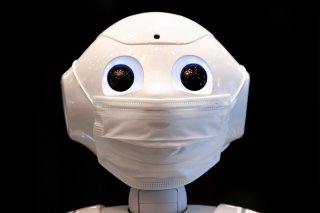
One hotel is using a well-known robot named “Pepper,” which wears a protective mask like the patients. It can remind people by saying, “Please, wear a mask inside. I hope you recover as quickly as possible.”
Other uplifting messages include: “I pray the spread of the disease is contained as soon as possible” and “Let’s join our hearts and get through this together.”
Pepper, which has been around since 2014, has been deployed to several office buildings across the world to greet visitors. This particular robot features facial recognition software that enables it to identify individuals and even detect emotion via voice patterns and facial expressions.
In addition to Pepper, another hotel is utilizing the services of another high-tech robot, and its chief function is to clean. Armed with the latest AI skills, this robot can clean “red-zone” areas of the hotel that are deemed too risky for the on-site staff to take on.
There is even another robot—called LightStrike—that has recently made waves with its capability to use ultraviolet light to disinfect hospitals. More importantly, it has been shown to neutralize the novel coronavirus in only two minutes, providing a potentially effective method of eliminating the virus from high-risk public areas.
Texas-based Xenex Disinfection Services has already announced a successful test of the robot against COVID-19. LightStrike, which is sold in Japan by the medical equipment maker Terumo, is designed to be able to emit light at wavelengths between 200 and 315 nanometers.
Ultraviolet light has shown to be highly efficient in decontaminating furniture, doorknobs and other often-used surfaces. Just two or three five-minute rounds of ultraviolet light on surfaces can leave viruses too damaged to function.
Japan has more than 14,000 COVID-19 cases, along with about 450 deaths, according to Reuters.
Government ministers in the UK are reportedly in disagreement over whether to lift lockdown restrictions in May, or to keep these measures in place until the summer. Onlookers ranging from journalists to Conservative MP Liam Fox have presumed that British people want the lockdown to end “as quickly as possible”. But the results of a recent survey my team ran indicate the opposite.
We found that 87% believed the lockdown should continue for at least another three weeks (with 6% unsure and 7% disagreeing). A similarly whopping 89% said they supported the government policy of requiring all non-essential workers to stay at home. The survey involved 2,502 UK residents through two panels on April 9-11. The proportion of respondents with different ages and genders mirrored the UK population as a whole.
Throughout the pandemic, governments have been keen to hint at their plans in ways that give their population some sense of what is coming without boxing themselves into particular timelines. On April 9, the day our survey opened, Foreign Secretary Dominic Raab summarised the UK’s near-term plans by saying “the measures will have to stay in place until the evidence shows we have moved beyond the peak”.
When asked their opinion on whether the UK’s plans over the next few weeks were “not firm enough with restrictions on people” or were “putting too many restrictions on people”, roughly a fifth said they didn’t know what the plans were. Of the rest, 56% felt they were not firm enough, while 19% felt that they imposed too many restrictions. (The remaining 25% did not lean one way or the other.)
Perhaps more surprising is that when asked how they felt about the UK government’s plans over the next few months, which have been sketchy at best, only one fifth said they didn’t know what the government’s plans were. Of the rest, 51% felt they knew enough to say the government would not be firm enough in terms of restrictions, while 22% felt that it would impose too many. Many survey respondents left comments outlining additional steps that they felt the UK should be taking, such as expanded testing, travel restrictions, stricter enforcement of existing measures or mandating mask-wearing.
If UK residents seem to have a greater tolerance for lockdown than their neighbours across the pond – where there have been numerous protests against state lockdowns – keep in mind that Britons’ level of concern about COVID-19 may be uniquely high. Our recent analysis of data from a similar poll from March, recently accepted for publication by the Journal of Risk Research, found that the UK had the highest levels of perceived risk out of the ten countries surveyed: Australia, Germany, Italy, Japan, Mexico, South Korea, Spain, Sweden, the United Kingdom and the United States.
But worries were high across the board – even in the US. Similarly, a recent study from Yale University found that over 80% of Americans believe that stopping the spread of the coronavirus is more important than stopping the country’s economic decline, protests notwithstanding.
What this means
We also asked respondents to indicate whether they felt they had enough information from the government to take the necessary actions to minimise their risk from coronavirus on a sliding scale from “not at all” to “very much”. The proportion of respondents who felt they had enough information (those on the “very much” half of the scale) rose from 64% in March 19-20 to about 80% in our April survey. This is a major improvement, but 10% felt the opposite, with the remaining ~10% squarely in the middle. This indicates that the UK government still has some way to go to ensure everyone has the information they need.
If ministers’ proposals to end the lockdown sooner rather than later are arising partly from a perception that people are itching for an immediate end to the current policy, these concerns are misplaced. That said, government would do well to keep its pulse on nationally representative public opinion polls on this issue, as this is likely to change over time.
The high levels of concern among the British public also suggest that turning the economic tap back on may be more challenging than anticipated. For example, if people remain unwilling to patronise pubs, restaurants and retail outlets, then continued economic support for these industries may be necessary for a long time to come.
Assuaging public fears will not be as easy as simply telling people that the danger has passed. Thankfully, most UK residents in our April surveys indicated high levels of trust in the UK’s national scientific and medical advisers, with over 90% placing as much or more trust in them than in the country’s politicians.
But to preserve that trust, and to avoid having to make the sorts of policy u-turns we experienced in early March, scientific models and modelling assumptions should be transparent and shared widely with relevant experts, so that shaky assumptions can be corrected before they become baked into policy. Furthermore, scientists should be open about their uncertainties – research suggests that the public can handle the truth. In the words of the UK Statistics Authority’s principal adviser on the assessment of official statistics, “being trustworthy depends not on conveying an aura of infallibility, but on honesty and transparency”.
It remains unclear at what point UK residents will feel that the pain of lockdown exceeds the benefits, and we do not envy the difficult decisions that policymakers will have to take with limited information. But we can only hope they will do so with a clear-eyed attention to the science, as well as the concerns and needs of the British public.
The Trump administration recently declared, in the midst of the coronavirus emergency, that it would suspend the United States’ financial support for the World Health Organization, a United Nations agency that coordinates a wide range of international health efforts. The United States typically contributes more than US$400 million per year to the organization, roughly 15% of its annual budget.
In announcing the suspension of U.S. funding, Secretary of State Mike Pompeo claimed that WHO had failed to provide “real information about what’s going on in the global health space.” President Trump suggested that the agency had colluded with the Chinese government in withholding information about the nature of the outbreak: “I have a feeling they knew exactly what was going on,” he said. And he sought to deflect blame for his administration’s disorganized response by pinning responsibility on global health officials: “So much death has been caused by their mistakes.”
To assess these claims, it is important to understand the context in which WHO officials make critical decisions at the early stages of a disease outbreak. As I explore in my recent book, “Unprepared: Global Health in a Time of Emergency,” WHO is constrained in its ability to gather knowledge about disease outbreaks and to intervene in national settings. It must rely on national governments for information about an outbreak and for permission to send investigators to learn more details. The agency’s power is limited to providing technical assistance and issuing recommendations.
Critical moments of decision
In January 2020, infectious disease experts scrambled to understand key aspects of the novel coronavirus, such as its rate of transmission and its severity. At that point, it was not yet possible to know exactly what was going on with the disease. Nonetheless, WHO officials had to make urgent decisions – such as whether to declare a global health emergency – in a situation of uncertainty.
More generally, much critical information about what is happening in the global health space can be known only in retrospect, once data on the event has been gathered, analyzed and disseminated by the scientific community.
Two other recent global health emergencies are instructive: the 2009 H1N1 influenza pandemic and the 2014 Ebola epidemic. In the aftermath of each of these outbreaks, WHO was sharply criticized for its early response.
When a novel strain of H1N1 influenza was first detected in the spring 2009, global health officials feared that it could spark a catastrophic pandemic. Within weeks of the virus’s appearance, WHO officially declared a global health emergency. The declaration urged countries to put their existing pandemic preparedness plans into action. In response, a number of national governments implemented mass vaccination campaigns, making advanced purchases of millions of doses of H1N1 vaccine from pharmaceutical companies.
Over the next several months, as the vaccine was manufactured and vaccination campaigns were implemented, epidemiological studies revealed that H1N1 was a relatively mild strain of influenza, with a case fatality ratio similar to that of seasonal flu.
In many countries, when the H1N1 vaccine finally became available in the fall 2009, there were few takers. National governments had spent hundreds of millions of dollars on campaigns that immunized, in some cases, less than 10% of the population.
Critics in Europe accused WHO of having exaggerated the pandemic threat in order to generate profits for the pharmaceutical industry, pointing to consulting arrangements that the agency’s influenza experts had with vaccine manufacturers. According to one prominent critic, the WHO declaration of a health emergency in response to H1N1 was “one of the greatest medical scandals of the century.”
A later investigation exonerated the WHO experts from wrongdoing, noting that the severity of the disease had not yet been determined when vaccine orders were made, and that “reasonable criticism can be based only on what was known at the time and not on what was later learnt.”
Retrospective criticism
Five years later, in the aftermath of the Ebola epidemic in West Africa, WHO officials again found themselves under sharp attack for their initial response to a disease outbreak. This time, officials were accused not of acting too hastily but rather of having failed to act in time.
At the earliest stages of the epidemic, in Spring 2014, the agency’s experts did not consider the event to be a “global emergency.” Based on prior experience, they felt that Ebola, while dangerous, was easily containable – the disease had never killed more than a few hundred people, and had never spread much beyond its initial site of occurrence. “We know Ebola,” as one expert recalled the early stages of response. “This will be manageable.”
It was not until August 2014, well after the epidemic had spun out of control, that WHO officially declared a global health emergency, seeking to galvanize international response. By this point it was too late to avoid a region-wide catastrophe, and multiple critics assailed the agency’s slow response. “WHO’s response has been abysmal,” as one commentator put it. “It’s just shameful.”
Whose failure?
Today, as the world confronts the coronavirus pandemic, the agency finds itself again under a storm of criticism, now with its very financial survival under threat. To what extent can we say that the agency did not provide adequate information in the early stages of the pandemic – that it failed to “do its job,” in Secretary of State Pompeo’s scolding words?
It is worth remembering that we are still in the early stages of the event as it unfolds, still seeking answers to critical questions such as how quickly the virus spreads, what its severity is, what proportion of the population has been exposed to it, and whether such exposure confers immunity. We also do not yet know whether the Chinese government fully informed global health officials about the seriousness of the initial outbreak. We do know, however, that while WHO made its most urgent call for vigilance by national governments in late January, with the declaration of a global health emergency, it was not until nearly two months later that the U.S. began – haltingly – to mobilize in response.
Blood tests that check for exposure to the coronavirus are starting to come online, and preliminary findings suggest that many people have been infected without knowing it. Even people who do eventually experience the common symptoms of COVID-19 don’t start coughing and spiking fevers the moment they’re infected.
How common is it for people to contract and fight off viruses without knowing it?
In general, having an infection without any symptoms is common. Perhaps the most infamous example was Typhoid Mary, who spread typhoid fever to other people without having any symptoms herself in the early 1900s.
My colleagues and I have found that many infections are fought off by the body without the person even knowing it. For example, when we carefully followed children for infection by the parasite Cryptosporidia, one of the major causes of diarrhea, almost half of those with infections showed no symptoms at all.
For the most part, symptoms are actually a side effect of fighting off an infection. It takes a little time for the immune system to rally that defense, so some cases are more aptly considered presymptomatic rather than asymptomatic.
How can someone spread coronavirus if they aren’t coughing and sneezing?
Everyone is on guard against the droplets that spray out from a coronavirus patient’s cough or sneeze. They’re a big reason public health officials have suggested everyone should wear masks.
But the virus also spreads through normal exhalations that can carry tiny droplets containing the virus. A regular breath may spread the virus several feet or more.
Spread could also come from fomites – surfaces, such as a doorknob or a grocery cart handle, that are contaminated with the coronavirus by an infected person’s touch.
What’s known about how contagious an asymptomatic person might be?
No matter what, if you’ve been exposed to someone with COVID-19, you should self-quarantine for the entire 14-day incubation period. Even if you feel fine, you’re still at risk of spreading the coronavirus to others.
Most recently it has been shown that high levels of the virus are present in respiratory secretions during the “presymptomatic” period that can last days to more than a week prior to the fever and cough characteristic of COVID-19. This ability of the virus to be transmitted by people without symptoms is a major reason for the pandemic.
After an asymptomatic infection, would someone still have antibodies against SARS-CoV-2 in their blood?
Most people are developing antibodies after recovery from COVID-19, likely even those without symptoms. It is a reasonable assumption, from what scientists know about other coronaviruses, that those antibodies will offer some measure of protection from reinfection. But nothing is known for sure yet.
Recent serosurveys in New York City that check people’s blood for antibodies against SARS-CoV-2 indicate that as many as one in five residents may have been previously infected with COVID-19. Their immune systems had fought off the coronavirus, whether they’d known they were infected or not – and many apparently didn’t.
How widespread is asymptomatic COVID-19 infection?
No one knows for sure, and for the moment lots of the evidence is anecdotal.
For a small example, consider the nursing home in Washington where many residents became infected. Twenty-three tested positive. Ten of them were already sick. Ten more eventually developed symptoms. But three people who tested positive never came down with the illness.
When doctors tested 397 people staying at a homeless shelter in Boston, 36% came up positive for COVID-19 – and none of them had complained of any symptoms.
The antibody serosurveys getting underway in differentparts ofthe country add further evidence that a good number – possibly anywhere from around 10% to 40% – of those infected might not experience symptoms.
Asymptomatic SARS-CoV-2 infection appears to be common – and will continue to complicate efforts to get the pandemic under control.
Today, no matter how well-intentioned, there’s a risk that those helping hands could have the unfortunate consequence of causing more people to get COVID-19. And sadly, those most in need of help are often those who would be hit the hardest should they become infected because low-income people tend to have more health problems than others.
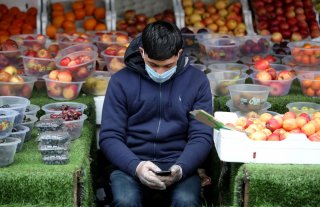
Many social-service nonprofits are experiencing a dramatic increase in demand. This includes everything from community clinics to youth centers, food pantries and agencies addressing domestic violence to groups that care for the homeless. At the same time, history suggests that many of these same nonprofits are likely to see their donations plummet due to the economic downturn underway, making any dollar you can spare count more than ever.
You need not ignore the general guidance to avoid extra trips to the grocery store or needlessly getting too close to strangers to do your share. That’s because cash donations to food pantries go further than directly donated items such as canned beans or boxed noodles.
Funds you provide to community organizations will help ensure they have the cash to meet their burgeoning needs now, or to reopen their doors later – depending on the situation. Theaters, operas and dance companies have had to cancel performances. Museums and zoos will be spending weeks closed. Shutting down is choking off revenue streams from ticket sales, gift shop proceeds and cafeteria operations they usually rely on. If you previously paid for upcoming performances or visits, you can do your share to support those institutions by not seeking refunds. Once this pandemic ends, won’t you want to be able to explore your favorite local zoo or museum or to experience live performances again?
2. Volunteer virtually
Many organizations use virtual volunteers. Depending on your skills, you could pitch in by helping boost an organization’s profile through Facebook and other social media platforms, upgrading their website, organizing an online fundraiser, coordinating the shipment of supplies directly to the nonprofit, and more.
But be sure to reach out before you act. Managing volunteers requires staff time, which many organizations lack. Other organizations may be ready and waiting for your help.
3. Check in before dropping by
Likewise, it’s best to call or email your neighbors before you drop by to see how they are doing. Ask what, if anything, they need in advance. If they’re running low on toilet paper, soap, rice or other basic supplies, consider placing an online order to be delivered to their door. You do not have to be the only one caring for the people in your life. The “mutual aid” groups popping up all over the country for this purpose can be both a great resource for those in need and a great way to channel the desire to help.
If you realize that someone needs a hot meal, don’t just make them a casserole – even if that thoughtful gesture is one you might have made during ordinary times. If you can afford it, consider placing an order with their favorite restaurant when delivery service is available because you will be both protecting the neighbor from unnecessary contact and, also, supporting local businesses. If they need in-person help, take care to respect all social-distancing protocols.
Since mid-March, the World Health Organization has urged countries to scale up the testing, isolation and contact tracing of COVID-19 patients in order to combat the pandemic. The reason for this advice is that if you can find infected cases, isolate and treat them, and trace the close contacts who they might have infected, and isolate them too, then you can keep much of the infection out of the general population.
This stops its spread and slows down the speed of the epidemic. It seems a simple and obvious strategy. It has been used extensively in the past, for example to stop epidemics of smallpoxand Ebola. So why hasn’t every country done that? Well, it’s not as simple as it appears.
The efficiency of contact tracing in any epidemic depends on the characteristics of the infection and the speed and coverage of the tracing process. So when a new disease such as COVID-19 first emerges it’s not possible to know exactly how useful testing and tracing will be.
Testing and tracing is most feasible as an effective strategy at the start of an outbreak when there are just a few chains of transmission of the disease. But if this does not keep the epidemic under control, and there is widespread community transmission, there will quickly be many cases and contacts. This is especially the case with a disease such as COVID-19, which is easy to catch, is quickly passed on after an infection sets in, and can infect some people without producing symptoms.
Many people will be getting infected from unknown cases and a large proportion of the population would need to be isolated. Testing and tracing soon becomes an unmanageable strategy and a lockdown to reduce physical contact then becomes a more efficient and effective means of controlling the epidemic. This achieves the same thing as testing and tracing, by keeping much of the infection out of the general population, but is a blunter instrument as it targets everybody.
As the current pandemic developed, some countries, including South Korea, were able to use testing and tracing to control the disease and avoid mandatory lockdown measures. But more widely, identifying cases of the disease with testing did not keep pace with the geographical spread of infection around the world. So in other countries, such as the UK, case finding and contact tracing capacity became overwhelmed early on and lockdowns were introduced instead.
In hindsight, those countries which persisted with expanded and rigorous testing and tracing programmes, such as Germany, South Korea, Hong Kong, Singapore, and New Zealand, have fared better with lower deaths rates than those which did not, such as Belgium, France, Italy, Spain, UK and the USA. This is probably because contact tracing and testing can identify asymptomatic infections and isolate them faster than systems relying on the development of symptoms.
Lockdowns aren’t sustainable in the long term because of the social, economic, and physical and mental health effects. The should reduce the spread of the disease so the number of cases starts falling. But if restrictions are relaxed even cautiously then transmission will go up again.
However, with a testing, tracking and tracing strategy in place as well, it will still be possible to keep the epidemic under control. To make this feasible, the numbers of cases needs to come down to a more manageable number, say a few hundred active cases. This is because of the sheer numbers of cases and contacts involved, each of whom would need quarantining until shown to be uninfected. As examples, the average number of tests required per case was 52 in South Korea, and 64 in Australia.
Building testing and tracing capacity is not easy. To start with there are two main types of test you can perform, one that tells you if someone is currently infected (a PCR test) and another that tells you if someone has had the disease in the past (an antibody test). You need the organisational capacity, the labs, equipment and chemical reagents to be able to conduct these on a massive scale.
Contact tracing also requires significant resources. You need thousands of people to interview patients, identify everyone they may have come into contact with since being infected, and track down these contacts. Many countries are also using or planning to introduce contact tracing apps that track your location or identify contacts using Bluetooth in order to automatically gather this data and inform people if they need to self-isolate.
Digital tracing
It is generally agreed in public health circles that these apps are useful as a supplement, but cannot replace manual checking. However, some evidence suggests that COVID-19 spreads too quickly for manual tracing alone, and that an app could help stop the pandemic if 60% of the population downloads it. On the other hand, there are also privacy concerns over how these apps allow governments to track citizens’ movements.
In South Korea the testing was conducted on a base of well-funded and efficient public services and an effective infrastructure, including widespread digital surveillance. For other countries to emulate this success, much still needs to be done in terms of planning, organisation and logistics.
In the UK there are plans to recruit and train 18,000 tracing staff to reintroduce contact tracing. The government aims to conduct 100,000 tests per day, which is about 0.15% of the population.
For the future, it is likely that some form of physical distancing will be required to prevent future waves of infection until an effective vaccine is widely available. These measures, which may need to be periodically tightened and relaxed, should be supported by testing and tracing to keep the number of new infections under control. This is likely to include the testing and quarantining of all new arrivals in a country, to prevent the infection being reintroduced from abroad.
Following the coronavirus’s spread through the population – and anticipating its next move – is an important part of the public health response to the new disease, especially since containment is our only defense so far.
Just looking at an infected person doesn’t tell you where their version of the coronavirus came from, and SARS-CoV-2 doesn’t have a bar code you can scan to allow you to track its travel history. However, its genetic sequence is almost as good for providing some insight into where the virus has been.
An organism’s genome is its complete genetic instructions. You can think of a genome as a book, containing words made up of letters. Each “letter” in the genome is a molecule called a nucleotide – in shorthand, an A, G, C, T or U.
Mutations can occur every time the virus replicates its genome, so that over time mutations accumulate in the viral genome. For example, in place of the “word” CAT, the new virus has GAT. The virus carries these minor modifications as it moves from one person to the next host.
These mutations behave like a passport stamp. No matter where you go next, previous stamps in your passport still show where you’ve been.
Molecular geneticistslike us can use this information to construct family trees for the coronavirus. That allows us to trace the routes the virus has traveled through space and time and start to answer questions like how quickly and easily does it spread from one person to another?
Individual patient data help paint a big picture
Online databases have been collecting SARS-CoV-2 genomic nucleotide sequences since mid-December. Whenever a patient tests positive for SARS-CoV-2, a lab can determine the genome sequence of the infecting virus and upload it. As of late April, more than 1,500 genome sequence samples have been deposited in GenBank, a publicly available database run by the National Institutes of Health, and more than 3,000 are in GISAID, the open-access Global Initiative on Sharing All Influenza Data.
Since each sequence is from a patient who is in a specific place in the world, these viral genome sequences allow scientists to compare them and track where the virus has been. The more similar the sequences from two particular viruses are, the more closely related they are and the more recently they’ve shared a common ancestor. The first SARS-CoV-2 genomic sequence uploaded to the GISAID’s website was collected from a patient in early December 2019.
Of course, the viral mutations themselves do not tell researchers which country they happened in. But since the databases record where particular patterns of mutations have been observed, scientists can determine the route that each viral strain has taken. The global map tracks the movement of the virus around the world.
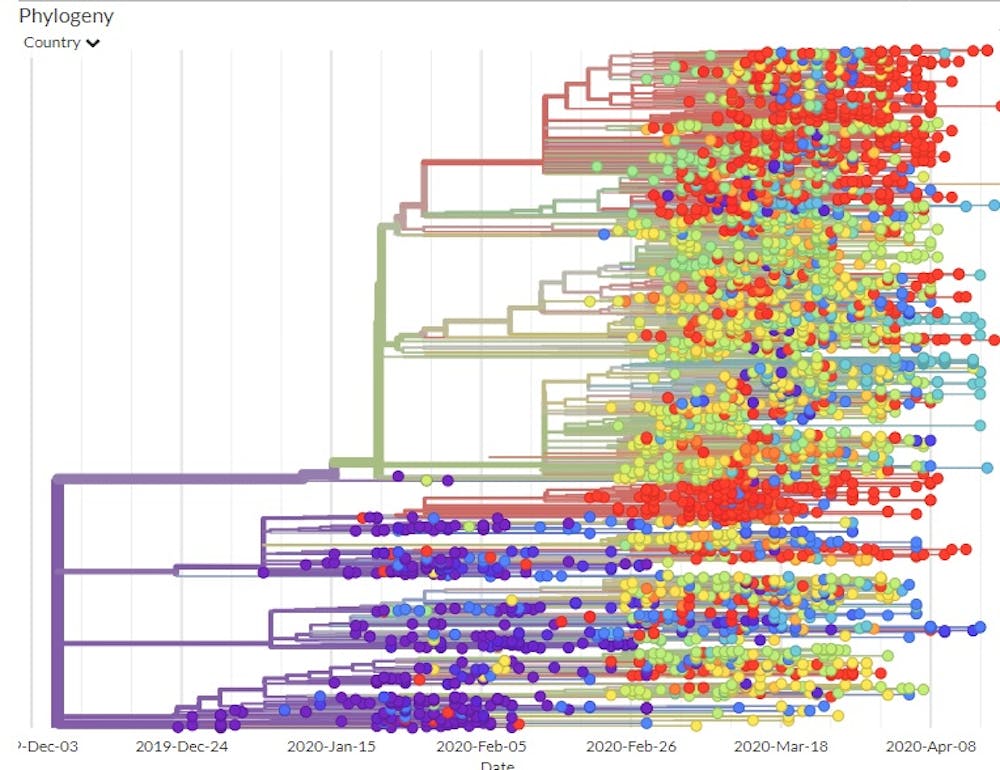
The SARS-CoV-2 phylogenetic tree – the family tree that connects all the sequenced coronavirus samples worldwide. The colors denote regional ‘branches’ of the tree.
Building maps out of sequences
The genetic data can play a big role in cracking public health mysteries, like how the coronavirus has spread through the United States.
On Feb. 28, scientists sequenced a virus sample from an American patient in Seattle and found its mutation signature matched that of the virus from the Wuhan traveler, plus three new mutations. GISAID has estimated the mutation rate at about 0.45 mutations per genome per week – so three mutations between the Jan. 20 case and the Feb. 28 case fits that rate.
Based on the three new mutations, this version of the virus had been multiplying undetected for about five weeks in the Seattle area. Since each infected person can infect several other peoplewithout experiencing any symptoms themselves, the virus could have spread to more than 100 people in five weeks.
Using the genome sequences to link the virus from the Jan. 15 traveler from Wuhan with the Washington-based patient from the end of February alerted Washington state officials that the virus was silently spreading through the population. This undetected spreading of the virus in Seattle and elsewhere is one of the primary reasons public health officials are calling for the public to stay home as much as possible.
Another study detailed the path the virus took as it moved from Wuhan to Shanghai to Germany to Italy to Mexico, stowing away in infected travelers. This study tracked infected individuals and compared their viral genomic sequences. Since researchers could compare the viral mutations to those in known locations at specific times, they were able to map out the phylogenetic tree – the family tree that shows how the various virus genome sequences are related.
Using the GISAID estimated mutation rate and the phylogenetic tree, scientists think the first time the coronavirus infected a person likely occurred in Wuhan in November or early December 2019.
If the virus had been around much longer, the viruses of the first known patients would have had a larger variety of mutations than they did.
Still tracking and learning from the sequences
The analysis of viral genomic sequences will continue to be a valuable tool for tracking and containing the spread of SARS-CoV-2.
For instance, sequencing the genome of a virus from a newly infected patient could tell you if it is a virus that has been circulating in the area for a while, or if it is a new introduction from elsewhere.
Someone who’d been in northern Italy before travel restrictions were in place brought the virus to Iceland. That initial outbreak was contained fairly quickly, but then new forms of the virus were introduced from elsewhere in Europe.
A new study pending peer-review indicates that California also had multiple introduction events with distinct viral lineages. For California, knowledge of the frequency of new introductions would be an important factor to consider as officials devise ways to contain the virus.
Viral genome sequences can be informative in other ways as well. Eventually, researchers may find that some forms of the virus are more virulent than others. In that case, the sequence of the viral genome could help physicians decide which treatment would be best for a particular patient.