#Sponsored

Wednesday, June 10, 2020

Is There Structural Racism on the Internet? The racial inequalities afflicting Americans and our society today are in many ways a result of the result of spatial segregation. by Charlton McIlwain

The racial inequalities afflicting Americans and our society today are in many ways a result of the result of spatial segregation. White people and nonwhite people tend to live in different neighborhoods, go to different schools and have dramatically different economic opportunities based on their race. That physical manifestation of structural racism has been true historically in this country, and is still the case today.

Today’s internet is built on a similar spatial logic. People travel from website to website in search of content in the same way they travel from neighborhood to neighborhood looking for stuff to do and people to hang out with. Websites accrue and compound value as visitor traffic and site visibility increases.

But there is a crucial difference: Internet users have – more or less – complete freedom to travel where they choose. Websites can’t see the color of a user’s skin and police incoming traffic in the same way human beings can and do in geographical spaces. Therefore, it’s easy to imagine that the internet’s very structure – the social environments it produces and the new economies it births – might not be racially segregated the way the physical world is.

And yet the internet does appear in fact segregated along racial lines. My research demonstrates that websites focusing on racial issues are visited less often, and are less visible in search result rankings than sites with different, or broader, focuses. This phenomenon is not based on anything that individual website producers do. Rather, it appears to be a product of how users themselves find and share information online, a process mediated mostly by search engines and, increasingly, social media platforms.

Exploring online racism

Words like “racist” and “racism” are loaded terms, primarily because people almost always associate them with individualized moral and cognitive failures. In recent years, though, the American public has become increasingly aware that racism can apply to cultures and societies at large.

My work looks for online analogues of this systemic racism, in which subtle biases permeate society and culture in ways that yield overwhelming advantages for whites, at the expense of nonwhites. Specifically, I am trying to determine whether the online environment, one completely constructed by humans, systematically produces advantages and disadvantages along racial lines – whether intentionally or inadvertently.

This is a difficult question to approach, but I begin by assuming that today’s technological systems have developed within a culture and society that is systemically and structurally racist. This makes it possible – even likely – that existing biases operate in similar ways online.

In addition, the historical geographical configurations that produced and perpetuated racial inequality provide a useful guide to investigating what systemic racism might look like online. The online landscape, and how people travel through it, are both important factors to understand this picture.

Understanding online navigation

First, I wanted to look at the map – how the web itself is structured by website producers. I analyzed what Alexa.com characterizes as the internet’s top 56 African-American sites using a software program called Voson. Voson crawls the web to identify what websites the source sites link to, and what sites link to the source sites.

Then I set out to determine the racial content, if any, of each of those thousands of websites, to begin measuring any inequalities that might exist in the online landscape.

Measuring spatial inequality offline typically involves measuring attributes of the people who live in a specific geographic location. For example, ZIP code 65035 designates a “white” neighborhood because 99.5 percent of the people residing there (Freeburg, Missouri) are white, according to U.S. census data. By contrast, ZIP code 60619, an area in Chicago, would be considered “nonwhite,” because 0.7 percent of its residents are white.

To make this type of distinction between websites, I relied on website metatags – website producers’ descriptions of the site coded to be picked up by and reflected in search engine results. I designated as “racial” websites with metatags including terms such as “african american,” “racism,” “hispanic,” “model minority” and “afro.” Sites without those terms in their metatags I designated “nonracial.”

By using website metatags, I was able to distinguish between racial and nonracial sites (and the segregated traffic between them) based on whether the site’s producers themselves define the site’s identity in racial terms.

Understanding online navigation

Once I had labeled each site as racial or nonracial, I looked at the links website producers created between them. There were three possible types of links: between two racial sites, between two nonracial sites, or between a racial site and a nonracial one.

How many of each type of link the data contained would reveal whether bias influenced website producers’ decisions. If there were no bias, the number of links would be proportional to the number of each type of site in the data set. If there were bias, the numbers of links would be disproportionately high or low.

While I found slight differences between the ideal theoretical proportions and the actual number of links, they were not significant enough to indicate that any segregation in people’s internet behavior is caused by web producers. People who travel the web just clicking links on websites at random would not arrive at racial or nonracial sites substantially more or less than they should based on the number of such sites that exist. But people don’t just follow links; they exercise their preferences when navigating the web.

Seeing segregation

For my second inquiry, I wanted to find out how people actually move between websites. I looked at the same 56 sites as for the previous analysis, but this time used Similarweb, a prominent web traffic metrics site. For each site, Similarweb produces data showing what websites people came from and what websites people navigated to next. I characterized those sites, too, as “racial” or “nonracial,” and identified three types of paths people took when clicking: between two racial sites, between two nonracial sites, or between a racial site and a nonracial one.

In this analysis, the number of clicks between different types of sites would reveal whether bias influenced users’ decisions. I found significantly greater numbers of clicks between nonracial sites, and fewer numbers of clicks between racial and nonracial sites. That indicates that users are going out of their way to visit nonracial sites.

Capitalizing on search engines

This gets us closer to the whole story when it comes to segregated traffic patterns and potential inequalities along racial lines. My data also showed that nonracial sites rank significantly higher in search results, and therefore likely enjoy greater visibility, than racial sites. The racial sites are less visible, get less traffic and therefore likely reap fewer benefits from visibility (such as advertising revenue or higher search engine rankings).

It might be tempting to suggest that this merely reflects user preferences. That could be true if users knew what websites they want to go to, and then navigate directly to them. But usually, users don’t. It’s much more likely that people type a word or phrase into a search engine like Google. In fact, direct traffic accounts for only about one-third of the traffic flow to the web’s top sites. To quote a conclusion from search optimization firm Brightedge, “overwhelmingly, organic search trumps other traffic generators.”

While more research is of course necessary, my work so far suggests that in conjunction with users’ preferred choices to navigate to nonracial sites more than racial sites, search engines do something with a similar effect: Nonracial sites rank significantly higher than racial sites. That can give racial sites less traffic and less financial support in the form of advertising revenue.

In both of these situations, people and search engines steer traffic in ways that give advantages to nonracial websites and disadvantages to racial sites. This approximates what, in the offline world, is called systemic, structural racism.

Two of America's Most Powerful Aircraft Carriers Have Just Joined Forces Now that's a pretty important milestone. by Peter Suciu

https://www.reutersconnect.com/all?id=tag%3Areuters.com%2C2019%3Anewsml_RC1C7B925720&share=true
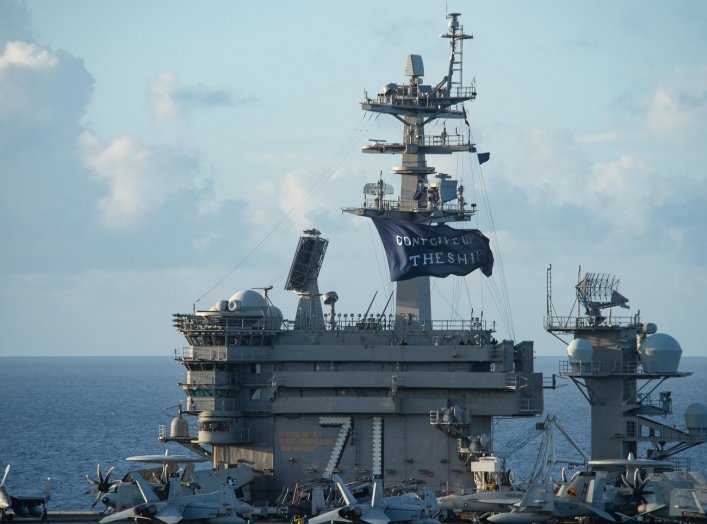
Recently, the United States Navy released photos of the USS Gerald R. Ford (CVN 78) and the USS Harry S. Truman (CVN 74) transiting the Atlantic Ocean. This marked the first time that the new Ford-class aircraft carrier has operated with a Nimitz-class aircraft carrier together while underway. The photos provided the best visual comparisons of the two carrier classes to date—highlighting many of the significant improvements that the new $13 billion USS Gerald R. Ford has to offer.

CVN-78 is the lead ship of Navy’s new Ford-class of flattops, and while the class design uses the basic Nimitz­­-class hull form, it incorporates several improvements. These include features that permit the ship to generate more aircraft sorties per day, more electrical power for supporting ship systems, and upgrades that require several hundred fewer sailors than the older Nimitz-class. This could reduce the 50-year life-cycle operating and support (O&S) costs for each of the new Ford-class carriers by about $4 billion, according to Navy estimates.

The U.S. Navy took delivery of the USS Gerald R. Ford in May 2017.

The Drive noted that among the most significant visual differences is the placement of the island superstructures on the two carriers. While the Nimitz-class superstructure has evolved substantially over time and does vary from ship-to-ship, the placement and even size of the island superstructure is quite different on the Ford. It was moved back about 140 feet to provide more deck space and to enhance the operational tempo. The island is both shorter in length, but about 20 feet taller than that of previous carrier class.

The shape of the island was also modified to house the AN/SPY-3 and AN/SPY-4 active electronically scanned array (AESA) Dual Band Radar, which has six separate arrays that provide 360-degree coverage around the ship. The old spinning 3D and 2D radars—which have been staples on earlier carriers—have been eliminated.

The Ford-class of carriers have just three aircraft elevators instead of four, but the placement and larger size will enhance operations. In addition, the Navy has said that the larger flight deck will help the ship reach its goal of being able to execute 25 percent more sorties than its predecessor.

Not so easily seen in the photos are the Ford’s new Electromagnetic Aircraft Launch System (EMALS), which will be used to launch all of the carrier’s aircraft. This has replaced the traditional steam catapults that have been commonplace with U.S. Navy carriers for decades.

The new warship is also equipped with two newly-designed reactors that provide 250 percent more electrical capacity than previous carriers, and from those improvements, the ship will be able to load weapons and launch aircraft faster than ever before.

The USS Gerald R. Ford recently completed tests to prove that it can launch and recover jets, and also completed its first ordnance movement from a lower deck magazine.

While the ships operated together for that Navy photo-op, it was announced last week that the USS Harry S. Truman would finally be returning home sometime this month, after remaining at sea following a deployment to the Middle East the past few months to protect the crew from exposure to the novel coronavirus. In April, the Navy announced that the Harry S. Truman Carrier Strike Group (HSTCSG) would remain at sea off the East Coast of the United States to keep the crew healthy and to remain combat-ready to take on missions if needed.

That move was made after the USS Theodore Roosevelt (CVN 71) was sidelined for almost two months in Guam after a significant portion of her crew was infected with COVID-19.

HSTCSG took part in the first-of-its-kind major exercise in the Atlantic last month in a drill known as Operation Eagle, which was conducted in partnership with North American Aerospace Defense Command, U.S. Transportation Command, U.S. Strategic Command and U.S. Space Command.

Why Did Iran Want This Florida Man In Exchange For an American Veteran? (Think Herpes) U.S. officials say he was part of a “very large conspiracy” to help Iran research a herpes vaccine. by Matthew Petti

An Iranian-American doctor from Florida has arrived in Iran as part of an arrangement to free U.S. Navy veteran Michael White.

American dermatologist Matteo Taerri pleaded guilty in December to violating U.S. economic sanctions on Iran. He was sentenced to time served last week, the same day that Iran allowed White to leave the country.

Another Iranian scientist, Sirous Asgari, was also deported to Iran last week as part of an unrelated case, although the Trump administration denies his role in any prisoner exchange.

Taerri had been arrested and charged alongside Iranian scientist Masoud Soleimani as part of a scheme to export medical research supplies to Iran. Soleimani was released in December 2019 in exchange for Xiyue Wang, a Princeton history researcher arrested for espionage in Iran.

Taerri, born Majid Taheri, had come to the United States in 1986 fleeing “political persecution” in Iran, his lawyer Steven Berne told a federal court. He then studied medicine and worked as a cosmetic surgeon at clinics in Florida and Georgia for several years.

The dermatologist later became involved in what federal agent Ariel Leinwand called “a very large conspiracy” to violate U.S. sanctions, according to U.S. court records.

Taerri’s nephew was one of Soleimani’s students at the University of Tehran. Soleimani is not related to Maj. Gen. Qassim Soleimani.

Taerri attracted the U.S. government’s attention in late 2015 after ordering e-coli bacteria derivative samples to his office in Atlanta. He told federal agents in January 2016 that he was shipping the samples to Iran as part of herpes vaccine research, according to court records.

Agents told Taerri during their meeting and in an April 2016 email that he would not be able to export scientific equipment or samples to Iran without a license from the U.S. Treasury, due to U.S. economic sanctions.

Taerri then flew to Romania in August 2016 with a Prostak Filter Module, used in biological laboratories, in his suitcase. Romanian authorities seized the filter as Taerri left for Iran.

Leinwand testified that the filter is regulated because it could be used for “for chemical and biological warfare purposes.”

U.S. Attorney Gregory Pizzo told a judge that it is “frankly irrelevant” whether “Dr. Taerri had an innocent use for these items” because of the way U.S. sanctions are structured.

U.S. officials sat on the filter for more than two years, before indicting Taerri on October 24, 2018. Authorities indicted Soleimani the next day as he arrived in the United States to begin a fellowship at the Mayo Clinic.

Soleimani was released in December 2019, but Taerri continued to languish in jail as he awaited sentencing. His lawyers asked the court to release him on bail in March 2020 when the coronavirus pandemic hit U.S. jails, as Taerri’s medical conditions put him at risk for the virus.

A judge granted the request in April.

Meanwhile, Iran was furloughing tens of thousands of its own prisoners to prevent the spread of the virus through Iranian prisons. One of them was White, an American sentenced to prison for posting a “private image” and insulting Iran’s leaders in 2018.

Iranian officials then demanded Taerri’s release in exchange for White’s full freedom, former New Mexico governor and hostage negotiator Bill Richardson told Al Monitor.

Taerri was sentenced to time served and allowed to visit Iran. Iranian foreign minister Javad Zarif lauded his arrival in a tweet referring to “Iranian hostages,” and Taerri received a red carpet reception in Tehran.

U.S. President Donald Trump thanked Iran for its role in the swap.

“Thank you to Iran, it shows a deal is possible!” he wrote in his own tweet.

Former White House Advisor: Fight Iran to Keep China out of the Middle East “Who is it that wants to take over Iran, make Iran their client state, get their foothold deeper into the Middle East strategically through Iran?” by Matthew Petti

A former National Security Council member said that President Donald Trump will keep an “intense focus” on Iran as part of a strategy to keep China out of the Middle East.

The Trump administration has attempted to shift its focus to great power competitors like Russia and China under the National Security Strategy of 2017, a process that has only accelerated with the coronavirus pandemic. The shift in resources has raised questions about the future of the U.S. presence in the Middle East.

But Richard Goldberg, who oversaw Iranian nuclear affairs at the National Security Council from 2019 to 2020, claimed that Trump’s “maximum pressure” campaign against Iran will continue as part of a worldwide competition with China.

“Who is it that wants to take over Iran, make Iran their client state, get their foothold deeper into the Middle East strategically through Iran?” he said at a Monday conference call. “Russia and China.”

He added that pressuring Iran would also help “a potential Biden administration to reset the policy and to gain maximum leverage for its own engagement, potentially, with Iran next year.”

Goldberg now serves as a senior advisor for the Foundation for Defense of Democracies, which hosted the Monday call to discuss a United Nations report on Iranian nuclear activities.

Behnam Ben Taleblu, a senior fellow at the Foundation, suggested that confronting Iran could also serve as an example to Russia and China in the future.

“There is a regional element to great power competition,” he said. “Our adversaries watch how we deal with our other adversaries.”

Trump has pursued a campaign of “maximum pressure” aimed at forcing the Iranian government to change a host of domestic and foreign policies. The campaign has been focused on economic pressure, but also included a brief military skirmish in December 2019 and January 2020 when U.S. forces assassinated Iran’s Maj. Gen. Qassim Suleimani in Iraq.

Iran, however, has remained defiant, and has even ramping up its nuclear research past the limits set by a 2015 deal with six world powers. The United States was originally part of the deal, but left at the beginning of the maximum pressure campaign.

Goldberg said that the Trump administration’s “intense focus” will include both continuing maximum pressure and bringing Iran’s nuclear violations to the UN Security Council.

The Trump administration has been trying to activate the UN snapback mechanism, which would restore international sanctions on Iran that were lifted under the 2015 deal. Russia, China, and European countries have all rejected snapback in harsh terms, although the United States argues that it does not need any other country’s consent under the terms of the 2015 deal.

Goldberg claimed that last week’s UN report, which voiced “serious concern” about Iran’s lack of transparency, would put those European countries in a “contemplative mood.”

David Albright, founder of the Institute for Science and International Security, added that China would cooperate with the effort.

“China is typically not inclined to defend violators of international safeguards agreements. What you're really looking for is basically that China doesn't block anything,” Goldberg said. “You don't expect them to be a positive player, but you try to maneuver so it's just not blocking.”

How Do America and China's Newest Nuclear Missile Submarines Compare? They are both getting more and more advanced. by Kris Osborn

How Do America and China's Newest Nuclear Missile Submarines Compare?
While there is likely little known about the exact technological make-up of the emerging Chinese Jin-class SSBN, it might not rival the emerging U.S. Columbia-class submarine. After all, the new, now-in-development Columbia class may be the quietest undersea boat ever to exist. It uses a quiet, efficient electric-drive and a differently configured X-shaped stern, among other technologies. 

What is known about the Chinese Jin-class is that it will be armed with the extremely lethal, 5,600 mile range nuclear-armed ballistic JL-3 missiles, according to a May 2020 Congressional Research Service Report called “China Naval Modernization: Implications for U.S. Navy Capabilities.” Moreover, a  2018 CSIS report states the Chinese have already test-fired the weapon which, by any estimation, could easily hold the continental U.S. at great risk. 

The Columbia class is to be equipped with an electric-drive propulsion train, as opposed to the mechanical-drive propulsion train used on other Navy submarines.

In today’s Ohio-class submarines, a reactor plant generates heat which creates steam, Navy officials explained. The steam then turns the turbines that produce the sub’s electricity and also propels the ship forward. This propulsion is achieved through “reduction gears” which are able to translate the high-speed energy from a turbine into the shaft RPMs needed to move a boat propeller.

“The electric-drive system is expected to be quieter (i.e., stealthier) than a mechanical-drive system,” a Congressional Research Service report on Columbia-Class submarines from last year states.

The submarines are designed to be 560-feet long and house sixteen Trident II D5 missiles fired from 44-foot-long missile tubes. 

The “X”-shaped stern will restore maneuverability to submarines; as submarine designs progressed from using a propeller to using a propulsor to improve quieting, submarines lost some surface maneuverability, Navy officials explained.

Navy developers explain that electric-drive propulsion technology still relies on a nuclear reactor to generate heat and create steam to power turbines. However, the electricity produced is transferred to an electric motor rather than so-called reduction gears to spin the boat’s propellers.

The use of an electric motor brings other advantages as well, according to an MIT essay written years ago when the electric drive was being evaluated for submarine propulsion.

Using an electric motor optimizes the use of installed reactor power in a more efficient way compared with mechanical drives, making more on-board power available for other uses, according to an essay called “Evaluation and Comparison of Electric Propulsion Motors for Submarines.” Author Joel Harbour says that on mechanical drive submarine, 80-percent of the total reactor power is used exclusively for propulsion.

“With an electric drive submarine, the installed reactor power of the submarine is first converted into electrical power and then delivered to an electric propulsion motor. The now available electrical potential not being used for propulsion could easily be tapped into for other uses,” he writes.

Research, science and technology work and the initial missile tube construction on Columbia-Class submarines have been underway for several years. One key exercise, called tube-and-hull forging, involves building four-packs of missile tubes to assess welding and construction methods. These structures are intended to load into the boat’s modules as construction advances.

The Columbia class also incorporates a number of technologies specifically developed for the Block III Virginia-class attack submarines, such as a computer-driven joystick navigation system, fly-by-wire technology and fiber-optic periscope technology. The automated navigation enables the submarine to automatically set depth and speed, while allowing a human operator to remain in a command and control role. 

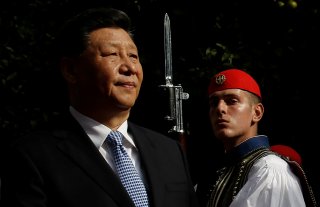
Why the Trump Administration Has Helped China The Trump administration mishandling of the coronavirus pandemic and the death of George Floyd has raised the stature of China, which is now perceived as the more competent country in the world. by Kishore Mahbubani

Reuters

Strange as it may sound, China will miss the Trump administration, if, and when, it goes.  

Undoubtedly, the Trump administration has been the most aggravating administration that China has had to deal with since the normalization process that Henry Kissinger began in 1971. It has launched a trade war that has damaged the Chinese economy a little. Restrictions have been placed on technology exports to China. A massive effort has been undertaken to cripple Huawei. Yet, the most galling move has been the effort to extradite Meng Wanzhou. Applying Western laws to Chinese citizens reminds the Chinese people vividly of the Century of Humiliation when Western laws were applied on Chinese soil.  

Yet, if the Chinese leaders think long-term and strategically, as they are wont to do, they could also calculate that the Trump administration may have helped China. Clearly, the Trump administration has no thoughtful, comprehensive and long-term strategy to manage an ever-rising China. Nor has it heeded the wise advice of key strategic thinkers, like Kissinger or George Kennan. Kennan, for example, advised that the long-term outcome of the contest with the then Soviet Union would depend on “the degree to which the United States can create among the peoples of the world” the impression of a country “which is coping with the problem of its internal life” and “which has a spiritual vitality.” No such impression has been created by the Trump administration. Post-coronavirus and post-George Floyd, America is delivering the opposite impression. In relative terms, the Trump administration has raised the stature of China, which is now perceived as the more competent country in the world.  

To be fair, America’s internal problems have preceded President Donald Trump. It is the only major developed country where the income of the bottom fifty percent has gone down for a thirty-year period leading to the creation of a “sea of despair” among the white working classes. John Rawls would have been appalled to see this. Indeed, as Martin Wolf of the Financial Times says, America has become a plutocracy. By contrast, China has created a meritocratic governing system. A meritocracy could well out-perform a plutocracy.  

Equally importantly, Kennan emphasized that America had to assiduously cultivate friends and allies. The Trump administration has seriously damaged relationships with friends and allies. In private, the Europeans are appalled. Walking away from the World Health Organization (WHO) when the world never needed the WHO more, especially to help poor African countries, was massively irresponsible. Not one American ally followed the United States out of WHO. The Trump administration has also threatened tariffs on allies like Canada and Mexico, Germany and France. All this does not mean that the rest of the world will rush to embrace China. Indeed, the Europeans have developed new reservations about working closely with China. Yet, there is no doubt that diminishing global respect for the United States opens more geopolitical space for China. Madeleine Albright once said “We are the indispensable nation. We stand tall and we see further than other countries into the future.” The Trump administration may succeed in making America a dispensable nation, presenting another geopolitical gift to China.  

The Trump administration has also ignored another wise piece of advice of George Kennan: to not insult one’s adversaries. No other Administration has insulted China as much as the Trump administration. Trump has said “China’s pattern of misconduct is well known. For decades, they have ripped off the United States like no one has ever done before.”  

In theory, such insults could have damaged the standing of the Chinese government in the eyes of its own people. The effect has been the opposite. According to the latest Edelman Trust Barometer, the country where the people have the highest trust in their government is China. It is 90 percent. This is not surprising. For the vast majority of Chinese people, the past forty years of social and economic development have been the best in four thousand years. Kennan spoke of domestic “spiritual vitality.” China enjoys it today. A Stanford University psychologist, Jean Fan, has observed that “in contrast to America’s stagnation, China’s culture, self-concept, and morale are being transformed at a rapid pace—mostly for the better.” The Chinese people are also acutely aware that China has handled the coronavirus crisis better than America. If America had the same rate of fatalities as China, then it would have had one thousand deaths instead of one-hundred thousand. Against this backdrop, the constant insults hurled at China have only provoked a strong nationalistic response, boosting the standing of the Chinese government. One small but critical point needs to be added here: no other government in the world hurls insults at China. America stands alone in this dimension, ignoring once again Kennan’s valuable advice: “And if there were any qualities that lie within our ability to cultivate that might set us off from the rest of the world, these would be the virtues of modesty and humility.”  

If he were alive today, then Kennan would first advise his fellow Americans to step back and thoughtfully work out a comprehensive long-term strategy before plunging into a major geopolitical contest against China. Any such strategy, heeding the advice of thinkers like Sun Tzu, would first require a comprehensive evaluation of the relative strengths and weaknesses of both parties. 

There is no doubt that America retains many magnificent strengths. It remains the most successful society humanity has created since human history began. No other society has sent a man to the moon. No other society has produced a Google and Facebook, Apple and Amazon, in short order. Even more remarkably, two of its biggest corporations, Google and Microsoft, are run by foreign-born citizens. No major Chinese corporation is run by a non-Chinese. China can tap the talents of 1.4 billion people; America can tap the talent of 7.8 billion, including talented Chinese. It would be a huge mistake for any Chinese leader to underestimate America. Fortunately, or unfortunately, that is not likely to happen. 

By contrast, in evaluating China’s relative strengths and weaknesses, the Trump administration is making the mistake of underestimating China. Here the supreme ideological conviction that democracies will always triumph against a communist party system creates a particular ideological blindness in America. In reality, functionally, the CCP does not stand for the Chinese Communist Party. It stands for the Chinese Civilization Party. The key goal of the CCP is not to revive communism globally. It is to revive the world’s oldest civilization and make it again one of the world’s most respected civilizations. This is the goal that energizes the Chinese people and explains the unusual vibrancy and vitality of Chinese society. Equally importantly, the Chinese civilization has historically been the most resilient civilization. As Professor Wang Gungwu says, it is the only civilization to have been knocked four times over four thousand years. Each time it stood up again. There is no doubt that Chinese civilization is now a great renaissance. 

It is therefore unwise for any American strategic thinker to assume that Americans cannot lose. It’s true that America hasn’t lost a major contest in over a hundred years but it has never had to deal with a competitor as formidable as China. Equally importantly, if the primary goal of the CCP is to improve the well-being of its people (and thereby revive Chinese civilization), there need not be a fundamental contradiction with the primary goal of any new American administration: to once again improve the well-being of the American people. Hence, when the Trump administration goes and America tries again to work out a more thoughtful long-term strategy towards China, it should consider a now unthinkable option: a strong Chinese civilization and a strong America can live together in peace in the twenty-first century. The world will be relieved and even cheer this outcome. And the American people will be better off. 

Tuesday, June 9, 2020

What Happenned to the 5G Protests? There have not, as of yet, been reports of attacks on 5G towers in the United States. by Stephen Silver

In recent months, due in part to a nonsensical conspiracy theory that 5G technology has something to do with the cause or spread of the coronavirus pandemic, there have been numerous reports of attacks on 5G towers and other infrastructure. The attacks have mostly been concentrated in the U.K. and parts of Europe, although there were some reports of them taking place in Canada more recently.

There have not, as of yet, been reports of attacks on 5G towers in the United States.

This past weekend, however, various entities inside and outside of government warned some protests or even attacks related to 5G could take place in the U.S. However, it doesn't appear that any actually did.

An organization called Stop 5G International, on their website, declared June 6 as the latest "International Stop 5G Global Protest Day." The organization held a webinar, and also offered a list of "suggested actions," which included raising awareness, hanging signs, signing and delivering the organization's appeal, and even a "playlist of counter-5G songs and inspiration."

The site does not in any way suggest any type of violence or property destruction, and while it listed several in-person events around the world to take place Saturday, the only ones scheduled in the U.S. were a noon rally on the front steps of a building in Los Angeles, and a " a small group of folks (social distancing)" in the forests in Oregon.

However, heading into the weekend, an advisory was issued by the Department of Homeland Security's Cybersecurity and Infrastructure Security Agency (CISA.)

The advisory, as reported by the website Cyberscoop, states that “while the U.S. has not seen similar levels of attacks against 5G infrastructure linked to the pandemic, the tactics used in Western Europe [have] begun to migrate to the U.S."

The memo also stated that, in the recent past, attackers in Tennessee had "physically disabled electrical breakers at more than a dozen cell towers," and that white supremacists had "used the encrypted messaging platform Telegram to encourage people to outfit drones with explosives and fly them toward tower sites."

In a separate note Friday, NATE: The Communications Infrastructure Contractors Association, issued a member advisory about the planned weekend protests.

"NATE as an organization has heard through official channels that there are 5G Global Protest Day activities being planned throughout the country this Saturday, June 6, 2020," the alert said. "NATE member companies set themselves apart by embodying the characteristics of work ethic, professionalism, safety and quality on a daily basis. NATE reminds our member companies and their employees to remain safe, exercise vigilance and report any unusual or suspicious activities that they witness when traveling to and working at tower sites this weekend."

One company working on the infrastructure, Ericsson, even suspended field work for the weekend in the U.S. and Canada, per Fierce Wireless.

Perhaps it was because activist attention was focused on the continuing protests around the country following the killing of George Floyd, or perhaps the 5G warnings were overstated, but there were no reports over the weekend anywhere in the U.S. or Canada of actual attacks on 5G towers or actual infrastructure.

There were protests in Canada, including one in Winnipeg and another in Kelowna, British Columbia, which also focused on vaccines and the calling for the end of coronavirus lockdowns. 

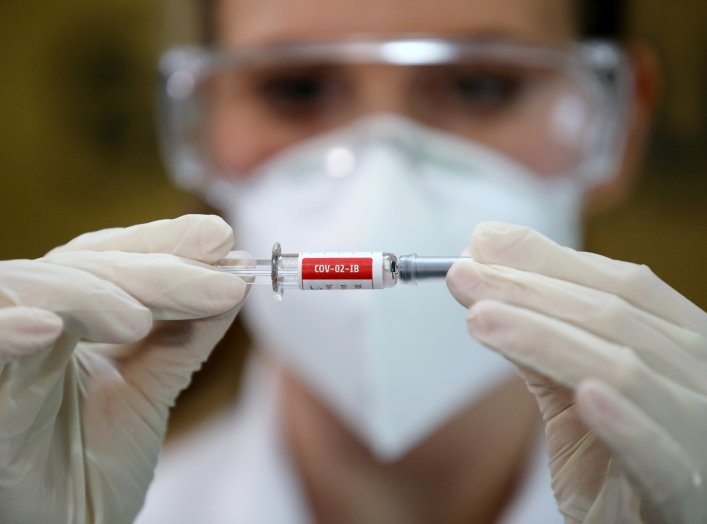
What Will Happen if the Coronavirus Vaccine Fails? A vaccine could provide a way to end the pandemic, but with no prospect of natural herd immunity we could well be facing the threat of COVID-19 for a long time to come. by Sarah Pitt

  There are  over 175  COVID-19 vaccines in development. Almost all government strategies for dealing with the coronavirus pandemic are base...