#Sponsored

Saturday, June 27, 2020

Open Your History Book: The Reasoning Behind China's Big Military Buildup China does not want to repeat history. by Harry J. Kazianis

Here's What You Need To Remember: A century of humiliation has taught Chinese planners that to allow military forces to be able to approach the coast and be able to build up forces for a possible attack invites strategic weakness and possible subjugation by foreign powers.

Over several years in this publication, I have been exploring the dynamics of the budding U.S.-China security dilemma—a high-tech drama pitting anti-access/area-denial (A2/AD) against what we used to refer to as Air-Sea Battle (ASB)—and have offered several different ways to lessen the possibility of such a dynamic from becoming cemented into the Asia-Pacific’s security architecture. However, China’s development and implementation of A2/AD clearly has various origins. One such origin that deserves to be explored is the “historical nightmare” of China’s subjugation at the hands of various colonial and Asian powers.

In many respects, China is trying to solve a centuries-old problem that never went away: how to defeat in battle military forces that are at least in a symmetrical sense superior to its own and will be for some time to come. If we alter our perspective and take a much longer view of Beijing’s own military obsolescence, a strategy that emphasizes anti-access makes tremendous sense. According to Admiral Wu Shengli, former commander of the PLA Navy, “in China’s modern history, imperialist and colonists initiated more than 470 invasions of China, including 84 large ones, from the sea.” If China’s military were to deter or halt the deployment of superior military forces into areas of Chinese territory or areas Beijing perceives as a core interest, another period of what leaders in China might see as a new form of subjugation could theoretically be avoided. A2/AD allows Beijing to compete with the United States asymmetrically—an important point when one thinks through how many years away China is from competing with America ship for ship or plane for plane.

The following serves as an account of what many Chinese consider their own historical nightmare at the hands of foreign forces and why A2/AD would protect China from being subjugated yet again.

A Lost Opportunity

There are several events in Chinese history that mainland scholars, politicians and academics point to that weakened the collective power of the Chinese nation and diminished its global standing for generations. Indeed, Chinese strategic planners are keenly aware they have missed multiple “revolutions” in military affairs looking back several centuries—a driving factor in China’s subjugation by the West and other Asian powers. Critical transitions from cold-weapon warfare (knives or blunt striking instruments) to hot-weapon warfare (such as guns and firepower) and from hot-weapon warfare to mechanized warfare (tanks, armored naval vessels, airplanes and so on) were lost opportunities to transform the military establishment into a modern fighting force.

The consequences were shocking. When well-armed Western powers forced their way into China two centuries ago, the Chinese were defenseless, thanks to obsolete technology. When Western powers developed mechanized weapons during and after World War II, China was in the midst of internal turmoil and suffered from foreign invasion (i.e., the Chinese Civil War and Japanese invasion); it did not have the capacity to keep up with the devel­opments of new military technology.           

“Century of Humiliation” Begins: The First Opium War

Numerous current Chinese scholars speak of China’s “century of humiliation” or subjugation by various powers that led, according to their line of argument, to the loss of China's great-power status, loss of territory, and in many respects, national sovereignty. Defeat on the battlefield marked the beginning of this century of loss and humiliation. The first major military loss at the hands of Western powers that had wide-ranging repercussions for China and large parts of the Asia-Pacific was its defeat at the hands of the British during the First Opium War (1839-1842). As scholar Richard Harris explained: “The Chinese have one very broad generalization about their own history: they think in terms of ‘up to the Opium war’ and ‘after the Opium war’; in other words, a century of humiliation and weakness to be expunged.”

The consequences of the conflict—China’s crushing defeat—were felt far and wide. Beijing’s geostrategic position in Asia was weakened dramatically. China’s military was crushed in a series of defeats by a vastly smaller, but technologically superior, British force. Chinese military technology, tactics and strategy were not on par with the West’s. This defeat sparked the first of what has been referred to as the “unequal treaties.” Five ports were opened to foreign traders, and the British colony at Hong Kong was founded (which would not be returned until 1997).  

The Sino-Japanese War

A second military defeat, this time at the hands of Japan, during the Sino-Japanese War of 1894-1895, also had wide-reaching consequences for Beijing. For several decades, Japan and China had spared in various domains—largely political and diplomatic—over control and influence on the Korean Peninsula. For China, Korea had been a vassal state, having been heavily influenced by Chinese culture. Japan, having undertaken a massive effort to Westernize under the Meiji Restoration, was undertaking efforts to bring Korea under its sphere of influence. Both nations were actively pursuing efforts to modernize their armed forces.            

While a larger study of the conflict has been done across many formats and is beyond the scope of this article, the war and its aftermath are of extreme importance. Japan would defeat China convincingly, most importantly at the Battle of the Yalu, an important naval victory. While China had by this time been clearly passed by Western powers and had lost considerable stature and territory, to now be defeated by a neighboring Asian nation-state was even more humiliating. Korea would be declared free of Chinese influence and placed effectively under Japanese control. China would be forced to pay large reparations to Japan. Tokyo would also receive the Liaodong Peninsula, which it was forced to give up, due to Western pressure.

A Chaotic 1930s, Civil War and World War II

A series of events from the early 1930s until the eventual victory of Mao’s communists in 1949, establishing the People’s Republic of China, would also have a lasting effect on today’s China. While each event is worthy of its own larger study, a narrow focus will be utilized for the purposes of this article.

In 1931, Japan occupied the Chinese territory of Manchuria, creating a puppet state named Manchukuo. In 1937, tensions flared once more when an incident at the Marco Polo Bridge would become the catalyst for full-scale war between China and Japan. Both nations waged a bloody conflict until the end of World War II in 1945. Large sections of Chinese territory were held by Japan, and vast areas of Chinese commerce, industry and farmland were destroyed. China was also in the midst of a civil war from 1927 until 1937, which was halted to combat the Japanese invasion. The civil war resumed in 1946, when China once again suffered severe losses. The Kuomintang or KMT under Chiang Kai-shek fled to Taiwan in 1949. The status of Taiwan to this day has yet to be resolved and is a major factor in Chinese strategic thinking on A2/AD.

China suffered dearly during this period of its history. Countless lives were lost during Japan's invasion and during the civil war. In 1937, China suffered the “Rape of Nanking” among other countless humiliations at the hands of imperial Japanese forces. Even though almost seven decades have passed since the end of World War II, Chinese and Japanese emotions on the subject are considerably heated, serving as a source of tension, which drags on positive bilateral relations.

Such a tumultuous period of Chinese history would have far and wide repercussions on the Chinese people, its collective sense of history and its national psyche. Chinese scholars have debated for several decades the role of such a period when thinking about its place in today’s international order. During this century, China would have to redefine itself, its place in the global order, its place in Asia and its own sense of history. As one scholar notes:

China had to redraw its world map: where it had for millennia sat comfortably at the center of a ring of tributary relationships with neighboring countries, it now found itself a weak competitor in a world of dozens or even hundreds of nation-states. Where Chinese rulers and intellectuals had before had little concept of an international arena, they now had to grapple with the notion that there existed a global system of power relationships whose dynamics – though almost entirely out of China’s control – would determine her fate.          

Chinese History: Chinese A2/AD?

As noted by many analysts (including myself), Chinese A2/AD strategy seeks to target selected perceived weaknesses in U.S. military technology, force structure and strategic doctrine—all while not having to match U.S. forces in all combat domains. At present, even though China possesses the second-largest economy in the world, it still does not have the economic or technological base to challenge America in a symmetrical military matchup. What China can do is devise an asymmetric strategy that is designed to inflict maximum damage on American forces if they were to intervene militarily close to China’s perceived interests along its coasts and out towards the first island chain.

History clearly shows us China has suffered from technological obsolescence on the battlefield for some time—allowing various nations to take advantage. A century of humiliation has taught Chinese planners that to allow military forces to be able to approach the coast and be able to build up forces for a possible attack invites strategic weakness and possible subjugation by foreign powers. Beijing does not feel it has the luxury of time to wait for the development of a first-class military if it were challenged by Washington or another great power. A2/AD solves an age-old problem for China and might just be able to at least deter America and others from possible infringement on China's core interests. And if history is any guide, it seems clear that is exactly the outcome Beijing wants.

Why the U.S. Navy Needs More Virginia-Class Attack Submarines Many in Congress are hoping the Pentagon receives enough funding to secure the acquisition of more Virginia-class attack submarines on a faster timetable to help offset an anticipated submarine shortage. by Kris Osborn

Many in Congress are hoping the Pentagon receives enough funding to secure the acquisition of more Virginia-class attack submarines on a faster timetable to help offset an anticipated submarine shortage, best leverage the many technical advances contained in the submarine and optimize the fast-growing execution of undersea reconnaissance missions. 

The House Committee on Armed Services Subcommittee on Seapower and Projection Forces announced its proposals for the mark-up of the National Defense Authorization Act for Fiscal Year 2021; the subcommittee recommends the restoration of a second Virginia-class submarine and the required advanced procurement to maintain the two-per-year build rate, as reported by Seapower Magazine. 

Additional attack submarines promise to bring new levels of undersea firepower, drone control and stealthy reconnaissance technology in the nearer term.

While firepower and attack weapons are naturally still a major area of focus for Virginia-Class submarines, the expanding ISR mission scope made possible by new technologies has provided key inspiration for senior Navy developers and members of Congress who have been working vigorously to increase the size of the attack submarine fleet.

Land weapons, port activities and other enemy movements in coastal or island areas are more difficult for deeper draft surface ships to access, often complicating surveillance missions – without giving away their position. Surface ships and the drones or aircraft they operate could, in a variety of operational environments, would be more “detectable” to enemy radar and sensors when compared to attack submarines. Given these and other variables, Virginia-class submarines are becoming increasingly critical to clandestine “intel” missions beneath the surface in high-risk areas. 

Virginia-Class submarines are engineered with “Fly-by-Wire” capability which allows the ship to quietly linger in shallow waters without having to surface or have each small move controlled by a human operator. With this technology, a human operator will order depth and speed, allowing software to direct the movement of the planes and rudder to maintain course and depth. The ships can be driven primarily through software code and electronics, thus freeing up time and energy for an operator who does not need to manually control each small maneuver, Navy program managers have told the National Interest.

This technology, using upgradeable software and fast-growing AI applications, widens the mission envelope for the attack submarines by vastly expanding their ISR potential. Using real-time analytics and an instant ability to draw upon and organize vast databases of information and sensor input, computer algorithms can now perform a range of procedural functions historically performed by humans. This can increase the speed of maneuverability and an attack submarine's ability to quickly shift course, change speed or alter depth positioning when faced with attacks.

“The most important feature for maneuvering in littoral waters is the fly-by-wire control system, whereby computers in the control center electronically adjust the submarine's control surfaces, a significant improvement from the hydraulic systems used in the Los Angeles-class,” a 2016 Stanford University “The Future of Nuclear Submarines” paper by Alexander Yachanin writes.

The U.S. Navy’s 2018 “Commander’s Intent for the United States Submarine Force,” writes - “We are uniquely capable of, and often best employed in, stealthy, clandestine and independent operations……. we exploit the advantages of undersea concealment which allow us to: Conduct undetected operations such as strategic deterrent patrols, intelligence collection, Special Operations Forces support, non-provocative transits, and repositioning,” the Navy strategy document writes.

Virginia-class subs are armed with Tomahawk missiles, torpedoes and other weapons able to perform a range of missions; these include anti-submarine warfare, strike warfare, covert mine warfare, ISR (Intelligence, Surveillance, Reconnaissance), anti-surface/ship warfare and naval special warfare, something described as having the ability to carry and insert Special Operations Forces. Future Virginia-Class submarines provide improved littoral (coastal waters) capabilities, sensors, special operations force employment, and strike warfare capabilities.

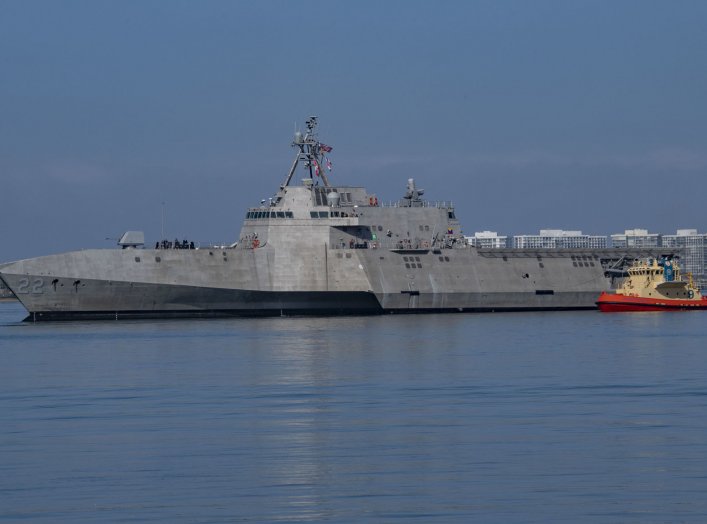
The U.S. Navy Just Landed Another Littoral Combat Ship The Navy commissioned Kansas City administratively via naval message, due to public health safety and restrictions of large public gatherings related to the novel coronavirus pandemic and transitioned the ship to normal operations. by Peter Suciu

Wikimedia Commons / Mass Communication Specialist 3rd Class Kevin C. Leitner
In the world of professional football there had long been a rivalry between the NFL’s (formerly) San Diego (now Los Angeles) Chargers and the Kansas City Chiefs, but the city that is known as "the birthplace of California" is now the home port for the USS Kansas City (LCS 22), the twenty-first Independence-variant littoral combat ship to be commissioned into the U.S. Navy. The warship arrived in its new homeport at the end of last month.

“I am extremely proud of all the hard work the crew has done to complete the sail around and prepare us to officially join the fleet on commissioning day,” said Cmdr. RJ Zamberlan, Kansas City’s commanding officer when the ship arrived in San Diego. “We are honored and excited to represent the Navy, the nation, and our namesake, as well as fulfill the ship’s motto, ‘United We Stand, Divided We Fall.’”

LCS 22 was designed and built by Austal USA in collaboration with General Dynamics in Mobile, Alabama. Prior to its departure from Mobile, the ship’s crew conducted a twenty-one-day restriction in movement (ROM) in accordance with the U.S. Navy pre-deployment guidelines. 

Last Saturday, the Navy commissioned Kansas City administratively via naval message, due to public health safety and restrictions of large public gatherings related to the novel coronavirus pandemic and transitioned the ship to normal operations.

“This Independence-variant littoral combat ship will continue our proud naval legacy and embody the spirit of the people of Kansas City,” said Secretary of the Navy Kenneth J. Braithwaite. “I am confident the crew of the USS Kansas City will extend the reach and capability of our force and confront the challenges of today’s complex world with our core values of honor, courage and commitment.” 

USS Kansas City is the second ship to be named for Kansas City, the largest city in Missouri—however, the name was originally assigned to a heavy cruiser that was under construction during World War II. Construction was canceled after one month due to the end of the war. The name Kansas City was then assigned to the Wichita-class replenishment oiler AOR-3 in 1967, and that ship saw service in the Vietnam War and Operation Desert Storm before being decommissioned in 1994. 

USS Kansas City will be homeported in San Diego with her sister ships, which include the USS Independence (LCS 2), USS Coronado (LCS 4), USS Jackson (LCS 6), USS Montgomery (LCS 8), USS Gabrielle Giffords (LCS 10), USS Omaha (LCS 12), USS Manchester (LCS 14), USS Tulsa (LCS 16), USS Charleston (LCS 18), and USS Cincinnati (LCS 20). 

Mission-Focused, But Problematic 

The LCS is a fast, agile, mission-focused platform that is designed to operate in near-shore environments, but also capable of conducting open-ocean tasks and addressing twenty-first-century coastal threats including submarines, mines and swarming small craft. The LCS is also capable of supporting forward presence, maritime security, sea control and deterrence.

However, the Navy has dealt with issues with the first four of its LCS vessels, and earlier this year the Navy’s budget director suggested it would cheaper to decommission the vessels than to upgrade and repair the warships. After spending $30 billion over a period of around two decades, the U.S. Navy has managed to acquire just thirty-five of the thirty-thousand-ton-displacement vessels. 

One issue is that the LCS warships aren’t as crucial for inshore naval warfare as one suggested. The “program has fulfilled little if any of its early promise yet could provide value in the future if put to creative tactical use.” 

While the modular design of the ship was hyped up, it lacked its striking potential once its over-the-horizon anti-ship missile that constituted its main battery for surface warfare was canceled. Instead, the Navy substituted Longbow Hellfire missiles, which while lethal had an effective range of just 6.84 miles—something that was seen as a problem as anti-ship missiles can now strike targets from hundreds of miles.

Efforts to upgrade the vessels have included installing the Naval Strike Missile, a thirteen-foot-long, sea-skimming missile that would become the LCS’s most powerful weapon. In addition, the Navy has explored ways that its Fire Scout drones could be employed on the LCS. The Fire Scout drone is an indispensable part of the ship's surface, countermine and anti-submarine warfare missions; it is equipped with advanced mine-hunting sensors, aerial surface scanners and target-locating Electro-Optical/Infra-Red cameras.

With these upgrades it is hoped that the Navy can right the course for the LCS—but already it has canceled twenty future LCSs in place of twenty new missile frigates.

See This Picture? Meet Israel’s New Starliner Drone. by Seth J. Frantzman

A new type of large drone, capable of doing surveillance or border security and other missions, may be flying over civilian airspace of countries in the near future. While large drones have generally been used in maritime areas or to conduct surveillance and strike missions as part of the global war on terror, in contested battle spaces, there is a need for them to finally be able to fly in the same areas as commercial aircraft. Elbit Systems, one of Israel’s largest defense companies and drone manufacturers, has built the Hermes 900 StarLiner—a UAV that is fully compliant with NATO’s Standardization Agreement known as STANAG 4671. It can be integrated into NATO members airspace and certified for civilian airspace.

The StarLiner was announced in 2018 and, like most complex hi-tech large drones, it must go through rigorous paces to meet the needs of militaries. It has conducted Civil Aviation Authority certified flights over Masada, the historic Jewish desert fortress that dates from the Roman era which overlooks the Dead Sea. It is supposed to be delivered to Switzerland and other customers in the future.

StarLiner and the concept behind it are part of the challenges that drone manufacturers face. Israel is a historic pioneer in drones, once dominating the global market. However, new competition from China and other countries presents a challenge. One issue is that large medium-altitude long-endurance drones, known by the acronym MALE, face questions as to how they can be used both abroad to monitor terror groups, but also at home. This is controversial because UAVs got a negative reputation during the War on Terror as they were accused of carrying out deadly and unregulated airstrikes in places like Pakistan. Revelations that a drone monitored recent protests in the United States has been reported as if there is something intrinsically wrong with using an unmanned plane rather than a manned helicopter to conduct surveillance for law enforcement.

Today, drones are carrying out more missions that go beyond the popular military role that systems like Predator or Reaper have been used for. This includes more maritime missions or border security and counter-drug smuggling. Israel’s solutions, and particularly Elbit’s model, is to see the future of drones as more about adding different capabilities to the existing successful platforms. That could mean more sensors, more artificial intelligence, or even the ability to do search and rescue missions. In May, Elbit’s Hermes 900 UAV was delivered to an unnamed Southeast Asian country with a new ability to help rescue people at sea. This means instead of sending numerous piloted aircraft to search the ocean for missing mariners, a drone can be sent to drop life rafts, saving pilots several hours of time.

With the need to integrate drones for more missions that might take place in civilian airspace, Elbit built the StarLiner, based on the success of the Hermes 900. The Hermes 900 is a large drone with a weight of 1,180 kg that can fly up to thirty-six hours up to 30,000 feet with a payload of 350kg. This format of the Hermes is comparable in function and appearance to the Predator or Reaper. It also came with experience, rolled out when Elbit’s smaller Hermes 450 had some 170,000 flight hours in 2009 and would reach 300,000 several years later. The Israeli Air force said the Hermes 900 was operational during its 2014 conflict with Hamas.

Hermes 900s have been sold all over the world, especially in Latin America, and it has been used by the UN and EU. Israel’s Globes media reported in 2017 that the unit cost was several million dollars, but customers who buy UAVs don’t buy just one airplane, they buy the container to operate it, communications and also several platforms so that they can be flying them at all times, even if one needs to be on the ground for maintenance or changes in payloads.

Where does StarLiner fit into all this? Instead of narrowly tailored missions, such as searching for insurgents in Mali, a multi-mission capable large UAV that can fly in non-segregated civilian airspace in places like Europe is a necessity today. Starliner has a diesel engine and has been improved to fly in bad weather conditions. It is to be fitted with radar cooperative and non-cooperative Detect and Avoid (DAA) features for Remotely Piloted Aircraft Systems (RPAS). What this means is that in congested airspace you may have aircraft that properly move to avoid collisions, but you may have aircraft that, for whatever reason, do not. Scientific academic studies have looked at this problem of integrating UAVs into civilian airspace.

The idea is that the Starliner will have triple redundancy in its ability to avoid collisions. This is the future Israelis think of in terms of new drone technology. Western countries will be buying more UAVs, and the market for these kinds of medium-altitude long-endurance models is already some $2.5 billion globally. But it’s a competitive market. However, on the civilian or homeland security use of these larger UAVs, no one so far is buying Turkish, Chinese, or Russian drones to do border security in Europe. Israel would like to play a greater role in these areas, especially at a time when the United States is reluctant to export its Predators and Reapers, and as the Eurodrone concept unveiled in 2018 has gotten off to a slow start. There are others out there with similar ideas, such as Leonardo’s Falco Xplorer, which since 2019 is targeting the civilian non-segregated airspace.

Countries are buying up drones at an increasing rate, seeking to outfit military units from the platoon level up with an array of multi-layered UAV systems from the smallest quadcopters to giant drones like the U.S. Global Hawk that Iran shot down in 2019. Israel’s Elbit sold more than one thousand drones to one unnamed Asian country last year and is upgrading its Hermes 900 for another country in South America. Many of these customers are classified, which reveals the degree to which drones are still seen as controversial or secretive. With UAVs like the StarLiner, that likely won’t be the case as drones come into the limelight as it were. The race is on now to have more drones ready and certified for civilian airspace. Elbit says it is ready for that new frontier.

Israel's Military Is a Powerhouse for 1 Big Reason: It Makes U.S. Weapons Better. by Charlie Gao

Key Point: Israel takes its security seriously. Towards that end it buys modified American equipment or else changes them itself.

The Israel Defense Forces field a wide variety of American military equipment, due to significant amounts of American military aid to Israel. However, American equipment has not always been the best suited to the tough desert and urban conditions encountered by the IDF. As a result, American equipment in Israeli service is often extensively modified to fit the IDF’s unique mission. Here are some unique derivatives of American equipment that the IDF fields.

1. MAPATS Antitank Missile

The IDF has had a long relationship with the antitank guided missile. In the long desert approaches that surround Israel, antitank missiles can direct the flow of combat and are very effective weapons. While the first ATGMs fielded by Israel were the French SS.10 and SS.11, it was replaced in the late 1970s by the American TOW (Orev in IDF service) missile. However, due to its wire-guided nature, the TOW has range limitations and cannot be used in all circumstances. Bodies of water, trees and power lines can disrupt the TOW’s guidance or endanger the TOW’s operator. As a result, the Israelis developed a version of the TOW that used laser guidance to avoid these issues. A new engine and improved warhead also gave it superior penetration and speed to the original TOW. The MAPATS has seen export success, although it is being replaced by other, newer Israeli ATGMs of wholly indigenous design.

2. Israeli M16 and CAR-15 Variants

While nominally most of the IDF has switched over to the Tavor, variants of the M16 continue to serve in the IDF. However, in the late 1980s and 1990s, these rifles were the frontline rifles of the IDF, replacing the heavier FN FAL and the Israeli Galil (although Galil carbines remained in service in the Armored corps, due to their shorter lengths with stocks folded). In the aughts, Israel set about modernizing these rifles. Due to the largely urban nature of combat the IDF Infantry engaged in, the long twenty-inch and 14.5-inch barrels of the M16s and Colt 653s were deemed too long. The barrels were sawn off to around 12.5 inch length, and the resulting carbines were called “mekut’zrar.” Furniture on these varied, but always had an eye towards the practical. Fabric bands could be wrapped around the plastic handguards to make them more rigid and stop them from creaking, red dots were added straight onto the carry handles and stocks were often replaced with modern six-position M4 stocks. The results were relatively modern, lightweight carbines on the cheap. Mekut’zrar carbines are still seen in service today, although they’ve been supplanted by new stocks of M4s and the Tavor series.

3. Machbet Self-Propelled Antiaircraft Gun

While the M163 VADS was always considered to be kind of a “stopgap” solution for the short-range antiair defense solution for the U.S. military, the VADS saw significant Israeli service in the 1982 Lebanon War. In addition to scoring a kill on a Syrian MiG-21, they provided valuable ground support, suppressing infantry in urban and mountainous areas with their rapid-fire twenty-millimeter cannons. While they were phased out of American service in the 1990s and replaced with the better-armored but slower-firing M6 Bradley Linebacker, Israel opted to upgrade its VADS to the new “Machbet” standard instead, fitting an optoelectronic tracking system, better radar, a quad-Stinger pod and an ADA network datalink to the VADS to make it effective against a wider variety of targets and faster reacting.

4. The F15 Baz Meshopar

Israel was one of the first customers for the American F-15 fighter. It has served admirably as the backbone of the Israeli Air Force (IAF) throughout the late 1970s to the present day. In addition to its superb performance in the air-to-air role during the 1982 Lebanon War, the F-15 was also used in Operation Opera and Operation Wooden Leg, both long-range-strike missions. These were done with the addition of some indigenous guidance and sensor pods. While Israel later acquired variants of the ground-attack F-15E Strike Eagle under the name F15I Ra’am, they also updated their first- and second-gen F-15s to a new standard with indigenous electronics and parts, under the name F-15 Baz Meshopar, or Baz 2000. The upgrade included a new radar with AIM-120 and Israeli Python missile compatibility, redone cockpits with a new throttle and stick and glass cockpit, and improved electronic-warfare capability. This upgrade program ran from 1995 to 2001, and these upgraded F-15s are expected to continue to serve far into the future.

F-35A Joint Strike Fighters Banned from Flying Near Lightning over Explosion Concerns. by Oriana Pawlyk

Lockheed Martin Corp. recently paused F-35 Joint Strike Fighter deliveries over an internal gas issue that could cause the stealth fighter to explode if struck by lightning.

The company said Wednesday that maintainers performing a routine maintenance check at the Ogden Air Logistics Complex in Utah found damage to a tube within the Onboard Inert Gas Generation System, known as OBIGGS, in the Air Force's variant of the Lightning II jet.

"Lockheed Martin initiated a delay in deliveries while we verified F-35 production is conforming to specifications with regard to OBIGGS installation," the company said in a statement. "We are working with the F-35 Joint Program Office on a root cause corrective action investigation to determine next steps, as it appears this anomaly is occurring in the field after aircraft delivery."

While deliveries have resumed after a nearly four-week pause, the JPO has advised local F-35A squadron commanders to avoid flying "within 25 miles of lightning or thunderstorms," according to the statement. Lightning strikes on aircraft are statistically rare, occurring about once per year according to the Federal Aviation Administration.

The advisory guidance will remain in place until the root cause and corrective action investigation is complete, said JPO spokeswoman Brandi Schiff. "The safety of F-35 operators remains an enduring high priority for the JPO," Schiff said in an email.

Earlier this month, Bloomberg reported the flawed tubing was found within 14 of 24 Air Force models of the fighter jet undergoing inspection. Lockheed Martin spokesman Brett Ashworth told Defense News the flaw seems to be limited to the Air Force's variant of the jet, which is also the version flown by the majority of the program's international partners.

The OBIGGS works to replace much of the oxygen built up in the fuel tank with nitrogen. Doing so helps prevent vapors in the fuel tank from combusting should the jet be struck by lightning.

The F-35 has seen this problem before: The Pentagon's Director of Operational Test and Evaluation (DOT&E) disclosed the deficiency, dating back to 2009, in a 2012 report, saying, "The system is not able to maintain fuel tank inerting through some critical portions of a simulated mission profile."

The Defense Department at the time called for a similar moratorium on flights during storms to avoid lightning strikes. The deficiency prompted a redesign to "more uniformly distribute the nitrogen-enriched air throughout the fuel tanks," according to a DOT&E report.

The flight restrictions were lifted in 2014 following a fix, according to Defense News.

The F-35 program's total cost has been projected at more than $1 trillion over a 50-year service lifetime. Its past has been plagued with breakdowns -- including engine fires, structural cracks, and peeling and crumbling insulation in its cooling lines -- along with cost overruns.

Production was also halted for two weeks in November after developers discovered a "co-mingling" of different types of fasteners being used on the aircraft.

Despite continuing issues, the Pentagon in October finalized a $34 billion agreement with Lockheed for the next three batches of F-35s -- firming up a deal for 478 F-35 aircraft, the largest purchase to date.

RIP, F-35: Meet the Air Force and Navy’s 6th Generation Stealth Fighter Programs. by Caleb Larson

Both the United States Air Force and the United States Navy have separate programs for getting a 6th generation fighter into the air.

The Air Force and the Navy both fly the 5th generation F-35 jet, with the Air Force also being the sole user of the F-22 Raptor, perhaps the world’s stealthiest jet fighter. Despite the airframe’s dominance, work is already underway on a 6th generation fighter.

Little is known about either the Navy or Air Force 6th generation fighter programs—and this worries the House Armed Services Committee. According to work done on the Fiscal Year 2021 defense policy bill, up to 85% of the funding requested for the NGAD programs could be withheld until an independent review is done.

But what are the programs like? Though both branches’ programs share the same name, Next Generation Air Dominance, this is where the similarities likely end.

Navy Next Generation Air Dominance

The Navy effort is cloaked in mystery, though it would replace their F/A-18E/F Super Hornets. The Super Hornets are not particularly old, but the design is considered unstealthy despite measures made to reduce its radar cross section. Survivability at sea against stealthy aircraft in the future is questionable. The Navy’s replacement is tentatively called the F/A-XX.

In order to free up funding for the F/A-XX program, the Navy would like to cut back on future Super Hornet orders, reducing their 2021 order of thirty-six down to just twenty-four airframes. The savings freed up by buying twelve less Super Hornets would then be rolled over into the F/A-XX budget in future years. The House Armed Services Committee wasn’t sold on the idea however and urged the Navy to not cut back on Super Hornet orders.

Air Force Next Generation Air Dominance

On the other hand, the Air Force wants to take a different approach, what they call the Digital Century Series. The name hearkens back to the so-called century series of jets designed as the United States entered the jet age.

A number of different companies quickly designed and prototyped the new century series jet designs, and fast. Familiar airframes like the F-100 Super Sabre or the F-105 Thunderchief are several notable examples. Market competition resulted in a high number of jets that were rapidly prototyped and put into service and enabled the United States to field a relatively wide array of airframes with differing capabilities.

The rapidity with which new designs were drawn up and then entered service stands in stark contrast to newer programs like the F-35, which proceeded at a glacial pace, taking over a decade from inception to adoption.

Rather than building up new technologies over time, the digital century series would ask America’s aerospace industry to use existing technology to rapidly get the best possible airframe into service in just a few years. Competitions would be held every few years and new fighters would quickly be put into service.

Postscript

Whatever the final design of the Air Force and Navy’s Next Generation Air Dominance programs, they’ll both have to convince Congress that their plans are worth the cost. Though not much is known about the NGAD, watch this topic closely as new developments come forth.

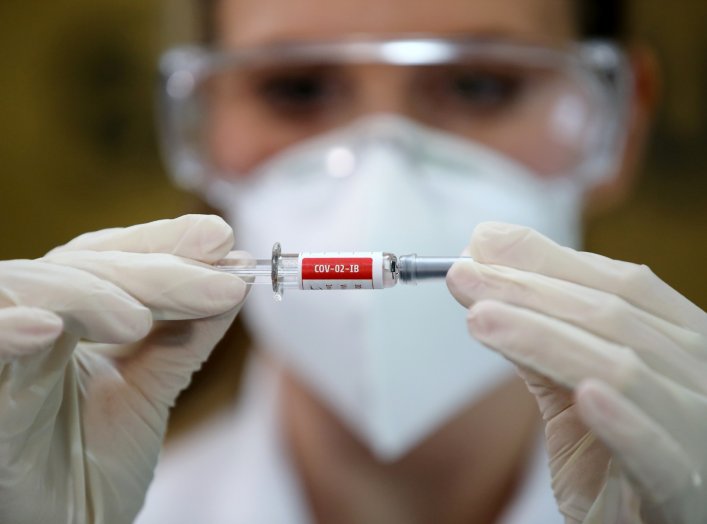
What Will Happen if the Coronavirus Vaccine Fails? A vaccine could provide a way to end the pandemic, but with no prospect of natural herd immunity we could well be facing the threat of COVID-19 for a long time to come. by Sarah Pitt

  There are  over 175  COVID-19 vaccines in development. Almost all government strategies for dealing with the coronavirus pandemic are base...