#Sponsored

Tuesday, July 7, 2020

China and Taiwan Could Be Headed Towards a Showdown. What Should America Do? by James Holmes


“Independence Support Spikes,” blared a headline this week in the Taipei Times, one of my favorite erstwhile publishing haunts. And blare it should. A Taiwanese Public Opinion Foundation poll indicated that a striking 54 percent of respondents favor early independence from China, 23.4 percent back the cross-strait status quo, 12.5 percent favor early unification with China, and the remainder made no response or were unsure. Breaking down the numbers among those who prefer the status quo—who in effect are content to postpone settling the question indefinitely—the pollsters found that 64.4 percent of respondents support independence, now or later, while just 17.8 percent endorse unification across the Taiwan Strait.

The poll shattered longstanding patterns in popular opinion. Declared foundation chairman Michael You: “In my research on public surveys on these issues over the past 30 years, this is the highest rate of support among Taiwanese for independence,” not to mention “the lowest figure for people supporting unification with China.”

And indeed the breakdown is stunning. For many years opinion on the island was steady and predictable. Some small percentage, generally under 10 percent of the electorate, generally favored either immediate independence or immediate unification. The middle 80 percent or so were content to kick the can down the road in hopes of getting their wish sometime in the indefinite future, whether that wish was for unification or for independence. And why not? I used to spend a fair amount of time on Taiwan and found the status quo there pretty darned pleasant. Some large share of that 80 percent backed eventual independence while the remainder backed eventual unification. The proportions sidled gradually toward independence as demographics shifted. Youthful islanders defined themselves as Taiwanese while the elder generation, many of mainland origins, went to their reward. Events seem to have accelerated that trend—as You notes.

Why the sudden surge in pro-independence sentiment?

Depicting it as a “spike,” as the Times did, implies that this is a passing phase. After all, the curve tracing a spike ascends along a steep upgrade, reaches an apex, then plummets. Chairman You attributed the results mainly to the coronavirus pandemic, saying he could imagine no other “reasonable explanation for the results.” Doubtless there’s something to that. By most accounts President Tsai Ing-wen’s government in Taipei handled the pandemic well, helped by Taiwan’s island geography. The government could regulate the flow of people across its frontiers, keeping the infected out to contain the problem while simplifying the task of preserving public health within. Taipei would lose the authority to control the island’s borders should it be subsumed within China. Poll respondents, it appears, want to preserve their island’s de facto sovereignty in order to ensure the authorities can control its borders and ward off cross-border infection.

Plausible. Oddly, though, You ruled out the China factor when interpreting the survey results. If the pandemic is the only reasonable explanation, then everything else must be unreasonable. Right? But Taiwanese pay attention to their surroundings, which include far more than disease outbreaks. The coronavirus is neither the only threat to Taiwan; nor is it a mortal threat. The mainland does pose a mortal threat. Beijing doesn’t bother concealing its aims vis-à-vis the island, and it shows anew every day that it is prepared to use military might to get its way, from the East China Sea to the South China Sea to the frontier with India.

And then there’s Hong Kong. Taiwanese have long understood that Hong Kong’s fate today would be theirs tomorrow should they submit to unification. That fate has taken a dismal turn. Beijing has been constricting Hong Kong’s freedoms for many years. Just this week the Chinese Communist Party (CCP) enacted “national security” legislation fabricating vaguely defined crimes and granting officialdom sweeping police powers to punish them. In so doing Xi and his henchmen demolished the “one country, two systems” framework governing Hong Kong affairs, whereby the city was supposed to remain autonomous until around midcentury. That’s the same arrangement they have offered Taiwan to coax the islanders into accepting mainland rule. The situation in Hong Kong reminds anyone paying attention that Beijing regards no commitment as forever, no matter how solemn. All promises are perishable—and CCP magnates determine when one hits its expiration date.

Small wonder President Tsai has rejected overtures from the mainland under the guise of one country, two systems. No leader knowingly accepts a suicide pact. And that’s what it would be. If Taipei consented to unification under any formula, or if China’s People’s Liberation Army (PLA) launched a cross-strait offensive and won, the democratic government in Taipei would cease to exist. Taiwanese would lose their liberties over time, just as Hong Kong residents have. With apologies to You, it’s eminently reasonable for Taiwanese to endorse policies aimed at fending off such an apocalyptic destiny. If that’s what respondents are saying, the proper metaphor for the poll may not be a spike but a tectonic shift that permanently alters the public-opinion landscape. Pro-independence sentiment will endure even as the pandemic subsides.

Now, military preparations across the Taiwan Strait are nothing new. A standard talking point among officials in Taipei lists the number of ballistic missiles the PLA has emplaced on the mainland within striking range of the island. Though potent, however, missiles remain over the horizon and mostly out of public view within their launchers. They are abstract. Rocket forces have minimal emotional resonance with people not schooled in military technology, including most ordinary Taiwanese. But the Chinese Communist Party has stepped up its threats over the past year in in-your-face fashion. PLA warships now cruise around the island’s periphery as a matter of course while PLA warplanes routinely probe its airspace. These threats are readily intelligible to anyone, as though calculated to galvanize opinion among the islanders.

Hand it to CCP strongman Xi Jinping: he is a uniter. His bluster and saber-rattling may well unite Taiwanese behind the cause of independence.

So Michael You’s interpretation of the survey results makes sense but remains incomplete. He is correct that threats rally people. Self-preservation is an irresistible motive in human affairs. Self-help is a common remedy. Taiwanese may see independence as a way to help themselves in the face of both disease and cross-strait aggression—especially if they believe they could uphold their independence despite the military onslaught the mainland has vowed to undertake. (Beijing wrote its threat into law many years ago.) A majority may believe just that judging from the 55 percent of poll respondents who disclaim fears of attack—mirroring the proportion who espouse independence.

That self-confidence augurs well for coalition building and maintenance between Taiwan and the United States. Readers of these pixels know that one go-to passage in the strategic canon comes from Carl von Clausewitz, who observes that the value a society attaches to its “political object,” or goal, determines “the sacrifices to be made for it in magnitude and also in duration. Once the expenditure of effort exceeds the value of the political object, the object must be renounced and peace must follow.” Thinking about wartime costs and benefits resembles purchasing something on an installment plan. The magnitude of the effort is the amount paid out in each payment, measured in lives, national treasure, and military hardware. The duration is how many payments it takes to pay off the balance. Multiplying the two yields the total cost of some political aim.

In other words, a society has to prize something dearly to make steep payments over the long term.

Try a commercial analogy. If you prize a luxury car and can afford one, you might dig deep and purchase a BMW roadster. If you don’t care that much about bling or can’t afford a flashy ride, you settle for something less expensive—maybe even a used Ford. Is keeping Taiwan independent a BMW or a Ford for the United States? The value Americans assign to it—how much they treasure the island’s independence—dictates how much they’re willing to spend on it. Taipei needs to convince its ally that it is a BMW selling for a low, low price. It needs to show that an independent Taiwan is precious to Americans. In Clausewitzian parlance, the value of the object is high. And Taipei needs to show that the cost of protecting Taiwan is affordable for the United States, the cheaper the better. The magnitude and duration of the effort are bearable under Clausewitz’s formula.

Message: keeping Taiwan free is a bargain!

Public Opinion Foundation polling data should abet Taipei’s cause. Allies help those who help themselves. Much of Winston Churchill’s diplomacy during the dark days of 1939-1941 aimed at convincing a reluctant United States that Great Britain would stand against Nazism. And so it did—buoyed by inspired leadership and public fortitude. An apathetic Britain would have looked like a losing cause. A plucky Britain merited U.S. support. It was extraordinarily valuable to the United States and thus merited an effort of lavish magnitude and long duration. If a majority of Taiwanese both covet independence from China and are willing to fight for it, the leadership in Washington will find it easier to gather popular support on this side of the Pacific—and to order U.S. forces into action.

Succoring free peoples is an idea that resonates in American society, but Taiwanese must not kid themselves. Washington will not automatically honor its informal security commitment to Taiwan. Like Britain at the outset of World War II, Taiwan must show itself to be a worthy and affordable cause. For its part, Beijing will try to depreciate Taiwan’s value to Americans while convincing them they will have to pay BMW prices for a clunker—if they can afford the sticker price at all. Xi will try to turn Clausewitzian cost/benefit logic to strategic advantage. A fair number of doomsayers here in the West seem receptive to such messaging, writing off the island as not worth the effort or expense.

How will Washington come down in the cross-strait standoff? There are hopeful signs. The latest: recently the War Zone carried a story about soldiers from the U.S. Army’s 1st Special Forces Group, the famous Green Berets, training with their counterparts on Taiwan. Releasing such footage is rare. It signals to influential audiences, including Taipei and Beijing, that the U.S. leadership does believe Taiwan is a worthy cause and is prepared to come to its aid in times of strife. It signals that Washington has skin in the game of Taiwan’s independence and will be there for the islanders should war come. Putting American lives in harm’s way is as firm a commitment as there is. It could deter Beijing. And disclosing Green Beret operations signals that the U.S. and Taiwanese armed forces work together on practical matters. Armed forces fight the way they train. If two partners train together regularly, they’re apt to fight as one.

Will it be easy to defend Taiwan? No. But John F. Kennedy delivered a speech at Rice University in 1962 in which he asked rhetorically, “why does Rice play Texas?” (He was referring to the gridiron mismatch between the Texas universities.) JFK proclaimed that societies—whether it’s the beleaguered Rice football program or the American people—attempt great feats “not because they are easy, but because they are hard.”

Let’s get on with it.

America's Largest Nuke: Here's What the B83 Nuclear Bomb Can Do. by Caleb Larson

Key Point: This nuke could cause a lot of damage. And it is only a regular gravity bomb.

The B83 is one of two so-called “dumb” or unguided nuclear bombs that the United States maintains as a part of its post-Cold War Enduring Stockpile arsenal. Along with intercontinental ballistic missiles and other smaller nuclear-capable bombs, stocks of the B83 are kept in case of emergency. It replaced a number of older American free-falling weapons, and is big.

At nearly one and a half tons, the B83 is the largest nuclear bomb that the United States currently keeps. Its nuclear tiled is 1.2 megatons—significantly more powerful than either of the nuclear bombs dropped on Hiroshima and Nagasaki during World War II. It’s big, it’s powerful, and it’s had a colorful history.

Bombs Away

Though often thought of as a domain best left to Hollywood, asteroid impacts could pose a real danger to the United States. Like the blockbuster film Armageddon showed, a large enough interstellar object could end life on Earth as we known it. The threat of impact is great enough, that NASA designed a spacecraft with just one purpose—to deflect objects on a collision course with Earth.

The launch vehicles would be launched in a staggered succession, allowing NASA several “shots” at any Earth-bound projectile in case the first interceptors failed to detonate, went off course, or experienced any other operational hiccups.

The so-called nuclear interceptor would carry a total of six packages that would each carry the nuclear components from a B83. At a close enough distance, the hope was a large enough nuclear explosion would pummel the threatening interstellar body away from Earth—though this would be no guarantee of survival.

Bunker Buster

The B83 was also tentatively evaluated as a nuclear bunker-busting munition. Modifications were made to the projectile’s nose to allow it to survive impact with earth and reinforced concrete, though using nuclear weapons is fraught with political considerations. The design may have never been finalized. Either way, the Massive Ordinance Penetrator (aptly named considering its 30,000 pound, or over 13,500 kilogram weight) is the primary bunker busting bomb in the United States’ arsenal.

Postscript

In any case, the end of the line may be approaching for the B83. Its smaller and less-powerful little sibling, the B61 was recently upgraded. Though costly, the upgrades will keep the B61 in service for at least another twenty years. And the B83? It might be reserved in the future exclusively for use with the Space Force.

China Has a Plan to Crush the Tibetan Diaspora by Gordon G. Chang

His Holiness the Dalai Lama turns eighty-five today. 

The atheists in Beijing are eagerly waiting for him to die so that they can pick his successor. They will do almost anything to gain control of Tibetan Buddhism—and all religion in China for that matter.  

Tibetans wear the robes of tragedy. His Holiness fled China-controlled Tibet in 1959, crossing the Himalayas on foot into India just ahead of Chinese soldiers. He and his followers have now settled into the foothills of Dharamshala.

In that town and around the world, Tibetans are now celebrating the Year of Gratitude for His Holiness, which began July 1. The famed monk, despite the celebration, sees his work is not yet done. “I will also be there for around twenty years,” the Dalai Lama said on June 5, while giving the Bodhicitta empowerment, which is intended to cultivate an altruistic, awakened mind. 

June 5 was an auspicious holy day in the Buddhist calendar for it marked the birth, enlightenment, and death of Buddha.

China is particularly interested in the Dalai Lama’s death. When he dies, Tibetans believe he will reincarnate. Beijing has demanded it have the right to pick the successor, who will be the fifteenth of this line. 

In normal times, the Panchen Lama and Dalai Lama “recognize” each other’s reincarnations, in other words, choose each other’s successors. The current Dalai Lama recognized the eleventh Panchen Lama on May 14, 1995. That was too bad for the six-year-old Gedhun Choekyi Nyima, the boy he chose. China kidnapped him and his family three days after the Dalai Lama selected him. 

Beijing in May announced Nyima, once called the “world’s youngest political prisoner,” is a college graduate and has a job, living a “normal life” as is his disappeared family. He has not been seen in public since his kidnapping, however. 

In his place, Beijing chose Gyaltsen Norbu, who lives in Beijing and appears at high-profile gatherings the Communist Party arranges. Most Tibetans—in China and elsewhere—reject him as the true Panchen Lama. 

So who chooses the next Dalai Lama now? Beijing passed a law in 2007 stating reincarnations are “subject to an application for approval.” Last year, a Chinese official said reincarnations “must comply with Chinese laws and regulations.”  

“If that sounds absurd, well, frankly, that’s because it is,” said Matteo Mecacci, president of the Washington, DC-based International Campaign for Tibet. “A ghastly joke with horrible consequences,” long-time Tibet activist Maura Moynihan said.

“Tibet will become only a memory if Beijing succeeds in commandeering the next lifetime of His Holiness,” Moynihan told me. “They will erase Tibetan culture, Tibetan religion, Tibetan identity. Nothing will remain.”

Tibet is called, correctly, an “internal colony” of China. The current Dalai Lama, who retains the devotion of Tibetans, cannot help those inside China’s borders, but he can prevent Chinese materialists from controlling Tibetan spirituality. 

His Holiness has indicated his successor need not be from Tibet, need not be a Tibetan, and need not be male. More fundamentally, he has also said he may decide not to reincarnate, suggesting last year that the concept of reincarnation may end forever. In any event, the ultimate decision on reincarnation will be up to the entire Tibetan community, and the public discussion the Dalai Lama started helps prevent China from hijacking the institution of reincarnation.

Everyone, not just Tibetans, has a stake in the outcome of the reincarnation debate. China’s plan to control succession is part of its attempt to eliminate religion in China and reorient the world in its direction. Chinese officials boast of their new model of human rights, economic development, and governance and even hint China should be considered the world’s only sovereign state. Through their global influence campaigns, they are pressuring peoples everywhere. 

Perhaps that’s why Congress is getting in on the act. Sen. Marco Rubio (R-Fla.) and Rep. James McGovern (D-Mass.) have cosponsored the Tibetan Policy and Support Act, which would, among other things, provide for sanctions on Chinese officials interfering with the succession of the Dalai Lama.  

“For a very long time, both Republican and Democratic administrations have assumed that by giving a pass to the Chinese Communist Party for its repression of its own citizens—including those in Chinese-occupied Tibet—it would work out for U.S. economic interests and those of other democracies,” Mecacci told me. “But the opposite has proven to be true, and the fallacy of such cynicism is now evident. By passing the Tibetan Policy and Support Act, the U.S. would make clear to China that it will not be allowed to annihilate an entire people, including their cultural and spiritual identity, without consequences.”  

Both Americans and Tibetans have a common foe in China, so, in this case, everyone should heed the words of the late John McCain. “To view foreign policy as simply transactional is more dangerous than its proponents realize,” he wrote in 2017 op-ed that was published in the New York Times. “Depriving the oppressed of a beacon of hope could lose us the world we have built and thrived in.”

America’s interests and values coincide with the Tibetan Policy and Support Act. This legislation passed the House with overwhelming approval in January and now is now under consideration in the Senate.

At stake is not just one bill. China’s communists demand obedience. They are able to control Tibetans inside their borders today. Tomorrow, with a selection of the next Dalai Lama, they will go after the Tibetans in Dharamshala and elsewhere.

And if they succeed with Tibetans, there will be no stopping China’s neo-colonialist communists. We could, as former Sen. John McCain (R-Ariz.) told us, eventually lose the world. 

North Korea Would Use Lethal 'Swarm' Attacks to Fight. by Michael Peck

Key Point: North Korea could potentially prove devastating by conducting quick surprise attacks with flotillas of boats to overwhelm the defenses of enemy ships.

If South Korea goes to war with its northern neighbor, one of the threats that it will face is swarms of small naval craft armed with missiles and torpedoes.

And how is South Korea is preparing to defeat them? With swarms of rockets fired from multiple rocket launchers mounted on small patrol vessels.

North Korea currently has about 300 fast attack craft, ranging from twenty-ton torpedo boats to a half-dozen Nongo-class surface effect ships—a sort of hovercraft—that weigh in at 200 tons, and carry a 76mm cannon and a North Korean version of Russia's Kh-35 antiship missile. The backbone of the North Korean force is composed of more than 200 torpedo boats, armed with a couple of torpedo tubes and some machine guns or small cannon.

This mosquito fleet could hardly inflict more than a mosquito bite in an open sea battle against the South Korean and U.S. navies. But used in coastal waters, they could potentially prove devastating by conducting quick, surprise attacks with flotillas of boats to overwhelm the defenses of enemy ships. That such attacks would be suicidal wouldn't trouble Pyongyang if the prize was sinking or damaging a South Korean destroyer, a U.S. cruiser or even an American carrier.

South Korea's response was recently unveiled at the recent MADEX 2017 trade show, where Korean companies LIG Nex1 and Hanwha unveiled a rocket launcher system, specifically designed to stop North Korean swarm attacks. It will equip the South Korean navy's Patrol Killer Experimental, or PKX-B, patrol boats.

The launcher contains twelve canisters, each containing one 130mm rocket armed with an eighteen-pound warhead, according to naval Web site navyrecognition.com. The rocket has a maximum range of twelve miles, and mid-course guidance system that can adjust its trajectory in flight using GPS, inertial navigation, and data uplink, before an infrared homing system steers it onto the target. Significantly, the rocket launcher's fire control system can reportedly engage more than three targets simultaneously, which would put a dent in any wolfpack attack.

The rocket does have a minimum range of about two miles, which would create a dead zone that North Korean vessels could penetrate. But the forty-nine-foot-long, 200-ton PKX-B is also armed with a 76mm cannon. The first PKX-B is scheduled to be commissioned by the end of this year. The next three ships will be delivered by the end of 2018, and the four after that in 2020.

Other navies are looking at other solutions. In particular, the U.S. Navy is worried about swarm attacks, given that Iran will also use flotillas of small, fast boats to take on American warships in the narrow waters of the Persian Gulf. The navy recently test-fired a modified U.S. Army Hellfire antitank missile, reconfigured as an antiship missile, from a Littoral Combat Ship. The navy has also tested 57mm shipboard cannon and even robotic swarm craft to intercept enemy fast attack craft.

This Chinese Submarine Could Drop a Nuclear Weapon on America. by Caleb Larson

The nuclear submarine club is indeed a highly exclusive club—and those with nuclear ballistic missiles even more so. The real issue is how quiet the Jin-class is. 

China’s Type 094, or Jin-class nuclear submarines are capable, but they may be tools for promoting national prestige rather than true nuclear deterrence. 

Jin-class

The Type 094, or Jin-class as it is also known, is operated by the People’s Liberation Army Submarine Force. The Jin-class is a ballistic missile submarine that has an onboard nuclear reactor for propulsion. It is China’s second generation of nuclear-powered submarines and is a direct successor to the Type 092, or Xia-Class of nuclear subs. The Jin-class was first launched in 2007, and became operational sometime in 2010. A total of 8 Jin-class hulls are believed to exist, though the class may ultimately grow to a total of 12 hulls. 

JL-2

As ballistic missile submarine, the Jin-class is armed with nuclear ballistic missiles—the JL-2. The JL-2 is an improvement of the older JL-1 ballistic missile, which is in service aboard the older Type 092 ballistic missile submarines. It is bigger in both diameter and length, and has a greater ranger and bigger payload. 

The JL-2’s range is estimated to be in the 8,000-9,000 kilometers, or approximately 5,000 to 5,600 miles. The warheads on the JL-2 are variable. It can be armed with a 1 megaton nuclear warhead, or several other lower-yield warheads. 

Although the distance from Beijing to Los Angeles is over 10,000 miles, a Type 094 submarine on patrol near Alaska would be able to hit the majority of the United States with the JL-2. The Type 094 began conducting nuclear deterrence patrols sometime in 2015. 

Silent

China’s defense industry is notoriously tight-lipped about advancements in weapon systems. It is therefore difficult to ascertain with an absolute degree of certainty how quiet the Jin-class really is. It has been suggested that the Jin-class may be quieter than the Typhoon-class—Russia’s quietest and most technologically advanced nuclear-powered ballistic missile submarine. 

Still, the Jin-class may not yet be a Chinese wonder weapon. A report by this publication stated that the Jin-class may be detectable due to a design flaw at the rear of the hull near the missile hatches, which could create a detectable sonar signal. 

Truth or Hype?

While most nuclear-equipped ballistic missile submarines rely on the ocean for survivability and ensure a second-strike capability, China’s strategy with the Jin-class may be a milder form of deterrence coupled with national prestige. 

The nuclear submarine club is indeed a highly exclusive club—and those with nuclear ballistic missiles even more so. The real issue is how quiet the Jin-class is. 

A report from the Office of Naval Intelligence stated that China’s Jin-class is the “first credible at-sea second-strike nuclear capability.” The Department of Defense concurred in a 2016 report stating that, “together these [the Jin-class and the JL-2 ballistic missile] will give the PLAN its first credible long-range sea-based nuclear capability.” 

Assuming that it is not as quiet as has been hyped, the Jin-class may serve as deterrence in a local theater of conflict (i.e., the South China Sea), rather than as a truly global nuclear deterrence tool. 

The WHO changed its coronavirus timeline to say it got its first report about the virus on the internet, not from Chinese authorities.

World Health Organization director general Tedros Adhanom Ghebreyesu in Geneva, Switzerland, on March 11, 2020.
  • The World Health Organization changed its coronavirus timeline to say that its China office first found out about the novel coronavirus from local reports on the "viral pneumonia," rather than from Chinese officials.

  • The revision, published June 29, comes as multiple reports found that China withheld key information about the coronavirus outbreak from the public and the WHO for several days.

  • For months, China has been accused of covering up its knowledge of the coronavirus in its early days, and the WHO of helping it do so. Both sides have repeatedly refuted these accusations.

The World Health Organization changed its coronavirus timeline to say it first heard about the coronavirus from a press release online, rather than a report from Chinese authorities.

In the revision, published June 29, the WHO said that on December 31, 2019, "WHO's Country Office in the People's Republic of China picked up a media statement by the Wuhan Municipal Health Commission from their website on cases of 'viral pneumonia' in Wuhan, People's Republic of China."

That same day, the WHO's open-source intelligence platform also picked up a Chinese-language news report from Finance Sina, a Chinese outlet, about the same cluster of cases in Wuhan, attributed to a "pneumonia of unknown cause," the agency said.

The WHO requested further information about the reports from China over the next two days — on January 1 and January 2, 2020 — but only got a response on January 3.

In a previous chronology, published in April, the WHO had said that it found out about the cases from the Wuhan municipal health commission, without specifying where or how it was notified, according to Agence France-Presse (AFP).

WHO chief Tedros and Chinese President Xi Jinping in Beijing on January 28, 2020.

NAOHIKO HATTA/AFP via Getty Images

The revised chronology now shows that the WHO's China office, not Chinese authorities, had raised the first alert.

WHO emergencies director Michael Ryan told reporters on Friday that countries have 24 to 48 hours to verify an event and tell the WHO about it, and that Chinese authorities had immediately contacted the WHO as soon as the agency asked about the reports.

In a Sunday statement to Business Insider, a WHO spokesperson said the new timeline "gives more details" on the WHO's initial contact with China, and "illustrates the range of WHO's work to stop transmission and save lives."

The spokeperson did not explain why the WHO took months to clarify how it found out about the outbreak.

China has been accused of covering up the coronavirus in its early days, suppressing key information to its citizens and the WHO.

The Associated Press (AP) reported last month that China delayed the release of critical information about the outbreak to the public and the WHO for several days, and waited more than a week to release the virus' genome — actions that likely delayed the development of vaccines, drugs, and diagnostic tests.

The AP also reported in April that top Chinese leaders had known for six days in January that the coronavirus could become a deadly pandemic, but told the world the virus posed a low risk to people and could not be transmitted between humans.

At the same time, the WHO, which relies on countries to provide their own data, took China at its word and offered the same advice — which has since proven to be wrong.

China has long denied accusations of a coverup, saying it released information and genome sequences as early as possible.

The WHO has also been accused of helping China cover up the outbreak in its early days.

President Donald Trump, who repeatedly highlighted the allegations, has since withdrawn $400 million of US funding into the WHO and threatened to sever ties to the agency.

China, meanwhile, has pledged billions of dollars in additional funds into the agency. Experts previously said that Tedros Adhanom Ghebreyesu, the WHO's director-general, was "deeply compromised."

The health agency has repeatedly denied the accusations.

The WHO announced last week that it would send a team to China to investigate how the coronavirus started, but did not give specific details on the makeup of the team.

Conducting independent research in China is notoriously difficult, especially if it could embarrass the ruling Communist Party. Teams probing Chinese human-rights accusations have previously found themselves on heavily choreographed and chaperoned tours, and forbidden to carry out investigations.

In response to a request for further information, the WHO spokesperson cited a July 1 statement from Ryan, the emergencies director, saying that the team will "consist of two experts from WHO headquarters: one an expert on animal health, and an epidemiologist with experience in epidemiological investigations."

They will "set up the scope of the study, the terms of reference, and the program of work," the spokesperson added.

We Fought a U.S.-China War in the South China Sea. The U.S. Navy Lost. by Kyle Mizokami

The simulation is a harrowing lesson to be cautious about how we equip the U.S. military.

The year is 2016, and two of the U.S. Navy’s latest ships are backing a key ally in the tinderbox of the South China Sea. They’re facing down the Chinese navy halfway across the world with the latest weapons and systems the United States can get its hands on. But is it enough?

For more than a hundred years, the U.S. Navy has been using naval wargames to test ships, tactics and strategy. Today, thanks to the ability of computers to process massive amounts of data, sharply accurate, procedural “hard” simulations are possible.

One such sim is Command: Modern Naval/Air Operations, a new game that attempts to model modern sea and air warfare as closely as a game for civilians can.

Command is particularly suited for attempting a high-fidelity simulation of modern naval combat — it included an admiral and staff from the U.S. Naval War College in the game’s beta testing — and we’re going to take a page from the Navy and put America’s latest fighting ship to the test.

The result isn’t good — and a harrowing lesson to be cautious about how we equip the U.S. military.

The post 9/11 ship

Today, we’re sending the Littoral Combat Ship into the fray — a new class of warships developed following the 9/11 attacks.

The LCS was designed to fight close to shore, a characteristic that opens the vessel up to more missions — and challenges — than most Navy ships. For one, they have to be both versatile and agile. The vessels are lightly armed, and rely on swappable “mission modules” to increase firepower and other special capabilities such as surface warfare, minesweeping and anti-submarine warfare.

A normal LCS has a rapid-fire 57-millimeter gun, a pair of 30-millimeter cannons and heavy machine guns. The ship also has Rolling Airframe anti-aircraft missiles to defend against enemy jets and incoming missiles.

But compared to larger surface ships, the LCS lacks firepower — something critics of the LCS have seized upon. These critics contend the LCS should have a larger gun, longer-range self-defense missiles, and anti-ship missiles capable of taking on enemy vessels its own size.

Game on

Our scenario takes place in the South China Sea at a cluster of reefs and rocks called the Scarborough Shoal, roughly 137 miles west of the Philippines. In real life, China and The Philippines both claim the shoal as part of their territory, and tensions between the two nations have been growing.

In 2012, this dispute almost came to blows when the Philippine navy dispatched the ex-U.S. Coast Guard cutter BRP Gregorio del Pilar to inspect Chinese fishing boats near the shoal. Gregorio del Pilar was forced to withdraw when confronted by two ships of the Chinese coast guard.

In our simulation, it’s 2016 and both nations have continued to press their claims. Two ships of the Philippine navy, the patrol craft BRP Emilio Jacinto and BRP Artemio Ricarde, have arrived.

The potential for a shooting war is very high.

Note — we’re not using this scenario to make a statement about the ambitions of Beijing and Manila, or what we think will happen in the real-life Scarborough Shoal. The scenario just makes a good backdrop for our test of systems on the Littoral Combat Ship.

The U.S. Navy is backing up its Philippine allies — two LCSs, USS Freedom and USS Fort Worth, are both about 30 miles south of the Emilio Jacinto and Artemio Ricarde. The USS Halsey, an Arleigh Burke-class guided missile destroyer, is behind them at an equal distance.

Shots fired

The ships of the Philippine navy have comparatively crude sensors — basically amounting to eyeballs and navigational radars — and are having a difficult time identifying all of the ship traffic in and around the shoal. There are a lot of surface contacts. Some are fishing boats, and some may be … something else.

If Emilio Jacinto and Artemio Ricarde really knew what was out there, they’d turn tail and run.

I’m playing the forces of both the U.S. and The Philippines, and fortunately I have an MQ-4C Triton in the area — the naval version of the Air Force’s Global Hawk drone. I send the Triton over the shoal to get an idea of what’s down there.

The Triton identifies plenty of Chinese fishing boats, but also a wolf in the fold — a Chinese Jianghu-class destroyer named the Changde. Twenty miles to the west is the Qinzhou, a new Type 056 corvette.

Changde heads directly toward Emilio Jacinto. Uh-oh.

At 09:46:31, Changde opens fire on the Emilio Jacinto with her 100-millimeter deck gun. Emilio Jacinto immediately returns fire with her 76-millimeter gun and scores a lucky hit, starting a minor fire on Changde. A gunfight rages for more than three minutes, during which time Changde is struck several times.

Emilio Jacinto reports she is under missile attack from the west. That would make the attacker the corvette Qinzhou. Without air defense radars and advanced weapons, Emilio Jacinto is a sitting duck. Seconds later, she is hit by several Chinese YJ-83 “Eagle Strike” anti-ship missiles, screaming in less than 30 feet above the ocean.

Emilio Jacinto disappears from the command screen.

Another brace of YJ-83s streaks towards BRP Artemio Ricarde. Despite the roughly 60-mile distance, Halsey attempts to intervene, launching SM-6 surface to air missiles to knock down the Chinese missiles. But the distance is too much and Artemio Ricarde is struck. The damage is catastrophic.

Freedom and Fort Worth are steaming north at flank speed. I am ordering them to engage Qinzhou and the wounded Changde, now fleeing north away from the battle zone.

It’s a gamble because Littoral Combat Ships are not well-protected against anti-ship missiles, having only their 57-millimeter guns and Rolling Airframe missile launcher mounts. I believe Qinzhou is out of anti-ship missiles. Changde might still have all of her missiles, but she’s also taken serious damage trading shots with Emilio Jacinto.

Moving at more than 40 knots, Fort Worth and Freedom begin closing the gap. Qinzhou and Changde both turn to face Fort Worth. Apparently they want to fight. I’ll oblige them. Both LCSs are under orders to engage the enemy as soon as they come close enough to fire their Griffin surface-to-surface missiles. Between the two of them, they have 30 Griffins.

At four miles, Fort Worth opens up on Qinzhou with her 57-millimeter gun. Qinzhou immediately returns fire with her 76-millimeter gun, lightly damaging Fort Worth. Unfortunately, Fort Worth’s Rolling Airframe missile launcher is destroyed early on, meaning she is out of active anti-missile defenses.

Then the Griffin missile launcher is put out of action, meaning Fort Worth’s sole armament is a single 57-millimeter gun. Within moments, that too is destroyed.

Fort Worth is hurt, with a bad fire and severe flooding. She’s defenseless at this range. It’s time to leave. Fort Worth turns to race south at maximum speed, but it continues to be pummeled by Qinzhou’s 76-millimeter gun. Laser rangefinders, gun directing radar, 30-millimeter Bushmaster guns all knocked out … the damage reports keep coming in.

Fort Worth is doomed.

As if that weren’t bad enough, Halsey detects two anti-ship missiles launched to the south, halfway between her and Fort Worth and right in the vicinity of the Scarborough Shoal. Could they be from a submarine?

Whatever they are, they’re moving at 520 knots. The two mystery missiles streak north, towards Fort Worth. Not good. Halsey again tries to intervene, launching a salvo of four SM-6 air defense missiles that within moments are traveling at 2,400 knots. Will they reach the threats in time?

Suddenly, it no longer matters. Fort Worth capsizes.

Last man standing

The only thing left for Freedom to do is attack. Freedom has the only anti-ship missiles within a thousand miles. Halsey has none except for a MH-60R Seahawk helicopter armed with Hellfire air-to-surface missiles, but I’m afraid of losing it to Qinzhou’s air defenses. If Freedom wants out, she has to fight her way out.

At 5.7 miles, Freedom reports there is light damage and major flooding on the already wounded Changde. She opens fire with the 57-millimeter gun, quickly scoring several hits. Changde’s gun must be damaged, because it is not opening fire.

Changde takes a lot of hits but is not going down, likely because of the small size of the 57-millimeter shell. Freedom is charging ahead at more than 40 knots, blazing away with her gun.

I’m waiting for my Griffin missiles to launch. What’s the range on those things? What’s taking so long?

At a distance of three miles, the Griffin missiles launch. It’s about time, because the 57-millimeter gun jams. Changde already has a medium-sized fire and major flooding. Several Griffins malfunction but most score hits on Changde.

Still, they don’t do any appreciable damage to the already damaged ship — Griffin missiles have a warhead that weighs as much as two laptop computers. The next largest anti-ship missile in the American inventory, Harpoon, has a warhead that weighs 488 pounds. But there aren’t any Harpoons within hundreds of miles.

Finally, with the last of Freedom’s missiles expended, Changde goes down. But Quinzhou, the Type 056 corvette, has arrived at the shoal and engages Freedom with its 76-millimeter gun. Due to the short range of the 57-millimeter gun, Freedom can’t return fire.

I’m faced with a serious dilemma — at the edge of the range envelope of the Chinese gun, do I run and get away, or do I close with the enemy and destroy him?

At this point I release Halsey’s Hellfire-armed helicopter. It’s at risk of being shot down, but I have no choice if I want to save Freedom. It can’t sink Quinzhou, but it might inflict enough damage that would allow Freedom to get away.

I waffle, and Quinzhou and Freedom are now locked in a gun battle and only one is going to sail away. Freedom has a rapid firing gun and likely better fire control, but Quinzhou’s shells are larger.

Freedom catches fire. The ship begins flooding. Her gun are destroyed. I’m pulling her away, speed 41 knots, and praying Halsey’s helicopter arrives in time to cover her withdraw.

The game crashes. Instead of frustration, I feel relief. The a**-kicking has ended.

Postmortem

I was tempted to restart the entire scenario, but I quickly realized that no matter how many times I played it, the result was just going to be the same. The Littoral Combat Ships as configured were completely outclassed by their Chinese counterparts.

The worst part — the Chinese didn’t even have to use missiles to defeat the Americans.

Although small for their size, the Chinese ships packed a significant punch. Changde’s design dates back at least 20 years and weighs 1,000 tons less than the LCS, but it has eight anti-ship missiles and a 100-millimeter gun. The corvette Quinzhou weighs less than half as much as LCS, but had four YJ-83 anti-ship missiles and a 76-millimeter gun.

The Littoral Combat Ships had plenty of firepower … theoretically. Each had a 57-millimeter main gun, but these were woefully underpowered for attacking surface ships.

Each had 15 Griffin missiles, but the Griffins had a range even shorter than the gun. The missiles’ 13-pound warheads, while probably useful against Iranian speedboats practicing swarm tactics, were practically worthless against the Chinese.

Worst of all, in order to bring what meager firepower each had to bear against the enemy, the LCS had to bring itself within range of multiple Chinese weapon systems.

In our simulation, the Littoral Combat Ships were defeated. Is this an indictment of the LCS? It’s not that simple.

The LCS as we configured them — as U.S. Navy currently plans to configure them — were defeated. But the LCS is modular in nature, and the loadout of the anti-surface warfare module they carried could be changed.

If I had, for example, a mix of Griffin and Norwegian-made Naval Strike Missiles, I could have quickly destroyed both Chinese ships without things degenerating into a sword fight — where I had only a knife.

The 57-millimeter gun wasn’t really a problem, because I wasn’t supposed to be using it to engage other ships anyway. The decision that led me to use it in desperation against other ships was the problem.

The speed of LCS was useful, as I was able to push both ships forward at more than 40 knots. But as I was doing so, I couldn’t help but think that the gain of moving an extra 10 miles an hour was not really all that useful when a Chinese YJ-83 missile had a range of 186 miles.

I would have gladly traded the speed advantage of the LCS for the ability to sense and destroy Chinese ships at 187 miles.

There’s an inherent danger in reading too much out of commercial wargame simulations. As much as the game designers try to model modern air and naval warfare as accurately as possible, and that is exactly what Command’s designers did, the unknown unknowns, as Donald Rumsfeld would probably put it, could tip the scenario either way.

Warfare is tragic and unpredictable. Any difference in training, maintenance or secret capabilities of both navies — things we wouldn’t know until the shooting starts — could have decisively impacted the scenario.

Still, as the U.S. defense budget grows smaller and hard choices are being made, the dismal performance of the LCS’s anti-surface warfare module in our simulation is food for thought.

Do we want the Littoral Combat Ship to be able to tackle ships less than half its size, and if so, how do we get there? Because we’re certainly not there yet.

The LCS is the Navy’s handyman, capable of doing all sorts of jobs with its mission module system. Like all handymen, it has its toolboxes to get the job done. And few handymen are really, really good at everything you might expect them to do.

With all the potential missions for the Littoral Combat Ship and a limited pool of money, what do we expect it to do really well?

One things for certain — the handyman’s hammer is too small.

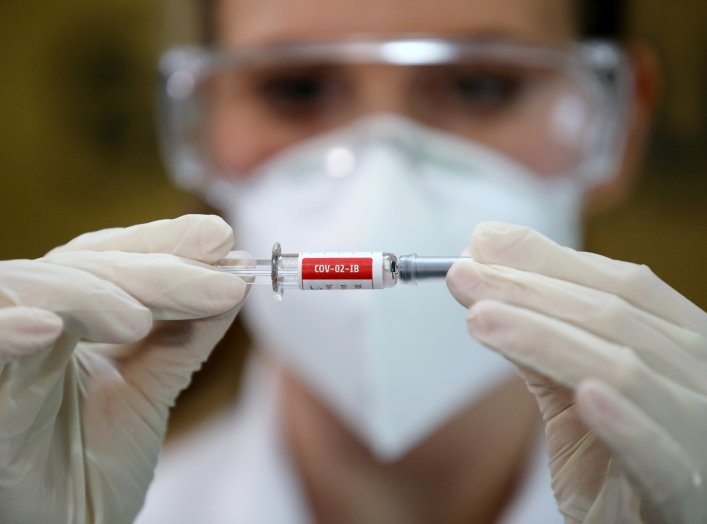
What Will Happen if the Coronavirus Vaccine Fails? A vaccine could provide a way to end the pandemic, but with no prospect of natural herd immunity we could well be facing the threat of COVID-19 for a long time to come. by Sarah Pitt

  There are  over 175  COVID-19 vaccines in development. Almost all government strategies for dealing with the coronavirus pandemic are base...