#Sponsored

Monday, July 27, 2020

Stealth UAVs Could Give China’s Type-076 Assault Carrier More Firepower

China's next-generation Type-076 Assault Carrier

The Chinese Navy is building assault carriers to support amphibious operations, like a possible invasion of Taiwan or landings on disputed islands in the South China Sea. The first two ships, called LHDs (landing helicopter docks) in naval terminology, are still being outfitted. But information is already emerging suggesting that the follow-on design, the Type-076, will have much more firepower.

The Chinese Navy, officially known as the People’s Liberation Army Navy (PLAN), is still new to the assault carrier game. Their current LHDs, which have yet to enter service, are the Type-075. These feature a spacious flight deck and are generally equivalent to the U.S. Navy’s America Class assault carrier. They can carry helicopters, including rotor-wing drones, and hovercraft. But it seems unlikely that they will host jet aircraft or UAVs (uncrewed air vehicles). Not so the Type-076.

A document circulating on the Chinese internet appears to be a request for proposals for the next generation of assault carrier. While it cannot be verified, it does appear to reflect the direction of PLAN thinking. It indirectly lays out the specification for the ship in the form of a list of systems and features. If it is broadly correct, then the Type-076 will carry jet aircraft of some sort.

We can infer this because a key new system will be an electromagnetic aircraft launch system, or EMALS, the 21st century equivalent to the steam catapult used for launching planes from aircraft carriers. A similar system is fitted to the U.S. Navy’s Ford Class aircraft carriers. China’s own next generation aircraft carrier is also reported to have EMALS, so China has a working knowledge of the technology. The U.S,. Navy has reportedly suffered teething problems, however. We should not assume that China will face the same issues, but it is a brand new technology so there are development risks involved.

Having EMALs on an assault carrier could be a significant game changer for China. It would allow it to carry jet aircraft, such as fighters or large UAVs. UAVs with an offensive weapons load are term UCAVs (uncrewed combat air vehicles). These could greatly increase air support for landing operations.

I asked B.A. Friedman, a military analyst focused on amphibious warfare and author of On Tactics: A Theory of Victory in Battle, what he thinks the implications of the EMALs would be. “There are no disadvantages to having jets on an LHD. But there trade-offs to the type of jets you can put on it. They need a lot of runway or they need to be VTOL [vertical take-off and landing], which itself has advantages and disadvantages. And jets tear up the deck plating faster than propeller aircraft.”

The EMALs approach suggests that the aircraft would not be VTOL. But what the aircraft would be is open to speculation. China may be developing a fighter aircraft suitable for relatively small flight decks of the LHD. For context, many Western LHDs are slated to carry the F-35 Lighting-II strike fighter. The current J-11 version of the famous Flanker, used aboard Chinese aircraft carriers, is likely too large.

But it may relate to a UCAV. These could benefit from being smaller than the equivalent crewed aircraft. The GJ-11 Sharp Sword is one design for a stealthy UCAV that China has been developing. Its payload is estimated to be around 4,400 lbs, which is at the lower end for warplanes. Another, the Flying Dragon-2, is expected to fly in 2021. This promises to still be light enough to operate from the Type-076’s 30-plus ton capacity aircraft lifts, but lift some 13,227 lbs of weapons. Something like these would require a catapult to operate for an assault carrier.

Friedman is cautious about how quickly these new capabilities can be developed. Learning how to use regular assault carriers, let alone ones with UCAVs, could take years. Friedman says that it is not like they can ask, " ‘How do you guys normally do this?’ They have never done it. It could be years.”

All the same the PLAN is building its capabilities as an astonishing rate. No sooner have we become used to seeing the Type-075 LHD, which was seen as a massive step forward less than a year ago, and already we are on to the next generation. The possible RFP documents give us an inkling about what the Type-076 may be like, but until we see one we will still be guessing.


Why is Xi Jinping pitting China against the world? Xi has stifled dissent at home and is increasingly willing for China to assert itself abroad

Xi Jinping learns about grain production in Lishu County of Siping City, northeast China’s Jilin province.
Xi Jinping on a visit to inspect grain  Xi

Earlier this week, Chinese leader Xi Jinping held a rare meeting in Beijing with business leaders. Admitting that the Covid-19 pandemic had a “huge impact” on the country’s economy, Xi used a Chinese idiom to assure his listeners.

“While the green hills last, there will be wood to burn,” he said. “If we maintain our strategy … we will find opportunity in crisis and turbulence. The Chinese people will surely prevail over all difficulties and challenges ahead”.

Xi’s remarks – reported in state media under the headline: “Xi Jinping conveyed confidence! Confidence! Nevertheless, confidence!” – belie a difficult and increasingly hostile international environment, one that critics say the Chinese leadership brought on itself through miscalculation and stifled dissent within the ruling party.

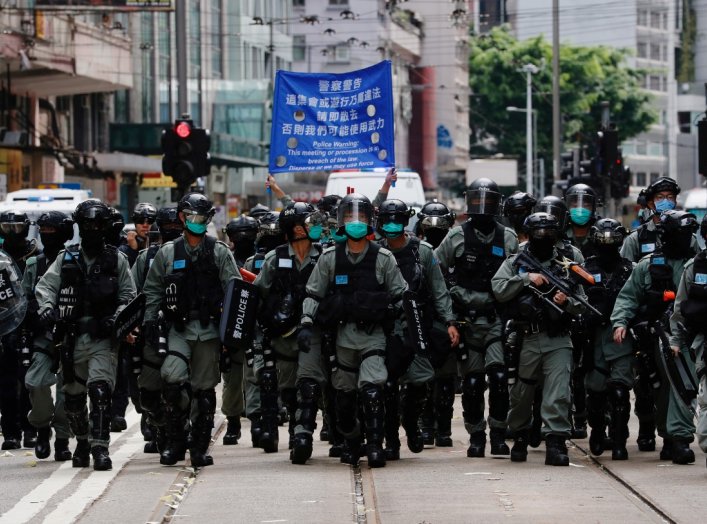
In just the last two months, China has ordered the closure of a US consulate in the country’s southwest in response to a similar move from the US; fought a deadly border clash with India, an unresolved border that threatens to erupt again; seen the abrupt end of the so-called “golden era” of relations with the UK; engaged in a war of words with Australia, bringing relations close to an all-time low; forced a draconian national security law on Hong Kong, earning international condemnation; and fallen further into a rivalry with the US that is forcing other countries to choose sides. Increasingly, they are choosing the US.

Chinese companies and citizens have begun to suffer the cost of growing mistrust. Fifty-nine Chinese companies have now been locked out of India, one of the world’s fastest growing markets, including WeChat and TikTok – a third of whose global users were in India. Chinese national champion Huawei has lost access to a key foothold in Europe as the UK, aligning with the US, announced it was blocking the tech giant.

As countries welcome fleeing Hongkongers, the Chinese territory is likely to see a brain drain. More countries have begun speaking out against China’s mass detention of Uighurs and other Muslim minorities in Xinjiang, as advocates call for sanctions and legal measures. Chinese scientists, students and others have come under more scrutiny abroad.

“This changes the whole narrative of China’s intentions. China looks like it has very narrow self-interest that it is pursuing rather than a more cooperative approach, and that means that other countries are going to erect all sorts of barriers. There will be real costs – not just reputational but economic costs,” said Susan Shirk, chair of the 21st Century China Center at the University of California, San Diego.

For years, China worked to assure the international community that its rise was peaceful, that it would not try to overturn the status quo. A more assertive China has emerged under Xi, one more willing to confront its critics and brave damage to its reputation. This past year, after containing the Covid-19 outbreak at home, Beijing has gained the upper hand over some of its rivals, such as the US, still struggling with the pandemic.

“This time they think, ‘Maybe we are strong enough. We are equals now and therefore we can cause as much pain to you as us. We can fight’,” said Dali Yang, a professor of political science focusing on China at the University of Chicago.

Chinese officials have ramped up attacks, criticising the US and other western countries for their Covid-19 response, defended its policies in Xinjiang, expelled foreign journalists and quickly implemented the security law in Hong Kong, with arrests made less than a day after the law was passed.

Beijing also finds itself locked in confrontations with countries not traditionally seen as rivals. After Australia pushed for an inquiry into Covid-19, China imposed 80% tariffs on Australian barley and sentenced an Australian man to death. As Huawei CFO Meng Wanzhou’s extradition case in Canada proceeds, Chinese courts have begun the formal charges against two Canadians detained in what was widely seen as retaliation. Recent dispatches of Chinese ships to islands claimed by Japan and China have hurt years of rapprochement, with conservative lawmakers now calling on the government to cancel a state visit by Xi.

“There has long been a question of whether Beijing could be authoritarian at home while acting responsibility and constructively abroad,” said Mira Rapp-Hooper, a senior fellow for Asia studies at the Council on Foreign Relations.

“Hong Kong, Xinjiang, the South China Sea, Huawei, come together in a distressing picture. It is hard not to feel like we have been given a preview of what sole Chinese global leadership would look like,” she said. “This puts all of its neighbours on guard at once.”

Analysts have been puzzled by the behaviour of the Chinese leadership over the last few months, cautioning that it is difficult to decipher why certain decisions have been made and who made them. But it is clear that the more centralised leadership of Xi has caused more backlash.

“It is rare actually that the Chinese leadership has picked fights with everyone at the same time,” said Shirk. “There is something broken with the policy-making process. This is a reflection of what Deng Xiaoping called the ‘over concentration of power’ that leads to policy mistakes. And why does it lead to policy mistakes? It’s because nobody dares tell the leader that this is a bad idea.”

Minxin Pei, an expert on governance in China at Claremont McKenna College, said: “Inside the system, voices of dissent, of disagreement are not heard. So one mistake follows another.”

At home, China faces the threat of high unemployment as the economy – already slowing before the pandemic – struggles to recover. After the outbreak, online censorship appears to have worsened. Those who have expressed critical opinions of the government or its Covid response have been detained, including a prominent law professor and young internet activists working to save information wiped from the Chinese internet.

“The Chinese people are probably starting to digest that their country is in this cold war with the US – the future looks pretty uncertain – and how they will deal with this because for the last 40 years, China lived in a very peaceful environment and now everything has changed,” said Pei.

For the Chinese leadership, what is most important may not be international reaction but maintaining support from its citizens. Officials maintain their country is only defending its own interests and pushing back against outside interference, a line aggressively pushed in state

Its success over the virus, compared to other countries, appears to have helped. A recent survey of 1,000 urban residents by the China Data Lab at the University of California, San Diego found that trust in the central government has increased. On a scale of one to 10, average trust in the central government was 8.65 at the peak of the outbreak in China in February and 8.87 in May, compared to 8.23 in June last year.

For Xi, who has spent the last several weeks making appearances around the country – talking with farmers in northeastern China, posing in an attack helicopter while visiting the air force, or giving “important instructions” on floods overwhelming much of the country – that may be more important than any international backlash.

“For the people who are making the decisions, they see it as the price to pay and they are willing to pay it,” said Yang.

How Dangerous Is China’s Hong Kong Crackdown? A new cold war could be brewing between Beijing and Washington. by Jacob Heilbrunn

Are the United States and China irrevocably headed on a course toward confrontation? Secretary of State Mike Pompeo is calling for a global anti-China coalition and met in London with Nathan Law, a politician and activist in Hong Kong, as well as with the last British Governor-General Chris Patten, a stalwart defender of Hong Kong’s freedoms. The Trump administration has also ordered the closure of the Chinese consulate in Houston, thereby further heightening tensions between Washington and Beijing. Some observers detect, or indeed are even promoting, the rise of a new cold war to replace the old U.S.-Soviet confrontation. Whether this is a development that can be avoided has provoked widespread controversy in America and elsewhere. America’s allies in the region shown scant avidity for a clash with Beijing even as they chafe at its attempts to flex its muscles abroad.

The central international flash-point is currently Hong Kong. Recent developments in Hong Kong, culminating in the promulgation of a new national security law that appears to abandon Beijing’s earlier commitment to allow Hong Kong autonomy under “one country, two systems,” have raised international alarm about China’s intentions. What are the goals of Chinese Communist Party leaders in Hong Kong? Are they in fact violating prior agreements with the United Kingdom and promises to the people of Hong Kong? What are the implications for Beijing’s broader regional behavior and its relationship with the West? And how will it deal with the international response to its actions in Hong Kong?

Below is a link to a video of webinar featuring a panel of prominent experts whose discussion was moderated by National Interest editor Jacob Heilbrunn:

· Ambassador Kurt Tong, who served as United States Consul General and Chief of Mission in Hong Kong and Macau from 2016 to 2019 and is now a Partner at The Asia Group in Washington, DC.
· Professor James Feinerman, the James M. Morita Professor of Asian Legal Studies and Co-Director of the Georgetown Law Asia Program at Georgetown University.
· Professor Steven Tsang, the Director of the SOAS China Institute at the School of Oriental and African Studies, University of London.
· Dr. Paul Heer, a Distinguished Fellow at the Center for the National Interest and a former National Intelligence Officer for East Asia.

Anthony Fauci on Coronavirus: “I don’t really see us eradicating it.” White House coronavirus advisor Dr. Anthony Fauci said on Wednesday that it is highly unlikely that the novel coronavirus will ever be eradicated. by Ethen Kim Lieser

White House coronavirus advisor Dr. Anthony Fauci said on Wednesday that it is highly unlikely that the novel coronavirus will ever be eradicated.

It is, however, possible for world leaders and public health officials to work together to bring the virus down to “low levels.”

“I think with a combination of good public health measures, a degree of global herd immunity and a good vaccine, which I do hope and feel cautiously optimistic that we will get, I think when we put all three of those together, we will get control of this—whether it’s this year or next year. I’m not certain,” Fauci, the director of the National Institute of Allergy and Infectious Diseases, said during a webinar with the TB Alliance.

He later added: “I don’t really see us eradicating it.”

Fauci’s comments seemingly contradict President Donald Trump’s long-held assertion, which he reiterated on Tuesday during a White House briefing on the pandemic, that the contagion will eventually disappear.

According to the latest data from Johns Hopkins University, COVID-19 has infected more than 3.9 million people in the U.S. and has been responsible for at least 142,000 deaths. More than half of all states are witnessing a surge in new cases.

Fauci noted that government officials must do a better job in containing the virus, which can be partly accomplished by adopting mask mandates and closing restaurants and bars.

“We are certainly not at the end of the game,” Fauci said. “Certainly, we are not winning the game right now—we are not beating it.”

Just last week, Fauci suggested that the nationwide surge in coronavirus cases is due to the U.S. not shutting down completely during its initial response to the virus.

Fauci highlighted the fact that COVID-19 is extremely efficient in transmitting from human to human and can produce a wide range of symptoms in those who are infected.

“I have never seen infection in which you have such a broad range—literally no symptoms at all in a substantial proportion of the population to some who get ill with minor symptoms to some who get ill enough to be in bed for weeks,” he said.

“Others get hospitalized, require oxygen, intensive care, ventilation and death. The involvement with the same pathogen is very unique.”

There are now more than 14.7 million confirmed cases of coronavirus worldwide, including at least 612,000 deaths, according to the latest data from the WHO.


Study: Mouth Lesions Might Be New Coronavirus Symptom In addition to the more typical COVID-19 symptoms that include fevers, coughs, aches and difficulty breathing, there might be yet another troubling sign of infection—rash-like lesions inside mouths. by Ethen Kim Lieser

In addition to the more typical COVID-19 symptoms that include fevers, coughs, aches and difficulty breathing, there might be yet another troubling sign of infection—rash-like lesions inside mouths.

In the Spanish study, which was published in JAMA Dermatology, researchers examined twenty-one COVID-19 patients at Ramon y Cajal University Hospital in Madrid between March 30 and April 8.

Enanthems (rash-like lesions inside a mouth) were observed in six of the individuals ranging in ages forty to sixty-nine. Four of the six were female.

“This work describes preliminary observations and is limited by the small number of cases and the absence of a control group,” the researchers wrote in the study.

“Despite the increasing reports of skin rashes in patients with COVID-19, establishing an etiological diagnosis is challenging. However, the presence of enanthem is a strong clue that suggests a viral etiology rather than a drug reaction, especially when a petechial pattern is observed.”

The study added that “many patients with suspected or confirmed COVID-19 do not have their oral cavity examined”—largely due to safety protocols put in place after the pandemic started.

Given the fact that patients are often wearing face masks or coverings and the mouth is not examined, there’s potentially even more individuals who may have these symptoms, the researchers noted.

Enanthems were previously observed in several coronavirus-infected patients in Italy, the study said.

Last month, the Centers for Disease Control and Prevention added congestion or runny nose, nausea and diarrhea to its expanding list of COVID-19 symptoms, which may appear two to fourteen days after exposure to the virus.

If any of these symptoms are spotted, the CDC recommends that individuals stay in a specific room and away from other people and pets in the home. If possible, they should use a separate bathroom.

There are now more than 14.7 million confirmed cases of coronavirus worldwide, including at least 612,000 deaths, according to the latest data from the WHO.

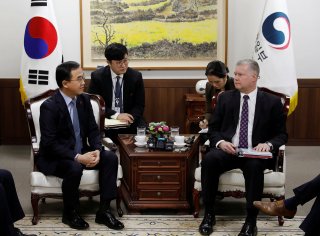
Can South Korea's New Unification Minister Save Inter-Korean Relations? It is a tough, thankless job, with a high attrition rate. by Daniel R. DePetris

https://www.reutersconnect.com/all?id=tag%3Areuters.com%2C2018%3Anewsml_RC13E55BB000&share=true
The job of Unification Minister is one of the most difficult and thankless tasks in the South Korean government. It doesn’t matter who holds the position at any given time, how dedicated the individual is to breaking ground with North Korea, or how much experience he or she has in the field of diplomacy—whoever comes into the job immediately confronts a steep mountain of challenges. Very often, the person who entered the role with such enthusiasm leaves disappointed. If you don’t believe me, just ask the latest victim, Kim Yeon-chul, who resigned last June.

Lee In-young, a four-term lawmaker, is South Korean President Moon Jae-in’s latest choice to manage the unification portfolio. Like many of his predecessors, the youthful 56-year-old floor leader of the Democratic Party of Korea is coming into the job with vigor and determination. Ideally, the objective of the Unification Ministry is to make peace with North Korea. Realistically, however, the ministry is responsible for ensuring that relations are salvaged and war is minimized. The trouble, as always, is that establishing sustainable inter-Korean harmony is not exactly an easy thing to accomplish—if it was easy, it would have already happened.

If inter-Korean relations can often look like a never-ending rollercoaster, Lee comes into the ministry at a time when the ride is dangerously close to crashing. Notwithstanding Moon’s endless pool of optimism about what the two Koreas could achieve together if both showed some courage and political will, an inter-Korean relationship that seemed so promising in 2018 is now stuck in quicksand. North Korean leader Kim Jong-un’s decision to suspend active military measures against the South is the only bright spot this year. Everything else has been utterly depressing, with communications cut, the inter-Korean office reduced to timbers and nasty words volleyed from the North Koreans. Meanwhile, threats of further escalation casting a pall over the entire Korean Peninsula. If times looked dark earlier this year, when Moon was begging for a resumption of dialogue, the picture today is as black as night.

Enter Lee In-young, who heads into the unification ministry with this sad scene as the backdrop. Lee likely realizes that the environment he is operating in is not conducive to grand agreements. Another inter-Korean summit being scheduled this year is about as likely as the coronavirus magically disappearing. Kim Jong-un has largely written Seoul off as a meddling bystander with no power and no dignity (Kim didn’t mention South Korea at all during last December’s, end-of-year Plenary meeting). Pyongyang has rejected every single proposal from the Moon administration this year. Kim even turned down an idea pitched by Lee’s predecessor regarding the establishment of a joint North-South public health response system, where scientists and public health officials from both Koreas could collaborate on research and share best practices. There’s not much Seoul can do if the other party refuses to dance.

Lee, however, is bringing some ideas with him. Rather than the historic summits of yesteryear, Lee is aiming small. “I hope to seek small-scale trade (with the North) in humanitarian areas related to eating, suffering and things people want to see before they die,” Lee told reporters a day before his testimony to the parliament. “For example, water from Mount Paekdu and liquor from the Taedong River can be exchanged with our rice and medication through item-to-item trade.” Over time, those small-scale barters will lead the way to bigger and bigger trading relationships and interactions, building up the trust that is required to implement the inter-Korean agreements signed with such fanfare two years ago.

Lee’s initiative seeks to accomplish two things simultaneously. The first: rebuild the goodwill that has been lost with the North. The second: push Moon’s inter-Korean reconciliation process forward without violating the torturous U.S. and U.N. Security Council sanctions regime that prevents bulk cash from crossing the border.

Time will tell whether Lee’s incremental approach will be any more successful than Kim Yeon-chul’s. The North Koreans are desperate for revenue; exports to China, Pyongyang’s largest trading partner by far, is down by over 80% from last year. Yet the question still left outstanding is whether small deals like what Lee is proposing are enticing enough for the Kim dynasty to drop the flame-throwing and return to the table.

The U.S. Navy Will Soon Lose Some Ability to Attack Land Targets with Missiles And their plan to fix it does not make sense. by David Axe

The Navy could instead add missiles to surface ships, including inexpensive unmanned vessels.

The U.S. Navy is about to lose a big chunk of the missile tubes it relies on to fire Tomahawk land-attack missiles during wartime.

The four SSGN cruise-missile submarines that the Navy converted from Ohio-class ballistic-missile boats are slated to decommission in the mid-2020s. These four boats, each packing 154 missile tubes, together account for 600 of the fleet’s roughly 6,000 Mark 41 launchers that fire Tomahawks.

The fleet’s plan to mitigate that 10-percent loss of Mark 41 tubes could jeopardize its ability to battle Chinese and Russian forces. That’s because the Navy is counting on enhancements to a new version of the Virginia-class submarine partially to replace the SSGNs.

But the Virginias might not be the best platform for land-attack, experts told Defense News. Submarines are expensive. And they’re getting easier for enemy forces to detect. A robotic surface ship might make a better missile platform, the experts said.

The Navy in late 2019 is preparing to sign a potentially $20-billion contract with shipbuilders for 11 copies of the Block V Virginia, which adds new missile tubes to boost each boat’s Tomahawk load from 12 missiles to 40.

The 11 Block V boats together would function as partial replacements for the four SSGNs, buying the Navy time to plan for a new SSGN class that could enter service in the 2030s or 2040s.

But it’s a waste to equip the new submarines for land-attack missions, Bryan Clark, a retired submariner and fellow at the Center for Strategic and Budgetary Assessments in Washington, D.C., told Defense News.

“I think the requirement may be changing,” Clark said. “Over the past 10 years there has been a real emphasis on the submarine as the one tool we have that may be able to get into contested areas — the East and South China seas, up in the North Atlantic, et cetera.”

“That’s changing now,” Clark added. “These countries are investing in their own anti-submarine warfare systems. China has put a lot of money into ASW systems, they are installing surveillance systems akin to our SOSUS [sound surveillance system]. So the idea that our submarines are our go-to asset to gain access, that may not be true in the next few years as it was in the past 10, so there is a question as to whether we should be investing in submarines to maintain the undersea strike capacity.”

Clark proposed that the Navy add missiles to surface ships, including inexpensive unmanned vessels that could function as floating arsenals.

Jerry Hendrix, a retired naval flight officer and analyst with The Telemus Group, agreed with Clark’s assessment. The argument for surface-based land-attack capabilities grows more compelling as the Navy develops large, hypersonic strike missiles that could help the fleet to strike targets from beyond the range of Chinese anti-ship ballistic missiles.

A hypersonic missile most likely would not fit in a Mark 41 tube, requiring the Navy to make pricey alterations to any ship that the service wants to carry the new, super-fast munition.

“I think there is a powerful argument to distribute these weapons across the surface force,” Hendrix told Defense News. “If you can create a strike weapon that allows the surface force to stand outside of DF-21 and DF-26 [anti-ship ballistic-missile] range and shoot three-pointers from outside, then yes. To create mass and volume in the submerged force is twice to three times as expensive as it is to create that volume from the surface force.”

“So there is a solid argument just from the standpoint of cost,” Hendrix stated. “If I was trying to create 2,000 tubes of hypersonics — which are much more massive than Tomahawks, won’t fit into a Mark 41 vertical launch system and hence will have to go into a different configuration — to create that mass in the submerged force is going to be very expensive.”

A third expert endorsed the idea of a robotic surface vessel relieving submarines of their responsibility for carrying land-attack missiles into combat. “I think this is going to one of the main things driving the design of the large unmanned surface combatant,” Dan Gouré, an analyst at the Lexington Institute think tank in Washington, D.C., told Defense News.

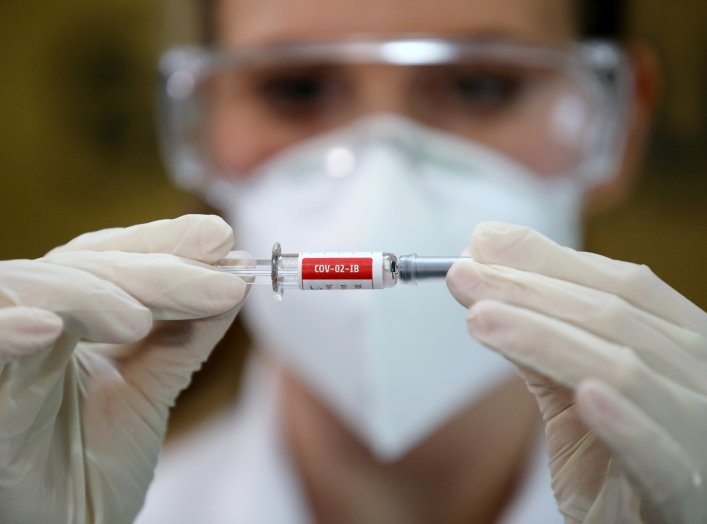
What Will Happen if the Coronavirus Vaccine Fails? A vaccine could provide a way to end the pandemic, but with no prospect of natural herd immunity we could well be facing the threat of COVID-19 for a long time to come. by Sarah Pitt

  There are  over 175  COVID-19 vaccines in development. Almost all government strategies for dealing with the coronavirus pandemic are base...