#Sponsored

Friday, April 10, 2020

Hospitals Must Let Doctors and Nurses Speak Out Nicholas Christakis says that “clamping down on people who are speaking is a kind of idiocy of the highest order.” by Conor Friedersdorf

A doctor at St. Barnabas hospital in New York.
Throughout the United States, doctors and nurses at the forefront of the fight against the coronavirus want to share what they are seeing and hearing with the public. But some fear that doing so could get them punished or fired by hospital administrators or medical-staffing agencies. Recent press reports document that many institutions have formally warned employees against speaking out, while some have already terminated various medical professionals.
NYU’s Langone Medical Center is among the institutions that sent a written warning to its health-care workers. It later asserted in a public statement that limiting the speech of its doctors and nurses is a long-standing policy intended to protect patient and staff confidentiality. “Because information related to coronavirus is constantly evolving, it is in the best interest of our staff and the institution that only those with the most updated information are permitted to address these issues with the media,” the statement said. “We have a responsibility to the public at large to ensure that the information they receive from our institution is accurate.”
Does that rationale stand up to scrutiny? To think that through, I called Nicholas Christakis, who directs the Human Nature Lab at Yale. For 15 years, he has studied different contagions, including the H1NI flu. One study probed what happens when a biological contagion such as H1N1 unfolds alongside a behavioral shift, or a so-called social contagion, such as wearing masks. How quickly must a social contagion spread through human networks to arrest a biological contagion?
“When the pandemic began, I never imagined that two topics I have an intellectual or philosophical interest in—processes of contagion and issues of free expression—would overlap in the United States,” he told me. “I realize there’s a world of a difference between speech suppression by the Chinese Communist Party or a government entity. But it’s just not a good look for hospitals—and especially for academic medical centers, for which many of the doctors and nurses are on the faculty, and which have a commitment to free expression—to be disciplining their doctors and nurses in the middle of a pandemic.”
What follows is a condensed and edited version of our conversation.

Conor Friedersdorf: What specifically is wrong about policing the speech of doctors and nurses?
Nicholas Christakis: It is bad for morale. It is inefficient in the sense that we’re taking health-care workers out of commission at the time we need them the most. It is absurd that administrators are spending time surveilling the social-media posts of their personnel rather than trying to actually fix the problem by addressing inefficiencies in their hospital or sourcing [personal protective equipment]. And finally, we are not going to kill this germ with censorship! The idea that we can hide from inconvenient truths or close our eyes and pretend that the situation is not the way it is by clamping down on people who are speaking is a kind of idiocy of the highest order. I find the whole thing absurd. The sharing of information is extremely useful and important to optimize efficiency. And don’t these administrators have anything better to do? Hospitals are scrambling. Why try to run around and shut up your staff when you could be fixing supply chains or sourcing ovens to heat PPE or preparing to divide wards to separate the sick from the not so sick? There are so many urgent things to do right now.
Friedersdorf: You’ve studied a lot of pandemics and epidemics. Is there any compelling public-health reason for restricting information flows?
Christakis: I cannot see any legitimate reason for such practices. I can imagine that people will say they’re trying to tamp down on panic or to provide a consistent message to a confused public. But if anything, in my view, the ham-fisted way this is being done is going to contribute to public disbelief in experts.
Friedersdorf: One can imagine an irresponsible doctor or nurse somewhere who says something that’s false or needlessly inflammatory.
Christakis: The way we gain credibility and show our expertise is by forthrightly addressing false information or taking ownership when uncomfortable true information is released. I get the idea that there could be rumors, there could be false information, there could be inconsistent information. In fact, our own government has been inconsistent in a number of its recommendations.
Now imagine for the sake of argument that back in February, when the government was reassuring everyone that everything was okay, if people like me and other epidemiologists trying to sound the alarm had been muzzled, or told that we were giving inconsistent information when we were telling the truth. I don’t accept that we are better off silencing people saying things that we don’t agree with. I totally, fundamentally reject that, not just from a principle of free expression, but also wanting to optimally meet grave challenges. So let me tell you what I would put in its place.
If a hospital is concerned that wrong information is spreading, the way to gain credibility is to stand up in a meeting or release a public statement once a day saying, “We have heard the following things: Our nurses are reporting a shortage of PPE in our hospital. This is true! And here is the challenge we’re facing as a nation. This is what we’re trying to do about it. Or, “This is false, and here’s why we reject it. Here is the evidentiary basis.” This increases credibility when we need it. It provides the public with confidence that the people leading them or who are responsible for their lives are telling the truth. Whereas if you try to suppress it, I'm thinking, What else is the hospital hiding that they don’t want me to know? Why should I trust anything they say?
Friedersdorf: What useful things might we learn if doctors and nurses are able to speak freely?
Christakis: We might learn, for instance, that doctors and nurses need housing because they don’t want to go home to their loved ones, that they’re willing to work but would welcome it if a local hotel owner gave them a place to stay. We might learn that they need child care, and be motivated to figure out how to provide it. We might learn that they need meals or want food delivered so that they can be more efficient at work and work harder. We all know now about the shortage of PPE. The more we hear about it, or the more anecdotes or stories that people in different communities get, the more people might be motivated to share the PPE that they’ve previously been hoarding.
We might learn about hot spots that we didn’t know about, or that even though the governor of state X says nothing is wrong, actually workers in a hospital there say we have an outbreak. There are so many ways in which the frank exchange of information and the forthright confrontation of falsehoods that may circulate, perhaps as rumors, enhance our ability to fight this epidemic. A hospital that corrects a false rumor has an opportunity to enhance their credibility.
Friedersdorf: But surely some false rumors do harm.
Christakis: We have all these hucksters in our nation—including some TV celebrities, some religious figures—who are circulating falsehoods about the efficacy of certain treatments. And they’re just making a buck. These people should be despised. They are in the worst tradition of snake-oil salesmen. So much so that they were caricatured in the movie Contagion by the man who was selling forsythia.
These people are awful. They have no basis for their claims. They are lying. And they are exploiting the fear of the public. But I would not stop them from saying these awful and wrong things. Instead, I would get up and say that they are lying, as I am to you now, and why they are lying, that there is no evidentiary basis for their claims.
So what I am saying is that I am not familiar with a case where the flow of information has been shut down in ways that have been beneficial even when we are sorely tempted to shut some people up.
Friedersdorf: Because the free flow of information also bolsters public trust in experts who deserve to be heeded?
Christakis: Yes. Look what’s happening in China right now. The populace doesn’t know what to believe. There are all these indicators and rumors that deaths in Wuhan were four times as large as official figures, judging by the number of funerary urns being delivered. And when officials say yes or no, nobody believes them, because they don’t have any credibility. It is so important to not be seen as squashing the flow of information and to acknowledge your mistakes so that when you get up and say something, people believe you. That kind of credibility is incredibly important when you’re trying to organize large groups of people. Look at the send-off Captain [Francis] Crozier just got when he disembarked from the Theodore Roosevelt. His sailors knew what was going on. His credibility was enormous.
Friedersdorf: Institutions often censor their employees reflexively. Still, I’m a bit confused about the institutional incentives that are causing hospitals to crack down on employee speech, even in this anomalous emergency. If a nurse at a hospital were to tell a local newspaper, “I'm not getting the protective equipment that I need,” or to post on Facebook, “God, we’re overwhelmed. This is really tough,” that doesn't seem like it would hurt the hospital’s consumer brand in the long run or affect who goes there two years from now for a knee surgery. Would I have found this same approach from hospitals before this pandemic?
Christakis: Yes, this managerial posture is long-standing––this effort to clamp down on information. So I don’t think it’s a new thing. I think the coronavirus heightened it. I also think it reflects a shift in the last 20 or 30 years from doctors being perceived as professionals to doctors being treated as corporate employees. The idea that some administrator is authorized to tell doctors what they can and cannot say and do comes from a shift in vision of the function of doctors in our society. Nurses too. Instead of being treated as independent professionals who swore a Hippocratic oath and are carrying out a moral calling—I mean, these health-care workers are literally risking their lives. It’s hard to imagine a more important calling than one that requires this of you. And they’re doing it for us. The idea that they can simultaneously be shut up is just offensive to me.

Thursday, April 9, 2020

Photos: The Volunteers By ALAN TAYLOR


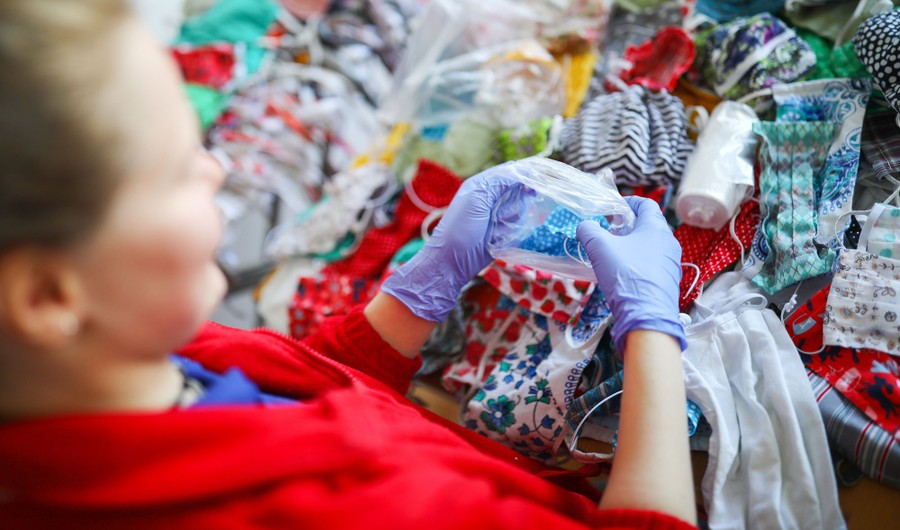
At a time when so many folks are in so many kinds of need, volunteers are stepping up around the world to give—to donate their time, skills, materials, and much more. To meet shortages, people are making masks and other personal protective equipment at home. To feed those in need, people are working at food banks and charities. People are shopping for and making deliveries to the more vulnerable, and producing and distributing sanitizers to prevent the spread of the virus. People are donating facilities, money, food, and even their own blood to help their neighbors make it through tough times. Below, a collection of images capturing some of the generosity that this pandemic has inspired.

Coronavirus-crisis volunteer Rhiannon Navin greets local residents arriving at a food-distribution center at the WestCOP community center in New Rochelle, New York, on March 18, 2020

A boy reaches for a bag of school supplies from a volunteer in a low-income neighborhood of Falls Church, Virginia, where schools are closed due to the coronavirus, on March 17, 2020

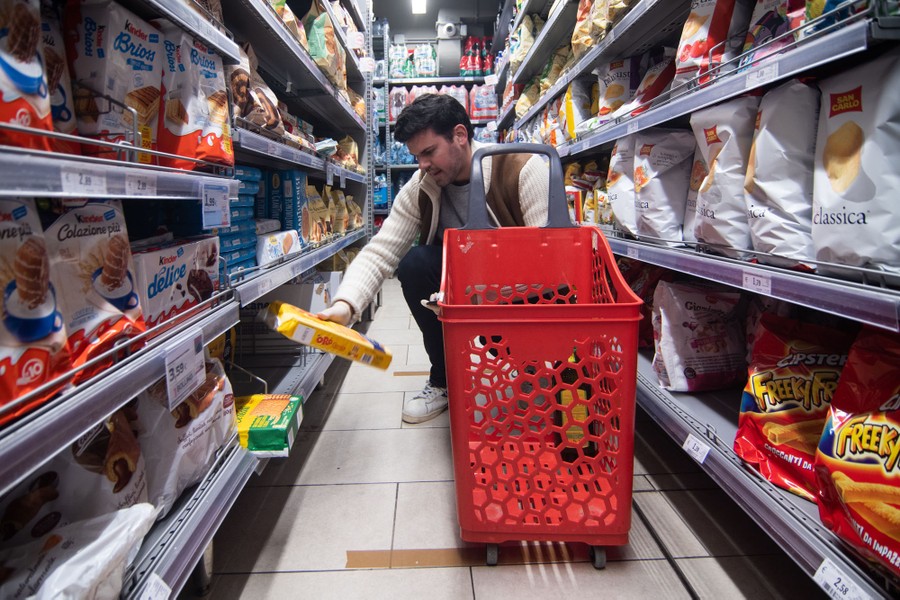
Marco Caberlotto, a volunteer with the association Generazione 90, buys food for an elderly woman who requested the group’s help, in Venice, Italy, on March 13, 2020

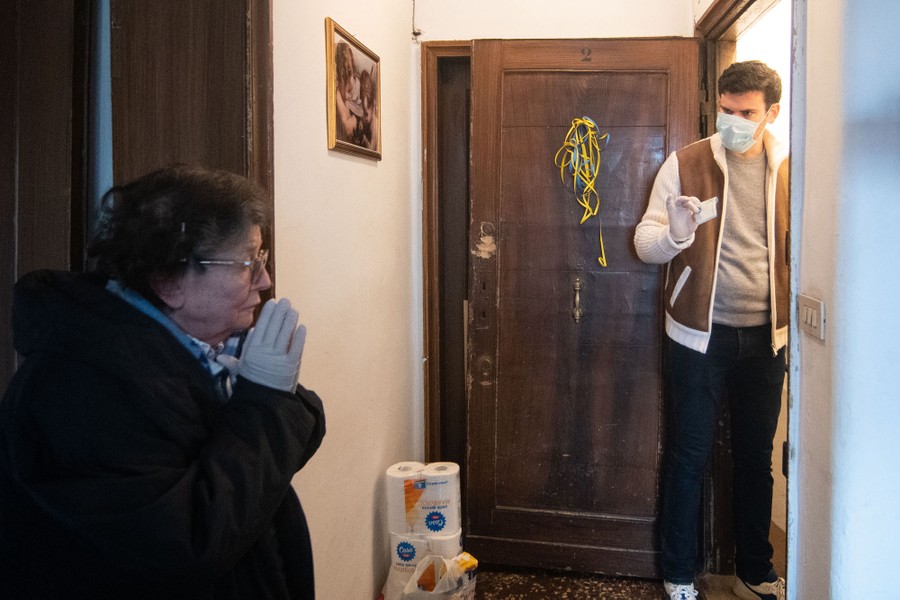
Volunteer Marco Caberlotto delivers food and supplies to a woman who had requested the help in Venice, on March 13, 2020

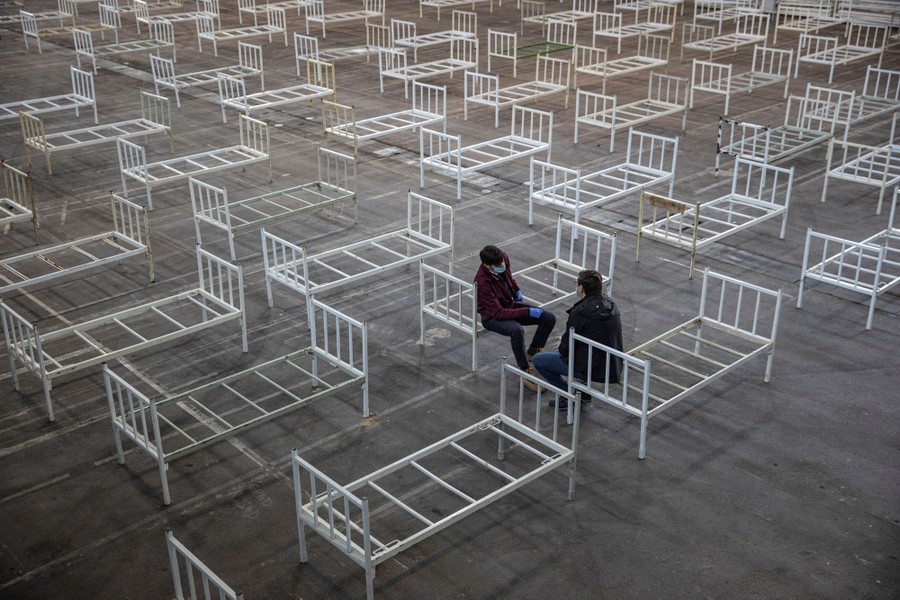
Volunteers take a break as they set up beds inside the Novi Sad Fair to accommodate patients who suffer mild symptoms of the coronavirus in Novi Sad, Serbia, on March 27, 2020

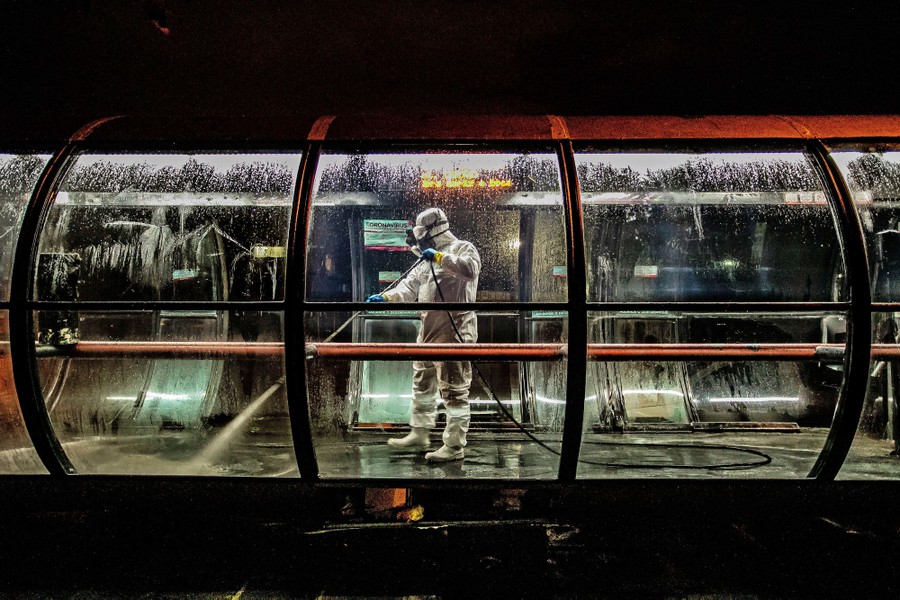
A volunteer worker disinfects a public bus station in Curitiba, Brazil, on April 1, 2020

Waltraud Doering of the Arbeiter-Samariter-Bund aid and welfare organization sews protective masks for paramedics, free of charge, as the coronavirus outbreak continues, in Barsinghausen, Germany, on March 26, 2020

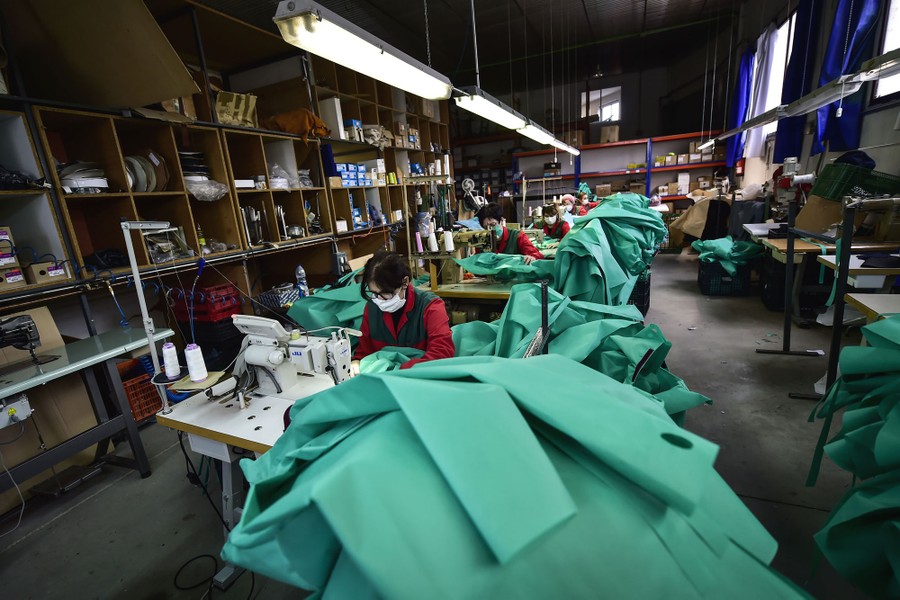
Volunteer workers in a clothing factory that normally manufactures firefighting gear make hospital gowns for medical staff to protect them from the coronavirus, in Arnedo, Spain, on March 30, 2020.

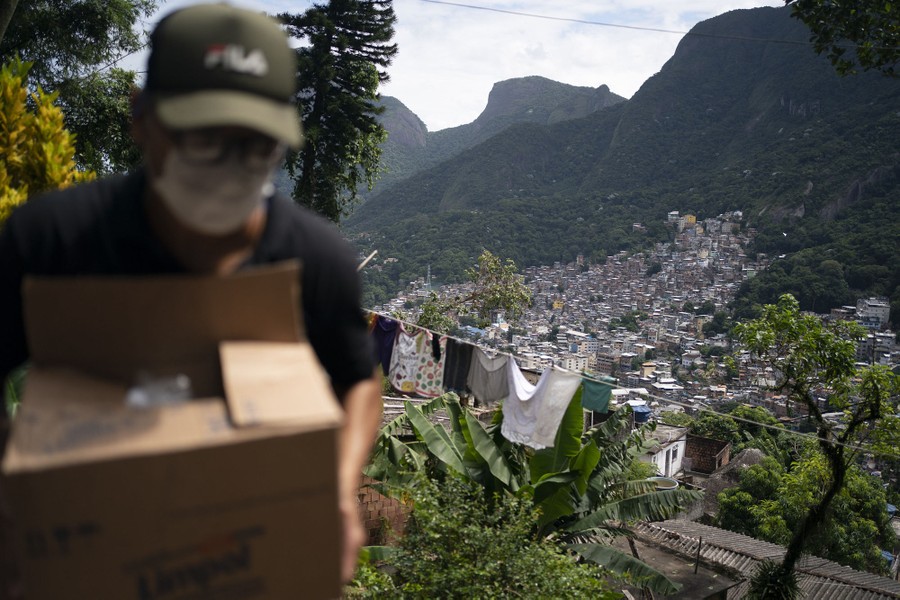
A local volunteer carries a package of soap and detergent to be distributed in an effort to stop the spread of COVID-19, in the Rocinha favela of Rio de Janeiro, Brazil, on March 24, 2020

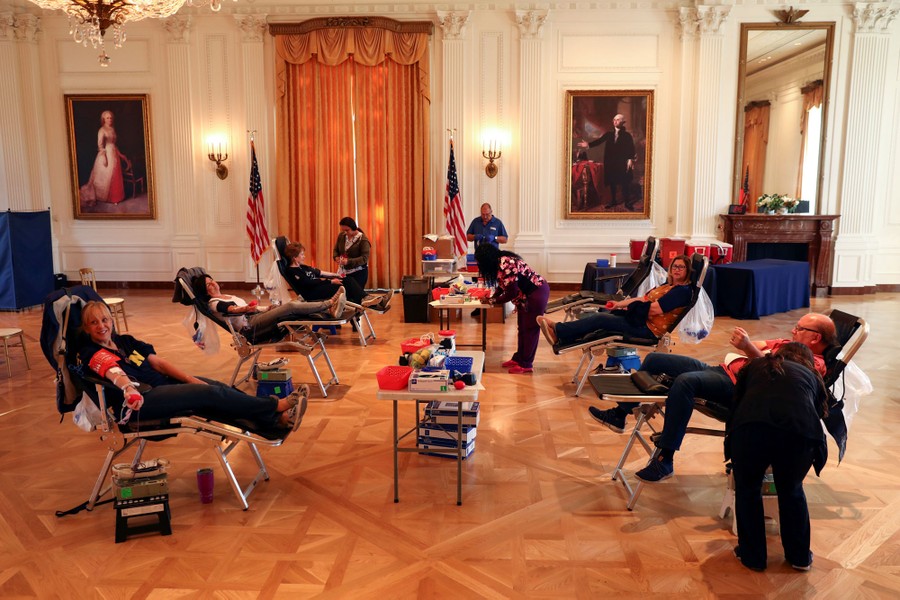
People give blood at a donation center inside a replica of the White House East Room, at the Richard Nixon Presidential Library and Museum, to help with a shortage of donations due to the coronavirus outbreak, in Yorba Linda, California, on March 30, 2020

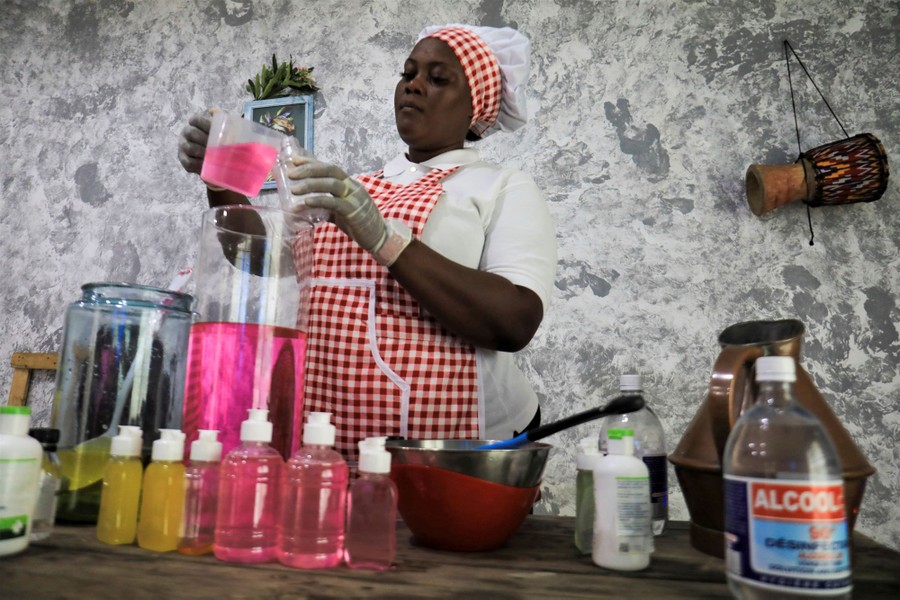
Rose Edhit Loukou fills bottles with homemade liquid soap in her restaurant in the Palmeraie neighborhood of Abidjan, Ivory Coast, on April 1, 2020. 

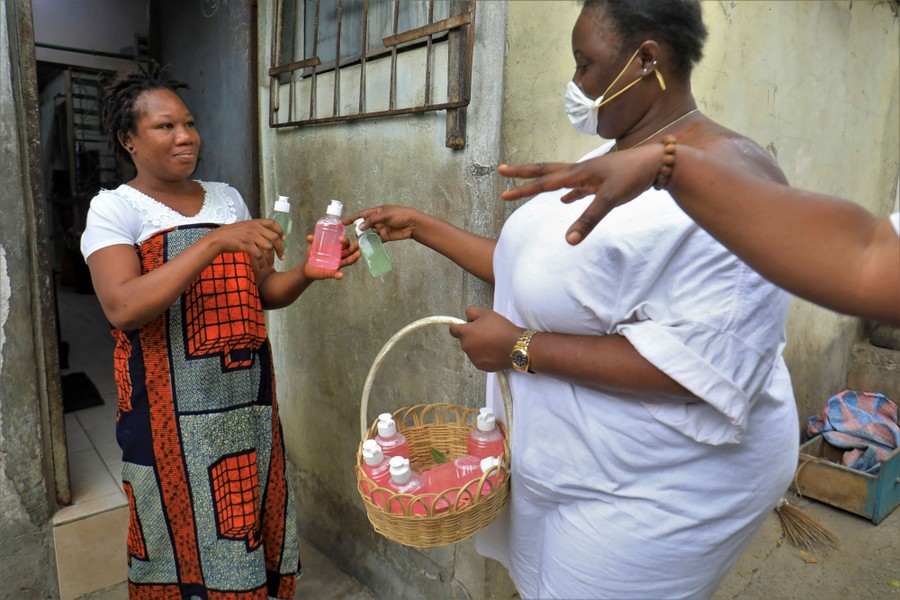
An assistant to Rose Edhit Loukou, a restaurant owner, gives their homemade soap and hydroalcoholic gel to a family in the Yopougon neighborhood of Abidjan, Ivory Coast, on April 1, 2020.

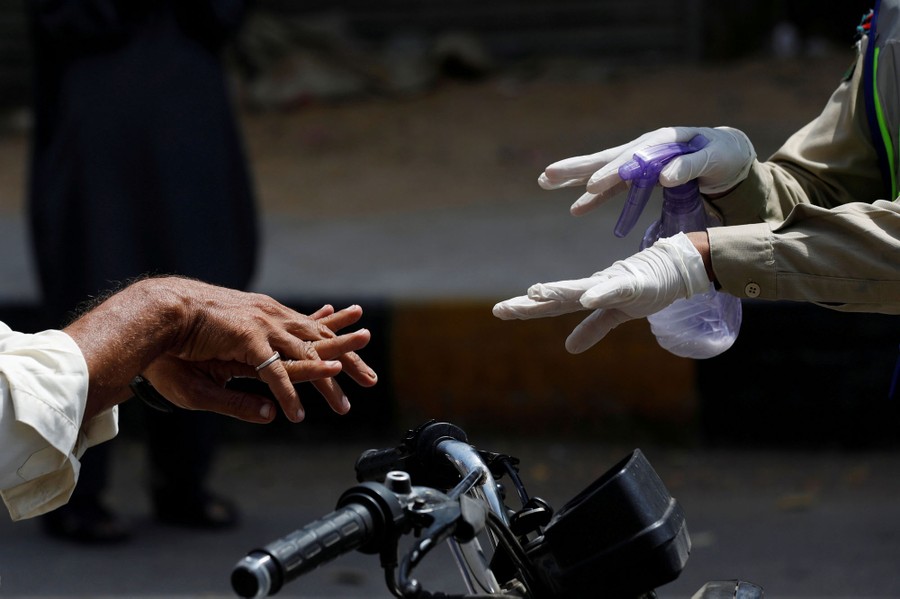
A volunteer of a community emergency-response team (right) gestures as he instructs a man on motorbike how to sanitize his hands, during a campaign to spread awareness of coronavirus prevention measures, in Karachi, Pakistan, on March 21, 2020

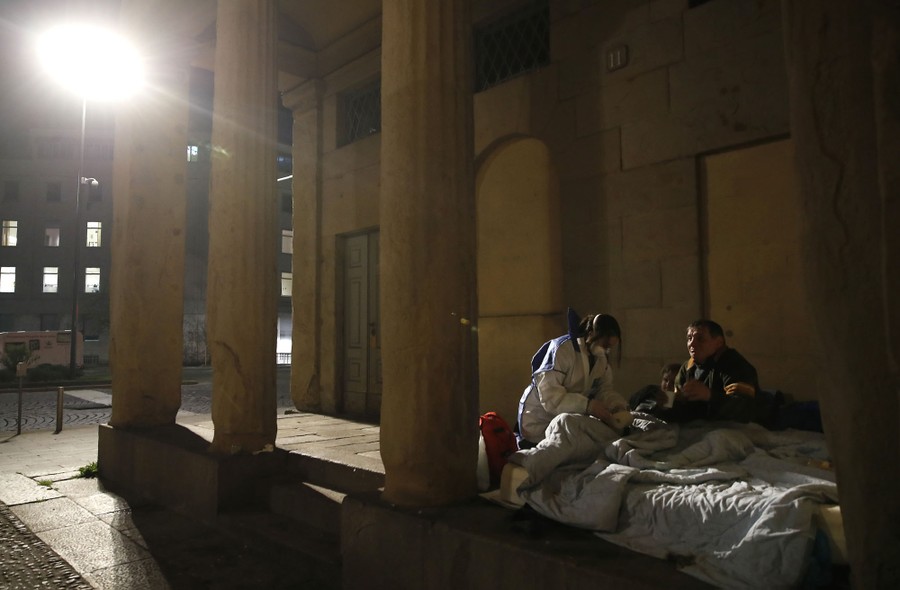
A volunteer nurse wearing a mask tends to homeless individuals in Milan, Italy, on March 24, 2020.

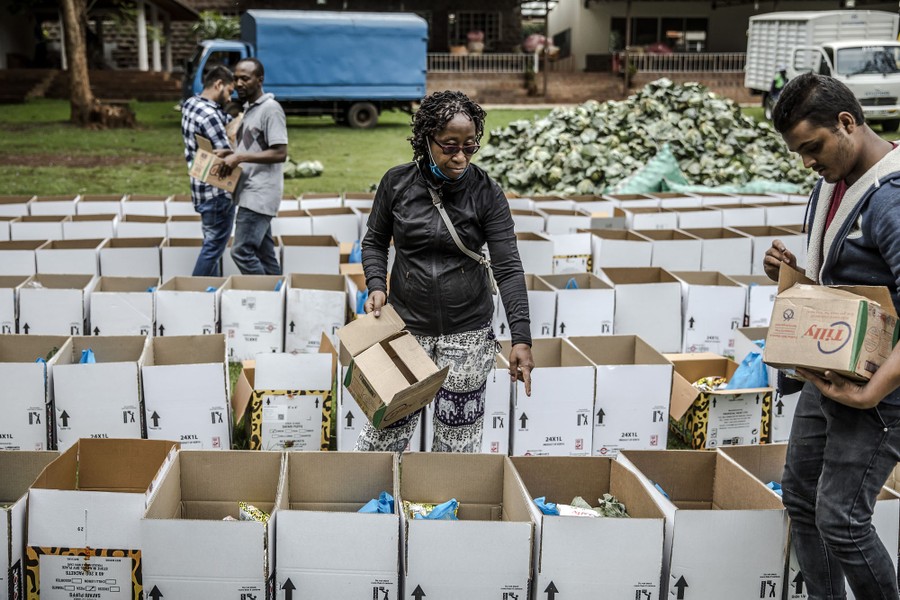
Volunteers prepare boxes with food and other basic goods to be delivered to people who will be affected by the government’s coronavirus-response measures in Nairobi, Kenya, on March 28, 2020

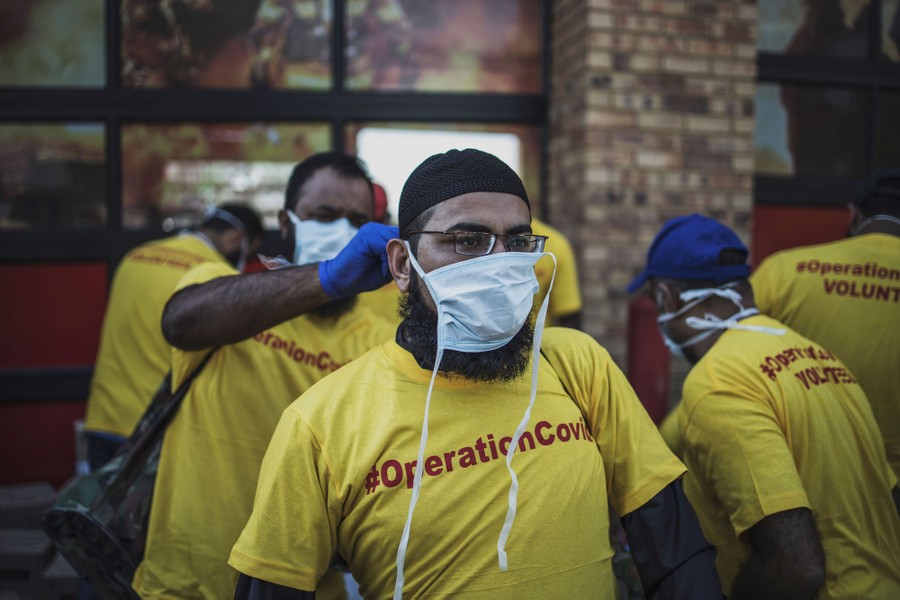
Volunteers wear masks as they take part in an awareness drive in the densely populated Diepsloot township in Johannesburg, South Africa, on March 21, 2020. Volunteers distributed soap and information to residents to bolster awareness of the risk of poor hygiene.

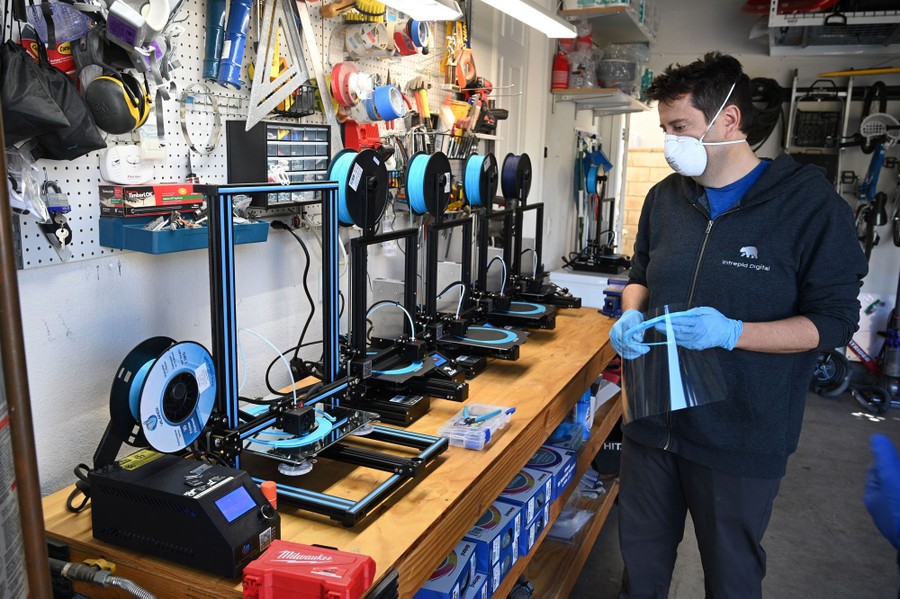
Jeremy Reitman watches as his five 3-D printers make components for medical-quality face shields in his garage in Calabasas, California, on March 30, 2020. A patchwork army of volunteers across the United States is churning out gowns and masks for emergency workers battling the spread of coronavirus. Reitman currently has five printers making 25 masks a day and is awaiting delivery of five more printers purchased with donated funds to increase output to 250 mask a day. He plans to donate all printers and materials to schools when the crisis is over. 

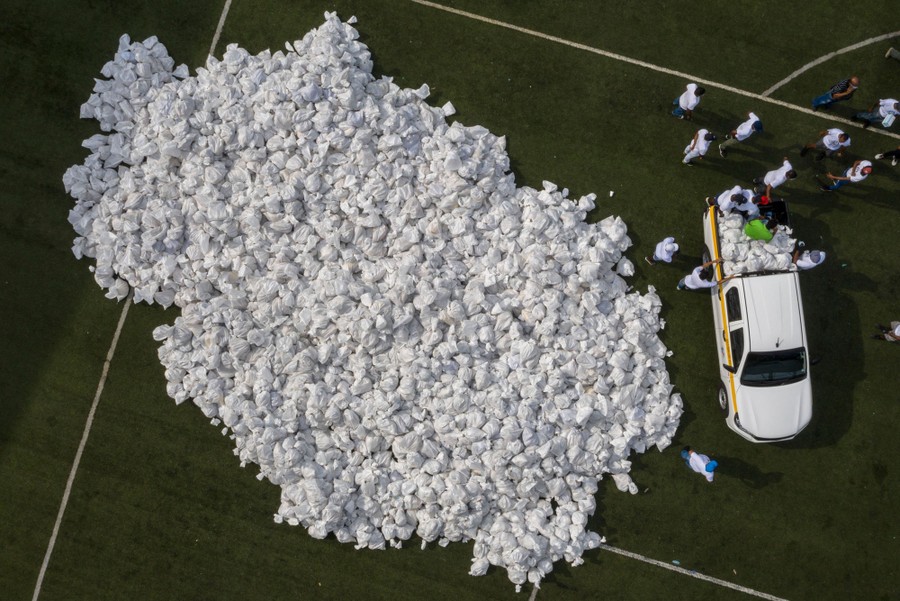
Volunteer members of the “Panama Solidarity Plan” load bags of food onto a pickup truck to deliver the aid to low-income families during the pandemic, at Maracaná Stadium in Panama City on April 1, 2020.

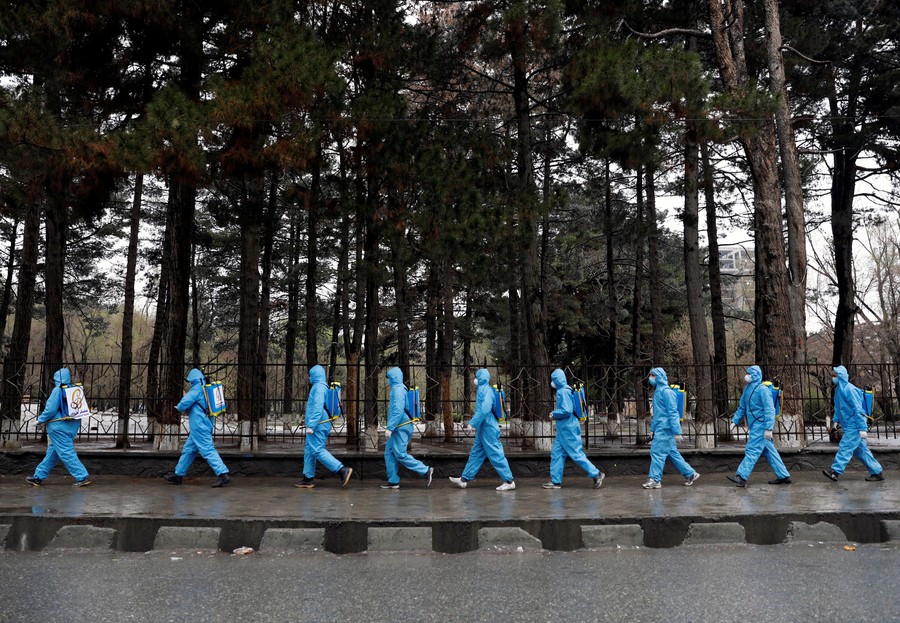
Volunteers prepare to spray disinfectants on streets and shops amid concerns about the spread of the coronavirus, in Kabul, Afghanistan, on March 30, 2020.

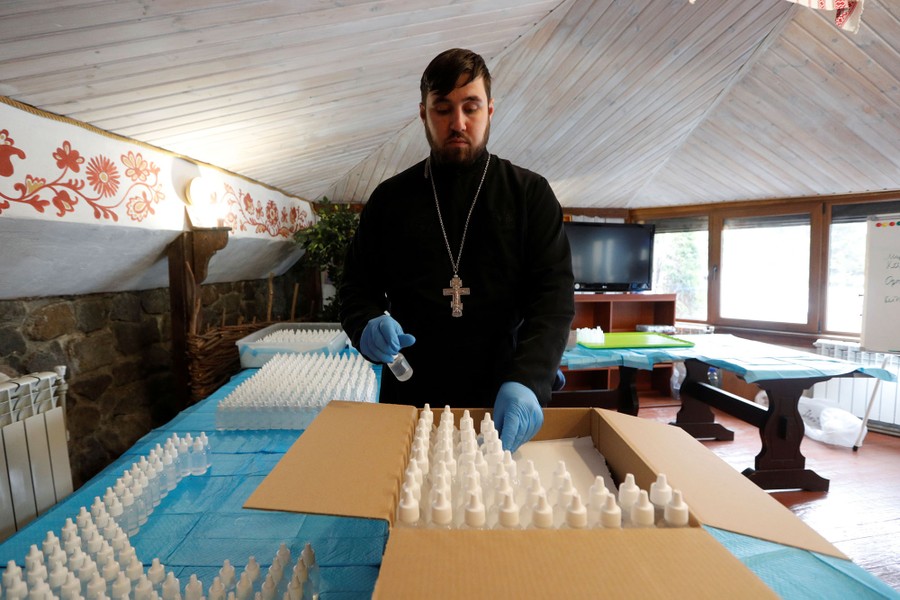
A clergyman of the Orthodox Church of Ukraine packs bottles of hand sanitizer at the Vydubychi Monastery in Kyiv, Ukraine, on March 21, 2020. Priests and students of the theological seminary produce sanitizer and donate it to the elderly and people in need to prevent the spread of the coronavirus.

An instructor addresses volunteers for a coronavirus-awareness campaign in preparation for any possible spread of the virus in Sanaa, Yemen, on March 28, 2020.

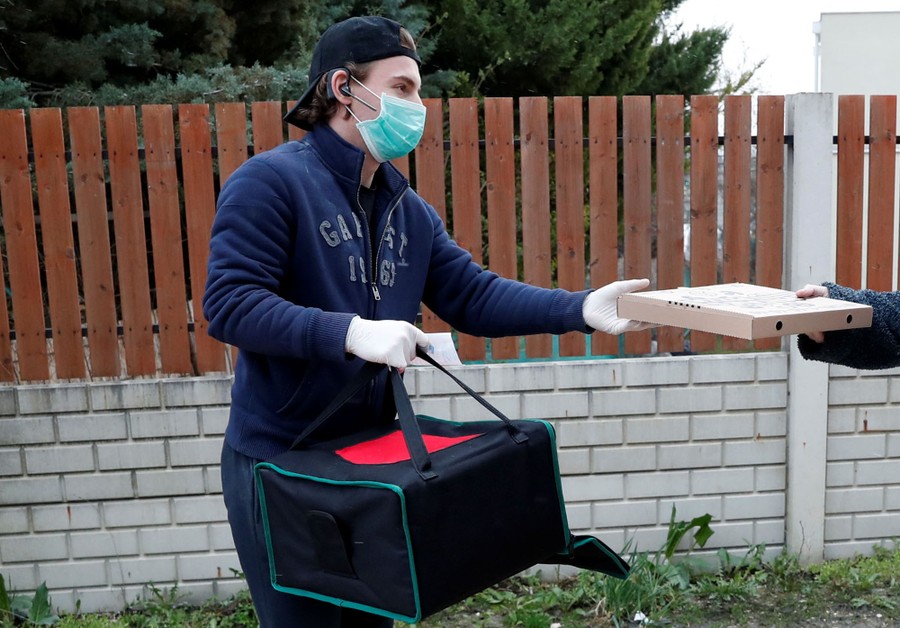
Milan Varga, the owner of a pizzeria, delivers a free pizza to people in self-isolation, as the spread of the new coronavirus continues, in Budapest, Hungary, on March 23, 2020

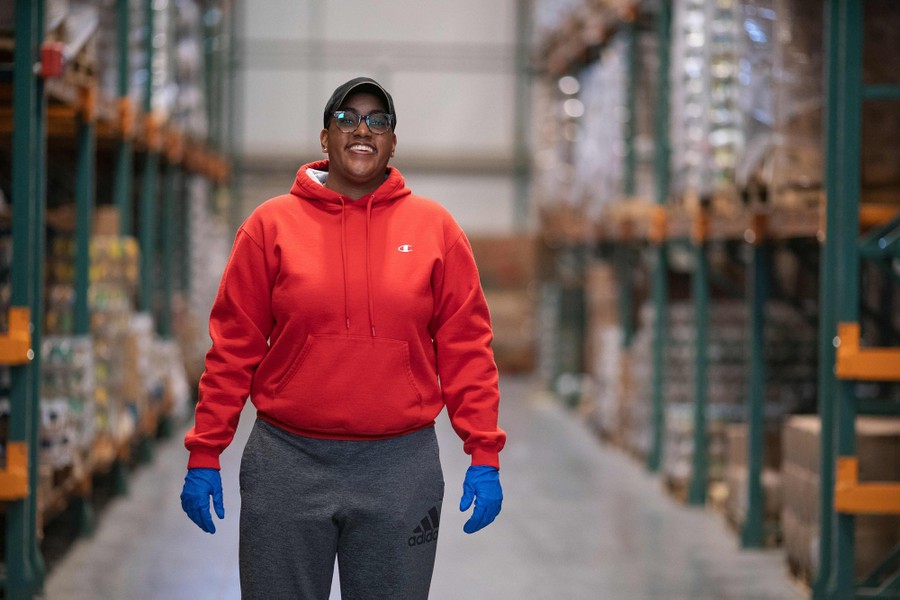
Courtney Thornton poses for a portrait as she volunteers at the Capital Area Food Bank in Washington, D.C., on April 1, 2020. The coronavirus pandemic is putting a strain on U.S. food banks, which are short on labor and donations as food requests increase.

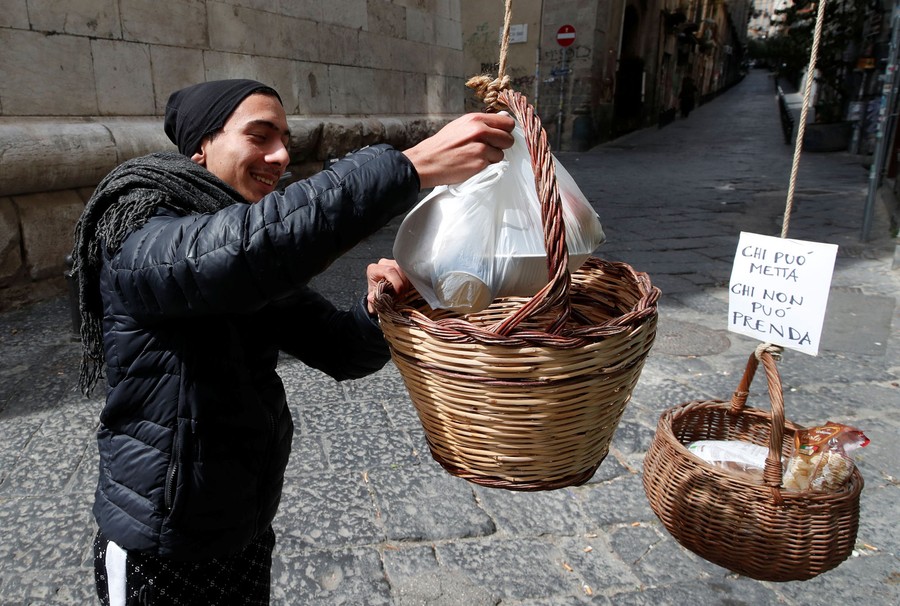
A man takes products from baskets that were hung so people could donate or take free food, as Italy struggles to contain the spread of the new coronavirus, in Naples, Italy, on March 30, 2020. The sign reads: “Who can puts in, who can’t takes.”

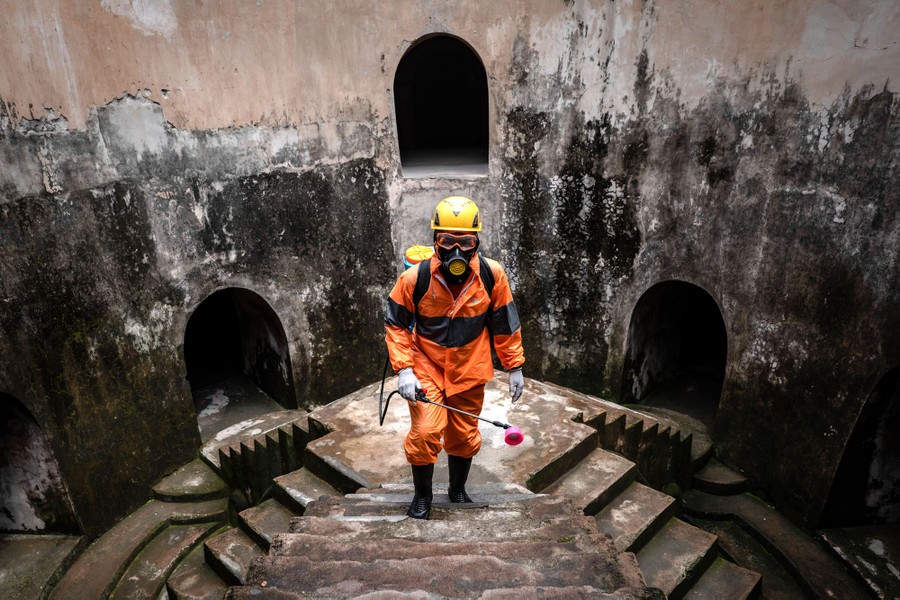
A volunteer sprays disinfectant to prevent the spread of COVID-19 at the Taman Sari Water Castle complex, a popular tourist attraction in Yogyakarta, Indonesia, on March 31, 2020

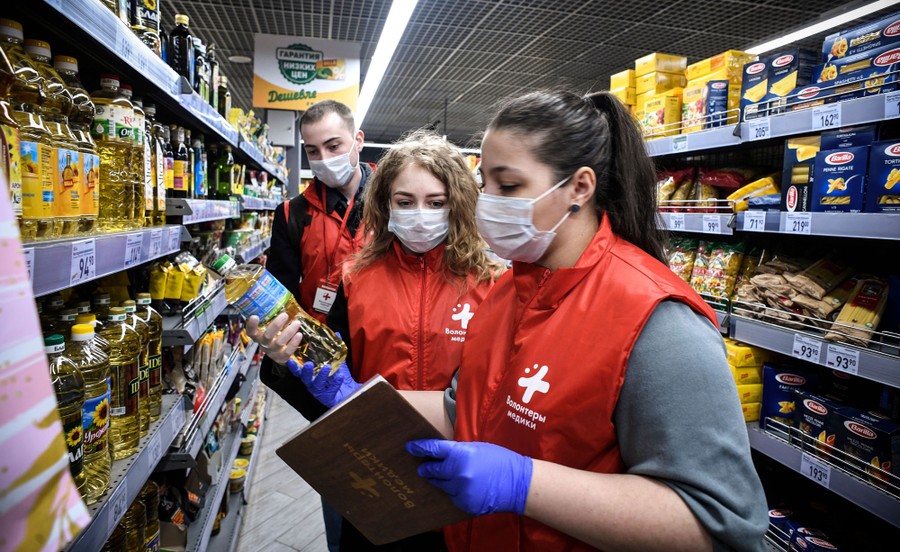
Volunteers wearing face masks buy groceries to deliver to elderly people quarantined in their homes, in Moscow, Russia, on March 27, 2020

The Best Hopes for a Coronavirus Drug If there is a way to stop COVID-19, it will be by blocking its proteins from hijacking, suppressing, and evading humans’ cellular machinery. by SARAH ZHANG

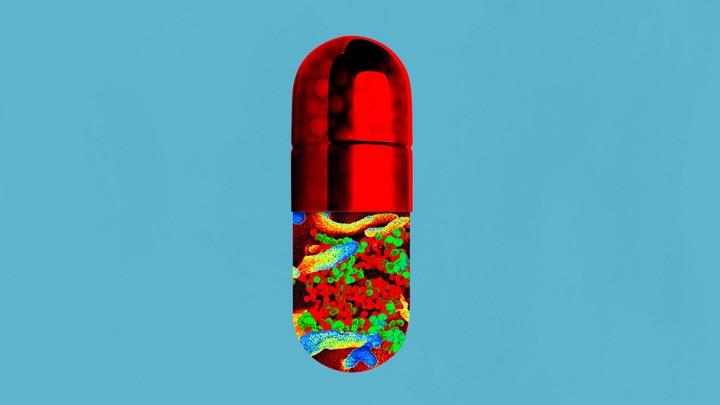
Illustration of a drug capsule
Twenty-nine. That’s the number of proteins the new coronavirus has, at most, in its arsenal to attack human cells. That’s 29 proteins to go up against upwards of tens of thousands of proteins comprising the vastly more complex and sophisticated human body. Twenty-nine proteins that have taken over enough cells in enough bodies to kill more than 80,000 people and grind the world to a halt. 
If there is a way—a vaccine, therapy, or drug—to stop the coronavirus, it will be by blocking these proteins from hijacking, suppressing, and evading humans’ cellular machinery. The coronavirus may sound small and simple with its mere 29 proteins, but that is also what makes it hard to fight. It has so few weak spots to exploit. Bacteria, in comparison, might have hundreds of their own proteins.
Scientists have been furiously looking for a weakness in SARS-CoV-2, as the coronavirus that causes COVID-19 is formally known, ever since it was identified as the culprit behind mysterious pneumonia cases in Wuhan, China, in January. In just three months, labs around the globe have homed in on individual proteins, mapping some of their structures atom by atom at a record pace. Others are screening molecular libraries and the blood of COVID-19 survivors for compounds that can tightly bind and inhibit these viral proteins. More than 100 existing and experimental drugs are being tested against COVID-19. A vaccine candidate from Moderna was first injected into the arm of the first volunteer in mid-March.
Yet other researchers are focusing on how these 29 proteins interact with parts of the human cell—with the goal of finding drugs that target the host instead of the virus. While this seems indirect, it follows with the replication cycle of viruses. Unlike bacteria, viruses cannot copy themselves. “Viruses use the machinery of the host,” says Adolfo García-Sastre, a microbiologist at the Icahn School of Medicine at Mount Sinai. They trick host cells into copying their viral genomes and making their viral proteins.
One idea is to stop these virus-ordered functions without interfering with a cell’s normal functions. Here, the best analogy for a potential SARS-CoV-2 drug may not be an antibiotic, which kills foreign bacterial cells rather indiscriminately. “I think it’s much more like a cancer therapy,” Kevan Shokat, a pharmacologist at UC San Francisco, told me. In other words, it may be about selectively killing the human cells that have gone haywire. This opens up the possibility of many more drug targets in the host, but it also adds a challenge: It is much easier for a drug to distinguish between human and bacteria than between human and virus-hijacked human.
Antivirals are thus rarely “miracle cures” the way antibiotics can be against bacteria. Tamiflu, for instance, can shorten the duration of the flu by a day or two, but does not outright cure it. Antivirals for HIV and hepatitis C have to be taken in cocktails of two or three drugs at a time because the viruses can quickly mutate to become resistant. The good news about SARS-CoV-2, at least, is that it does not seem to mutate especially quickly for a virus. A number of different steps in the disease cycle could be lasting targets for a treatment.
STOP THE VIRUS FROM GETTING INTO A CELL
Let’s begin where the virus starts, which is by tricking its way into a host. SARS-CoV-2 is covered in lollipop-shaped “spike” proteins, whose tips can bind to a receptor found in some human cells called ACE2. These spikes are what give coronaviruses—the group of related viruses that includes SARS-CoV-2 as well MERS and SARS—their name, because they create a crown- or corona-like appearance. The three coronaviruses are similar enough in their spike proteins that scientists are repurposing strategies from SARS and MERS to fight SARS-CoV-2. The vaccine from Moderna, for example, was able to start clinical trials so quickly in March because it is based on previous research into MERS’s spike protein.
The spike protein is also the focus of antibody therapy, which is likely faster to create than a new pill because it harnesses the power of the human immune system. The immune system makes proteins called antibodies to neutralize foreign proteins, such as those from a virus. Several hospitals around the country are trying to infuse antibody-rich plasma from COVID-19 survivors into patients. Currently, research groups as well as biotech companies are also screening the survivor plasma to identity antibodies that can be manufactured en masse in a factory. Spike proteins are a logical target for antibodies because the proteins are so plentiful on the outside of the virus. And again, the similarities between SARS-CoV-2 and SARS helps. “It looked enough like SARS that we had a bit of a head start,” says Amy Jenkins, a program manager at the Defense Advanced Research Projects Agency, the Pentagon’s blue-sky research arm, which is funding four different groups working on antibody therapy against the new virus.

But simply attaching its spike protein to a receptor is not enough for SARS-CoV-2 to gain entry into a cell. In fact, the spike protein is not active until it is cut in two. The virus takes advantage of another human enzyme—such as furin or the inelegantly named TMPRSS2—which can unwittingly come along and activate the spike protein. Several candidate drugs are meant to prevent these enzymes from unknowingly doing the virus’s work. One possible mechanism for the much-hyped hydroxychloroquine, the malaria drug Trump is fixated on, may be inhibiting this spike-activation process.
Once the spike protein is activated, SARS-CoV-2 fuses itself with the membrane of the host cell. It injects its genome, and it’s in.
STOP THE VIRUS FROM REPLICATING
To a human cell, a naked SARS-CoV-2 genome looks like a specific type of RNA, a molecule that normally functions as instructions for making new proteins. So like a soldier who has gotten new orders, the human cell dutifully begins churning out viral proteins to make more viruses.
Replication is a relatively complicated step, which makes it a ripe target for antivirals. “There’s many, many proteins involved … there’s many potential targets,” says Melanie Ott, a virologist at the Gladstone Institutes and UCSF. For example, remdesivir, an experimental antiviral that is in clinical trials for COVID-19, targets the viral protein that copies the RNA, so the genome-copying step goes awry. Other viral proteins called proteases are necessary to free individual viral proteins that are linked together in one long strand, so they can go off and help the virus replicate as well. And still other proteins might help remodel the internal membranes of the human cell, creating bubbles of membrane that get turned into little virus factories. “The replication machinery sits on these membranes, and then it just starts making tons of viral RNA over and over and over again,” Matthew Frieman, a virologist at the University of Maryland School of Medicine, told me.
In addition to proteins that help it replicate and the spike proteins that make up a portion of the virus’s outer capsule, SARS-CoV-2 has a set of relatively mysterious “accessory proteins” that are unique to this virus. Figuring out what these accessory proteins are doing, Frieman said, could help scientists figure out other ways SARS-CoV-2 interacts with the human cell. These accessory proteins might allow the virus to evade the human cell’s natural antiviral defense in some way—another potential target for a drug. “If you can target that process,” Frieman said, “you can help the cell inhibit the virus.”
STOP THE IMMUNE SYSTEM FROM GOING HAYWIRE
Antivirals are likely to work best early in an infection, when the virus has not infected many cells nor made too many copies of itself yet. “When you give antivirals too late, the risk is the immune component has already taken over,” Ott says. In COVID-19 specifically, patients who become critically and fatally ill seem to experience what’s known as a cytokine storm, in which the disease sets off an indiscriminate and runaway immune response. Perversely, cytokine storms can also further damage the lungs, sometimes permanently, by allowing fluid to build up in the tissue, says Stephen Gottschalk, an immunologist at St. Jude Children’s Research Hospital. Another way to treat COVID-19, then, is by treating the immune response, rather than the virus itself.
Cytokine storms are not unique to SARS-CoV-2 or even infectious diseases. They can happen in patients with a genetic disorder, an autoimmune disease, or a bone marrow transplant. Drugs for quelling the immune system in these patients are now being repurposed in clinical trials for COVID-19. Randy Cron, a rheumatologist at the University of Alabama, is planning a small trial for Anakinra, an immunosuppressant currently approved to treat rheumatoid arthritis. Other trials are repurposing yet other drugs on the market, such as tocilizumab and ruxolitinib, which were originally developed for arthritis and diseases of the bone marrow, respectively. Treating a viral infection by tamping down the immune system is especially tricky to balance, because the patient still needs to clear the virus.
Moreover, Cron says, the reports of COVID-19 patients suggest that the cytokine storm within this disease is unique, even compared to another respiratory disease like influenza. “This one really starts fast in the lungs,” Cron says, but with less damage to other organs. Biomarkers of cytokine storms aren’t as “screaming” high as they usually are, he adds, despite the high level of lung damage. COVID-19 and the virus that causes it are, after all, still incredibly new to science.
Much of the early research into drugs against COVID-19 has focused on repurposing existing drugs because they are the fastest way to get something to a patient in a hospital bed. Doctors already know their side effects, and companies already know how to manufacture them. Unless researchers get very lucky, though, these repurposed drugs are unlikely to be a cure-all for COVID-19. Still, they might just work well enough to keep a mildly ill person from becoming severely ill, which is enough to free up a ventilator. “We can do better probably as time goes by,” says García-Sastre, “but right now we need something to start.”

An Unimaginable Toll. by ALAN TAYLOR


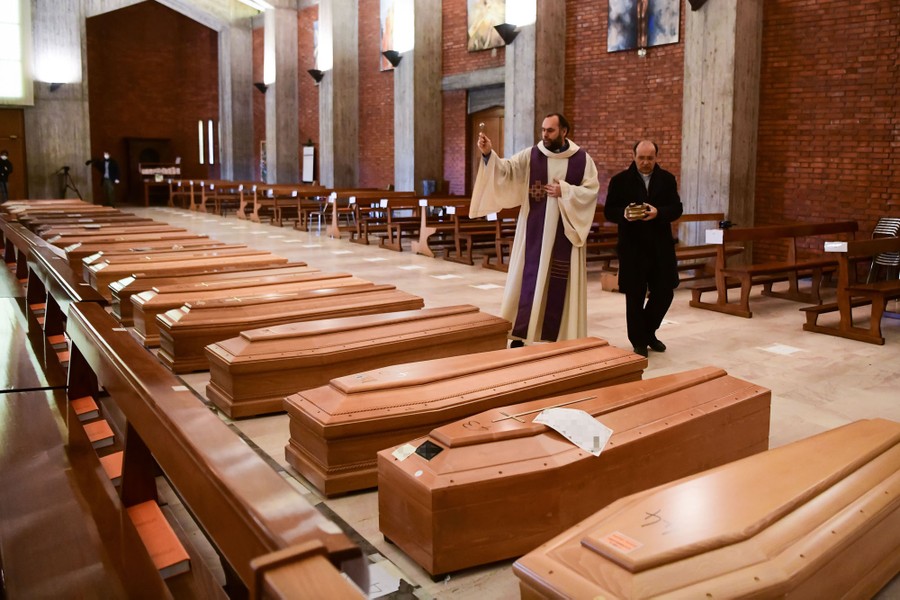
Priest Don Marcello blesses the coffins of deceased people inside the San Giuseppe church in Seriate, Italy, on March 28, 2020.
As of today, more than 83,600 people have died from COVID-19, the disease caused by the coronavirus, since late January, according to data tracked by Johns Hopkins University. This global death toll puts into perspective not just the individual lives lost, but also the thousands of families, communities, and loved ones left behind to cope with grief and uncertainty. New rules and procedures, prompted by the pandemic, have prevented many families from holding memorial services. And, in some of the harder-hit towns and cities, funeral homes and morgues are now reaching capacity. Below, a collection of recent images from around the world, in the midst of a painful and costly pandemic.

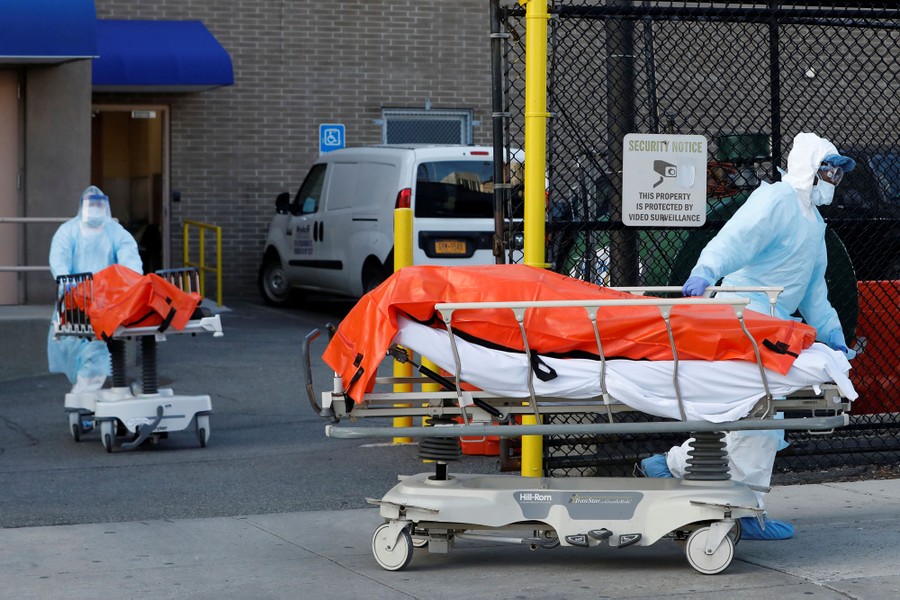
Health-care workers wheel the bodies of deceased people from the Wyckoff Heights Medical Center during the coronavirus outbreak in the Brooklyn borough of New York City, on April 4, 2020.

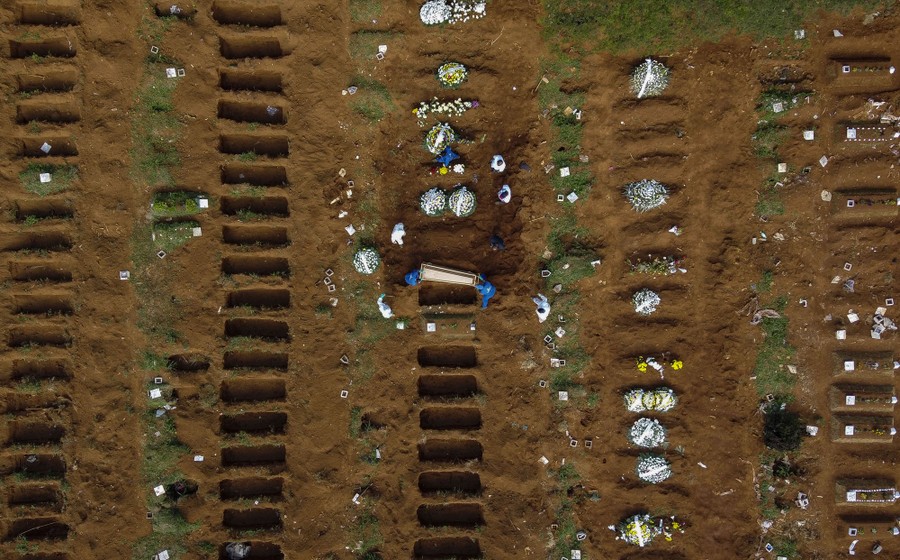
An aerial view of newly dug graves in Vila Formosa Cemetery, during a burial amid the coronavirus pandemic in São Paulo, Brazil, on April 1, 2020.

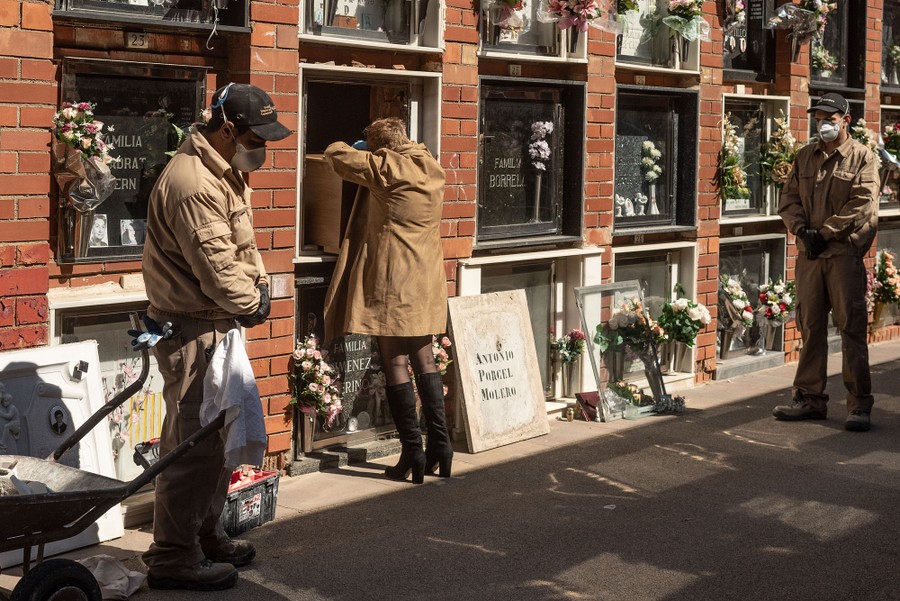
Maria Porcel cries on the coffin of her mother, Concepcion Molero, who died on March 31 of the coronavirus at the age of 80, on April 4, 2020, in El Prat de Llobregat, Spain. Due to the state of emergency in Spain, only three relatives are allowed to attend burial ceremonies as a measure to stem the spread of the virus.

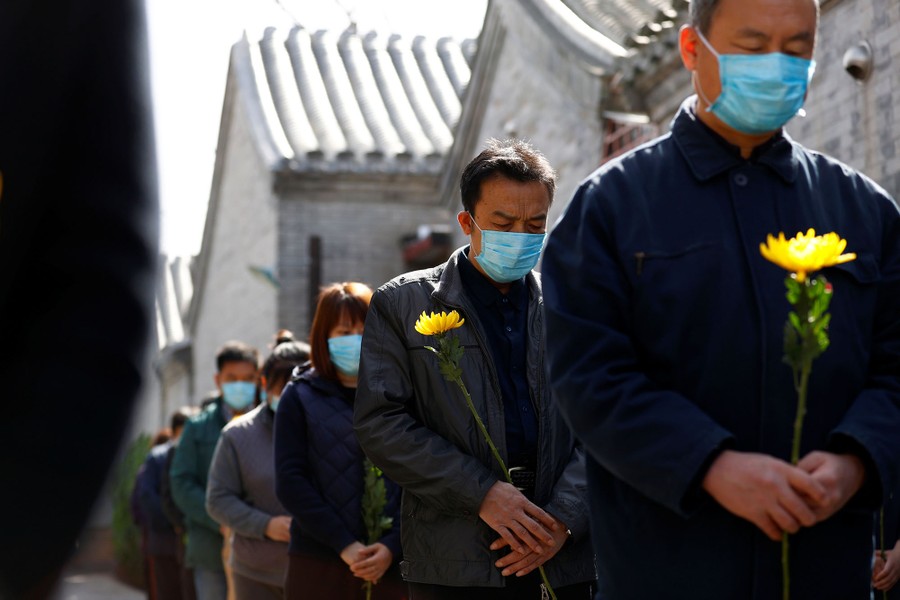
People holding flowers observe a moment of silence at a memorial event in Beijing as China holds a national mourning for those who died of the coronavirus, on the Qingming, or tomb-sweeping day, April 4, 2020

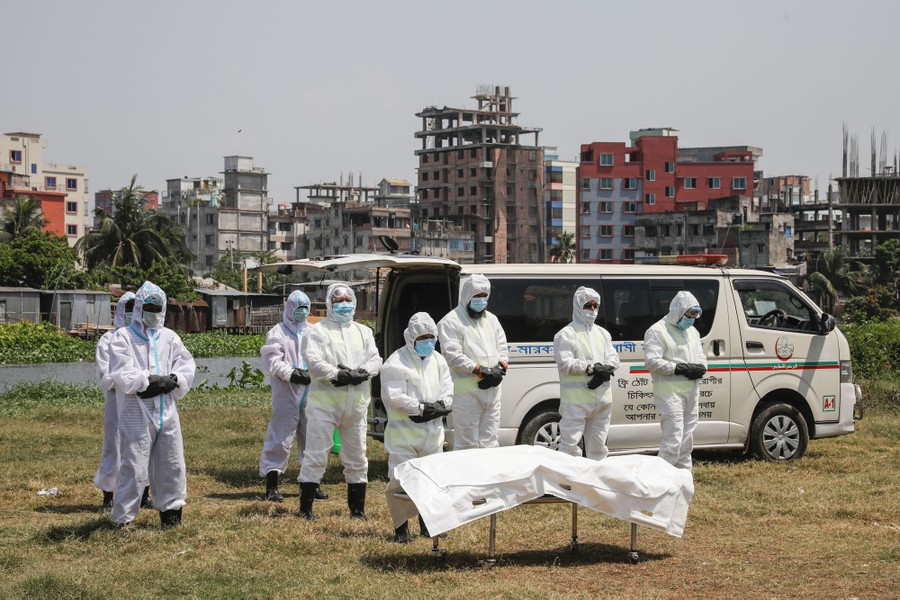
People in protective suits offer funeral prayers for a man who died of the new coronavirus, before his burial at a graveyard in Dhaka, Bangladesh, on April 6, 2020.

Coffins, most of them containing the bodies of COVID-19 victims, lie in rows inside a parking area of the Collserola funeral parlor in Montcada i Reixac, near Barcelona, Spain, on April 3, 2020.

Funeral-parlor employees carry the coffin of a coronavirus victim at a cemetery in Tegucigalpa, Honduras, on March 31, 2020.

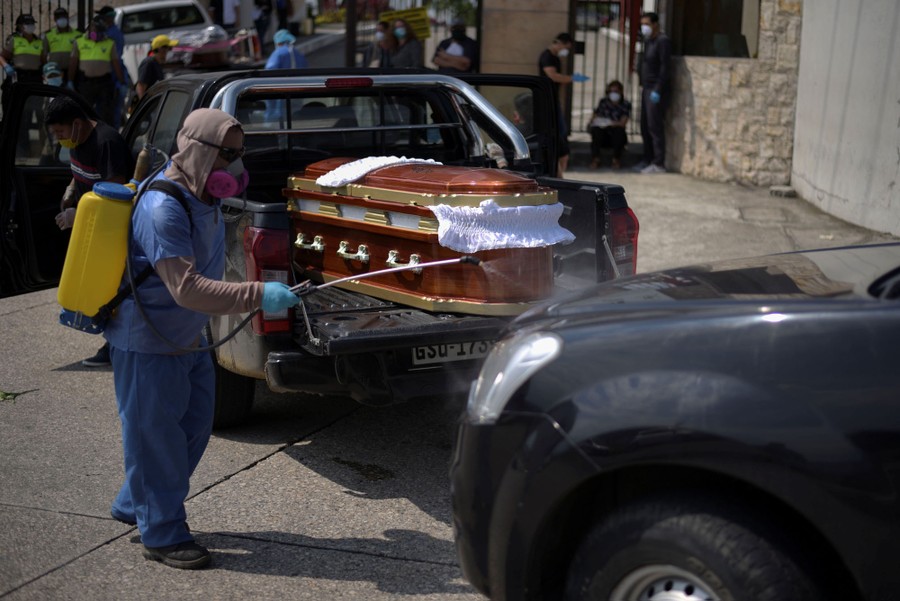
A worker sprays disinfectant on a vehicle carrying a coffin lined up to enter a cemetery in Guayaquil, Ecuador, on April 2, 2020


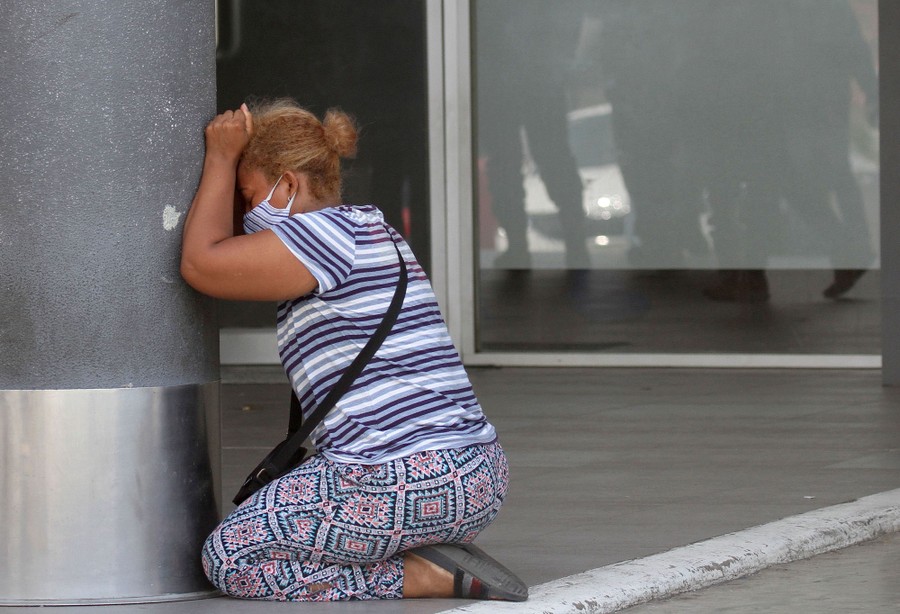
A woman cries after learning about the death of a relative at Los Ceibos Hospital in Guayaquil, Ecuador, on April 4, 2020. Ecuador’s vice president, Otto Sonnenholzner, apologized on Saturday after scores of bodies were left on the streets of Guayaquil as the coronavirus ravages the port city.

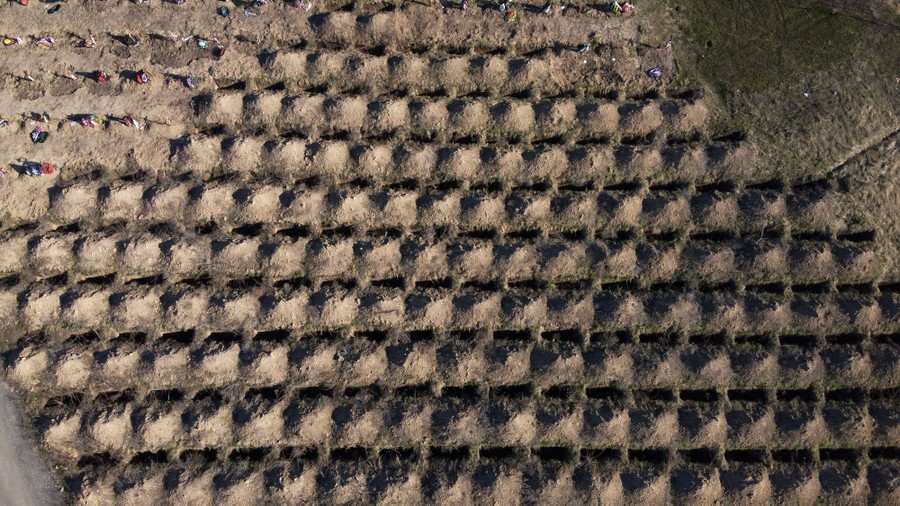
An aerial view shows graves, which, according to local authorities, were prepared in advance for potential victims of the new coronavirus, at a cemetery in Dnipro, Ukraine, on April 5, 2020.

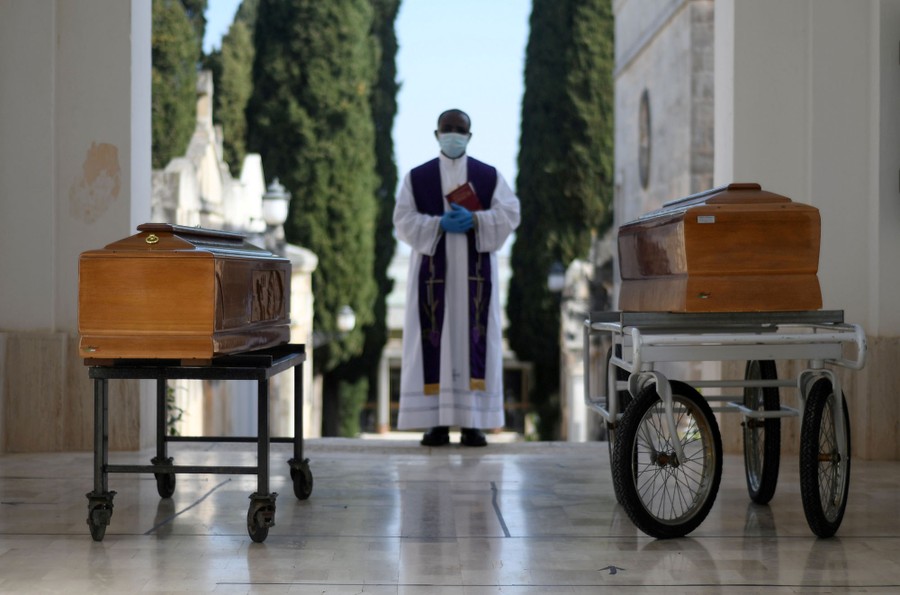
A funeral-service worker looks at coffins of two coronavirus victims, during a burial ceremony in the southern town of Cisternino, Italy, on March 30, 2020.

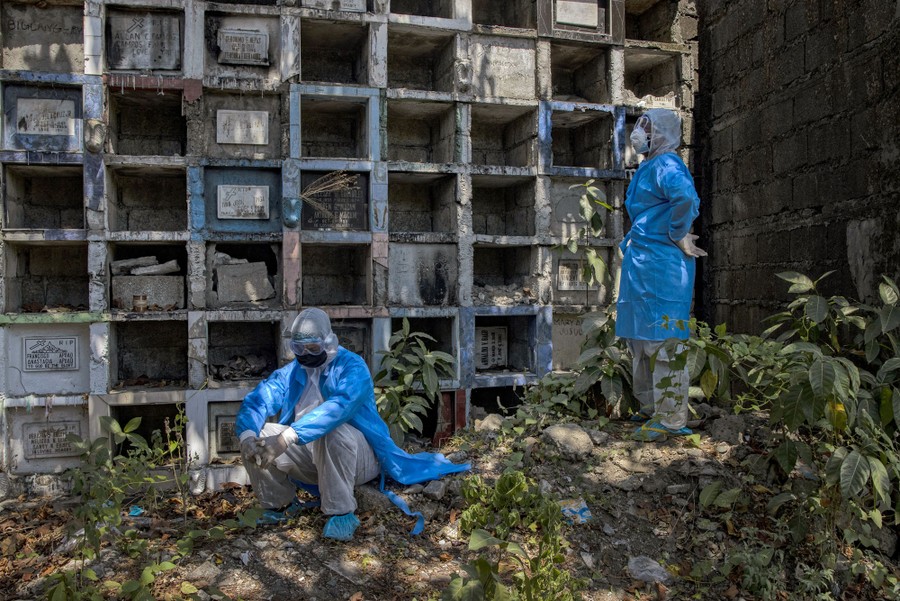
Funeral workers wearing protective suits take a break before transporting the body of a person presumed to have died of COVID-19 at a cemetery in Quezon City, Metro Manila, Philippines, on April 3, 2020

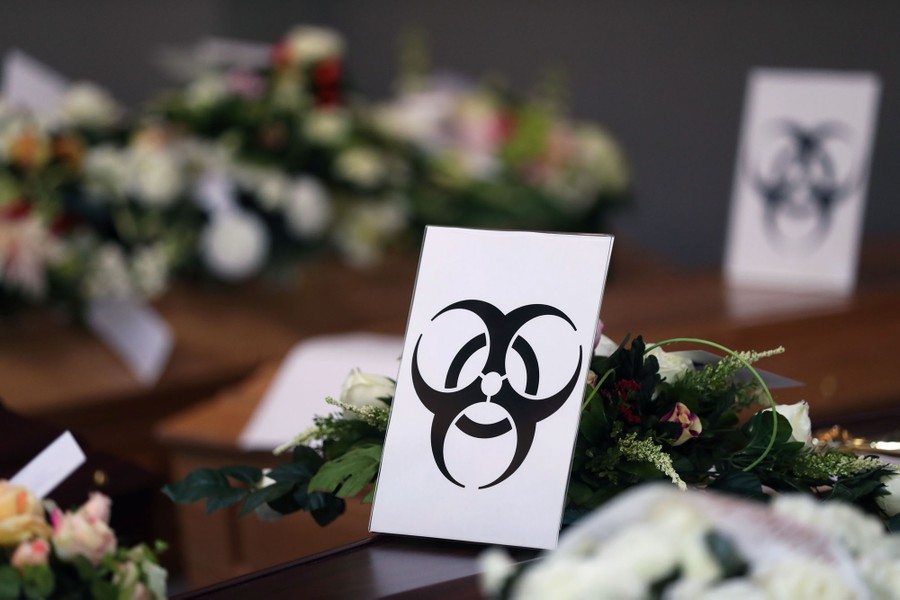
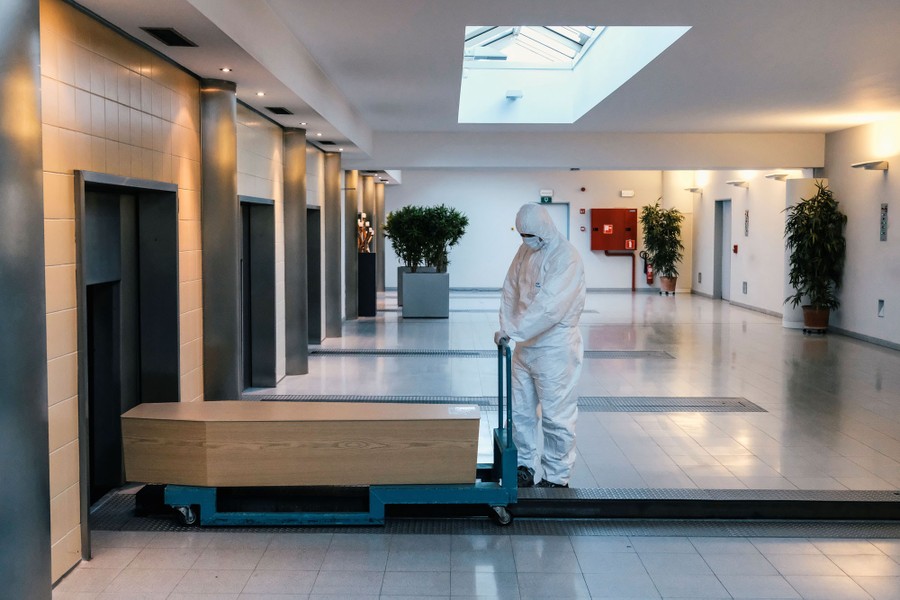
Biohazard warning signs are placed on coffins of people who died of the new coronavirus, at a mortuary near the city of Charleroi, Belgium, on April 7, 2020

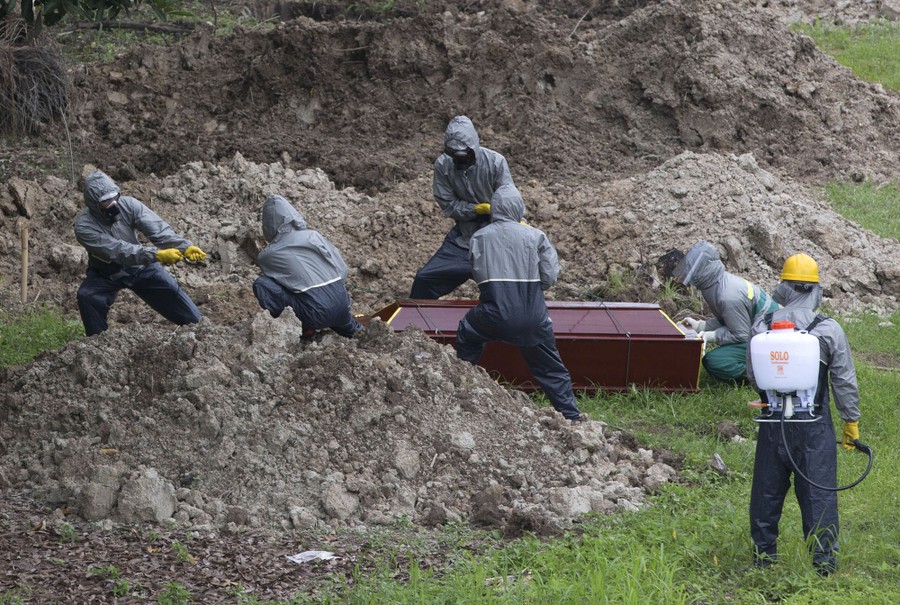
Workers in protective clothing carry a coffin for burial at a newly opened cemetery prepared for victims of the coronavirus in Medan, North Sumatra, Indonesia, on April 4, 2020

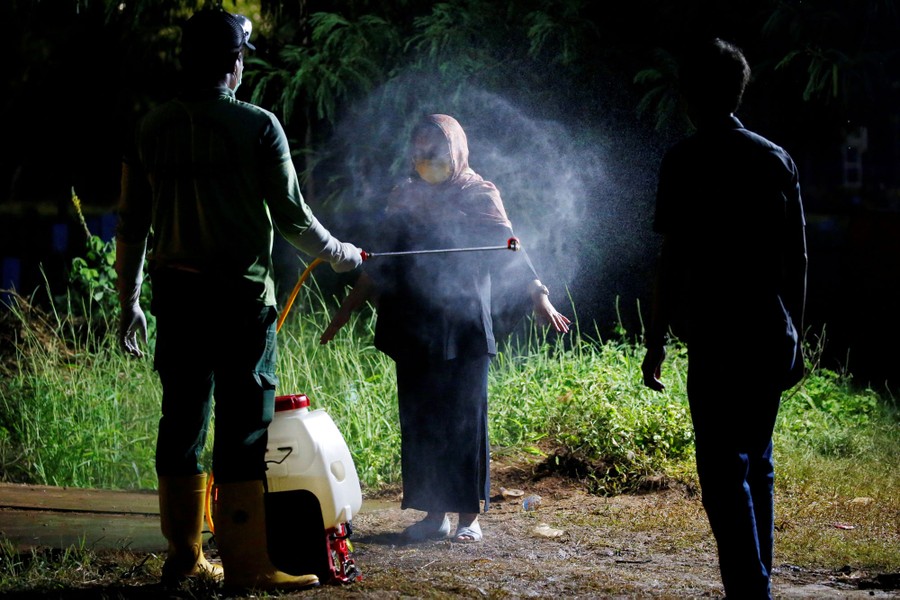
Municipality workers spray disinfectant on a relative of a coronavirus victim during a funeral in Jakarta, Indonesia, on March 31, 2020

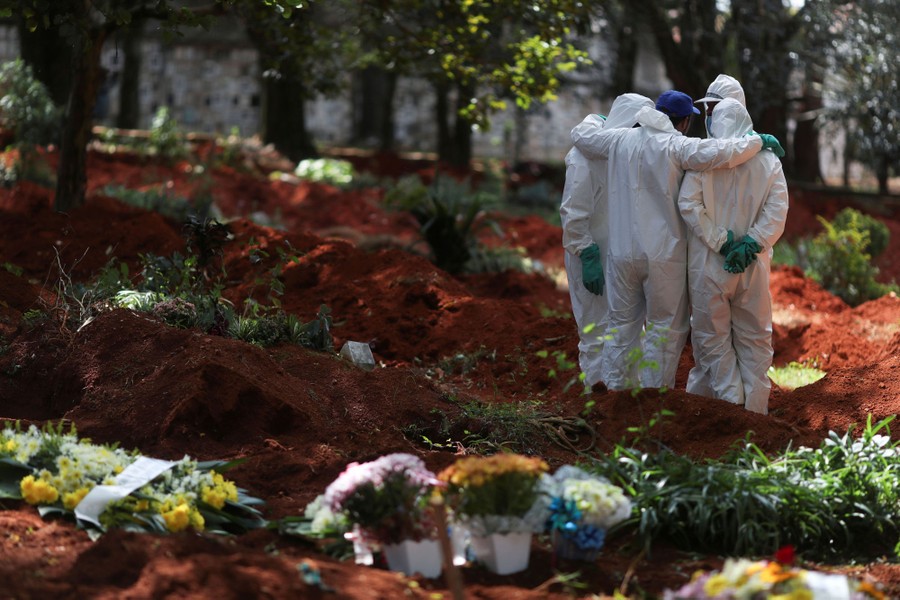
Gravediggers wearing protective suits gather at Vila Formosa, Brazil’s biggest cemetery, during the coronavirus outbreak, in São Paulo, Brazil, on April 2, 2020

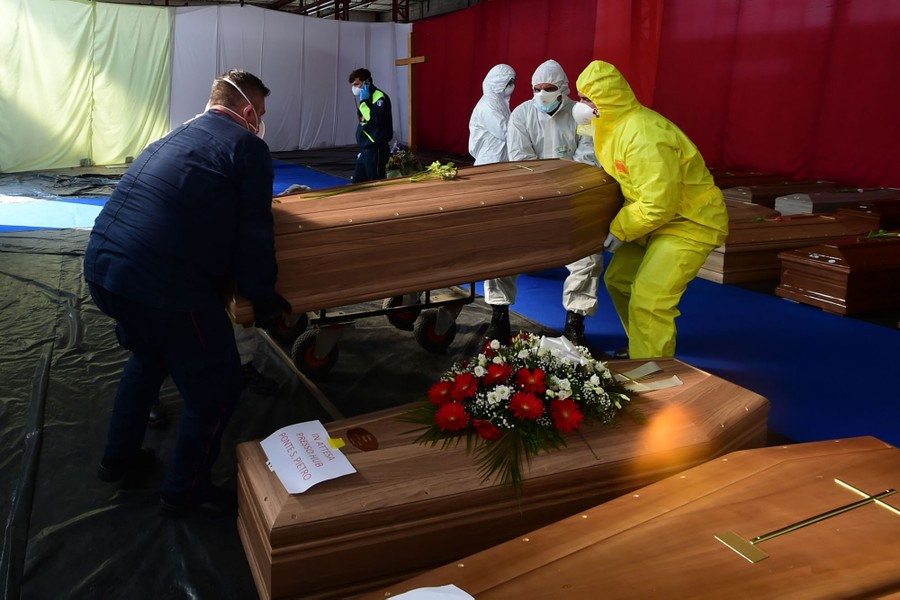
Members of the Civil Protection Agency and the Carabinieri carry the coffin of a coronavirus victim in Bergamo, Italy, on April 4, 2020. Some coffins of coronavirus victims are stored in a factory warehouse prior to being transported by the Italian military to a crematorium.

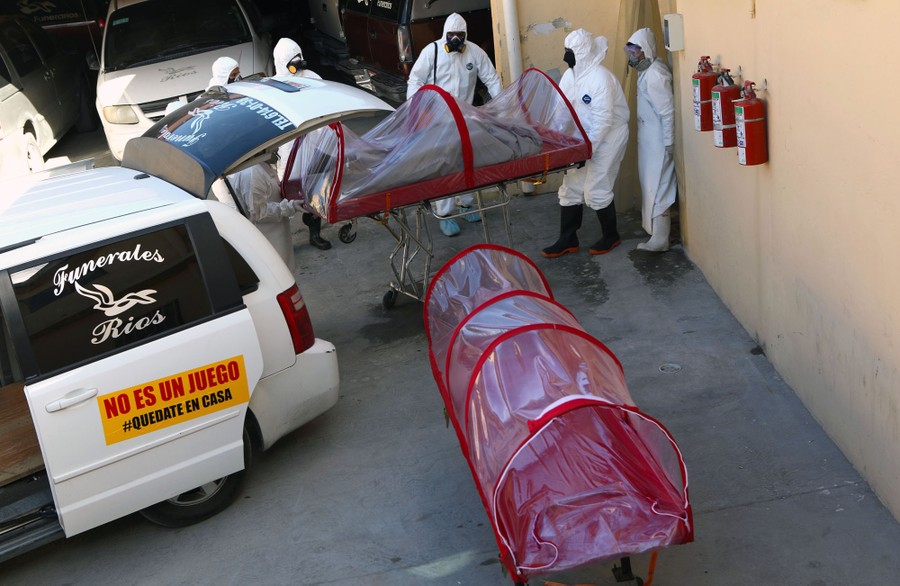
Workers from a funeral service show the process they carry out when working with victims of infectious diseases, in the midst of the coronavirus pandemic, in Ciudad Juárez, Chihuahua state, Mexico, on April 7, 2020

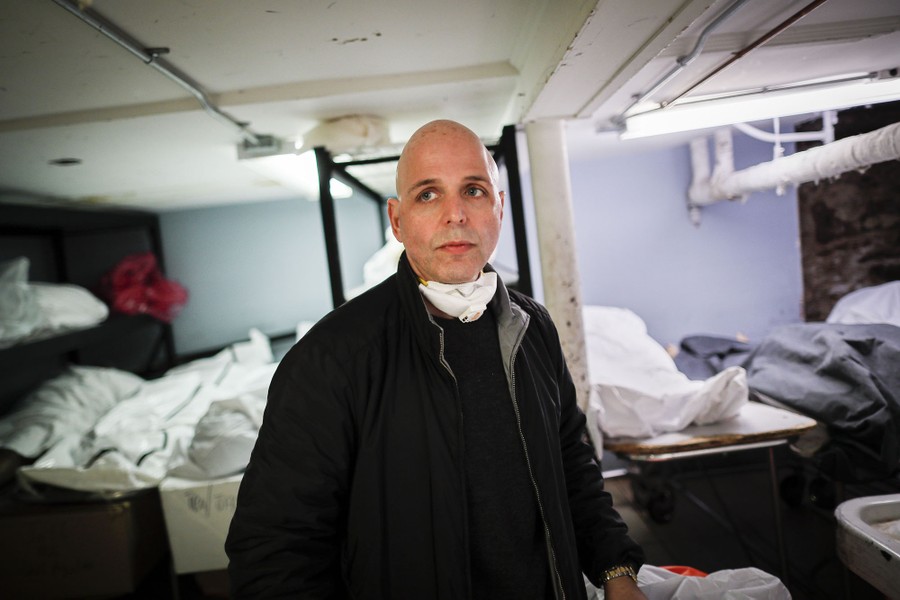
Pat Marmo, owner of Daniel J. Schaefer Funeral Home, walks through his body holding facility, which is struggling to handle overflow of clients stemming from coronavirus deaths, on April 2, 2020, in Brooklyn, New York. “This is a state of emergency,” he said. “We need help.”

Refrigerated tractor trailers that can be used by hospitals as makeshift morgues are lined up in the Icahn Stadium parking lot on Randall’s Island in New York City, on March 31, 2020

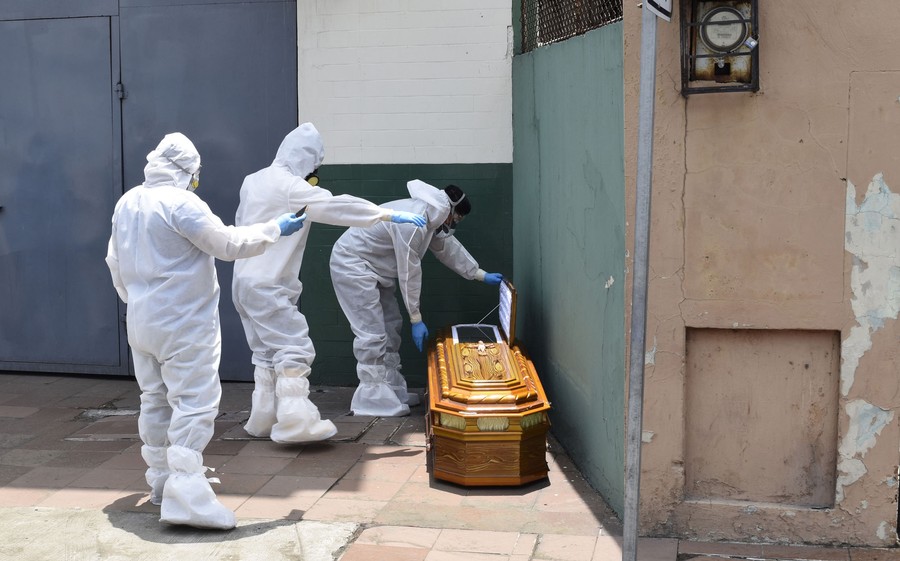
A brigade wearing biohazard suits pick up a coffin with a body that was left outside a house in Guayaquil, Ecuador, on April 6, 2020

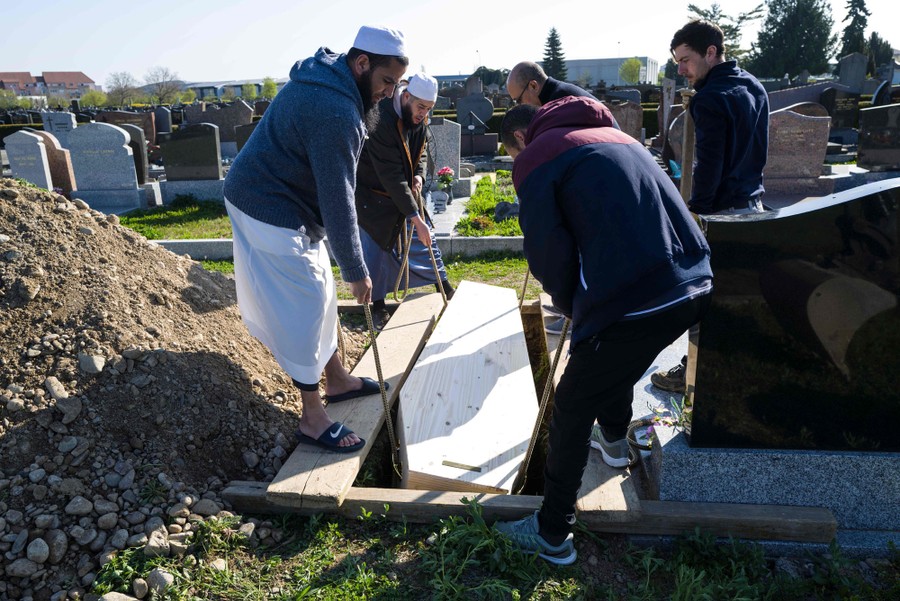
Relatives and others bury a victim of the coronavirus during an Islamic funeral on April 6, 2020, in Wittenheim, France.

Coffins of two victims of the coronavirus are seen during a burial ceremony in the town of Cisternino, Italy, on March 30, 2020.
A worker wearing personal protective equipment guides the coffin of a coronavirus victim during cremation at the Wilrijk Crematorium in Antwerp, Belgium, on March 31, 2020


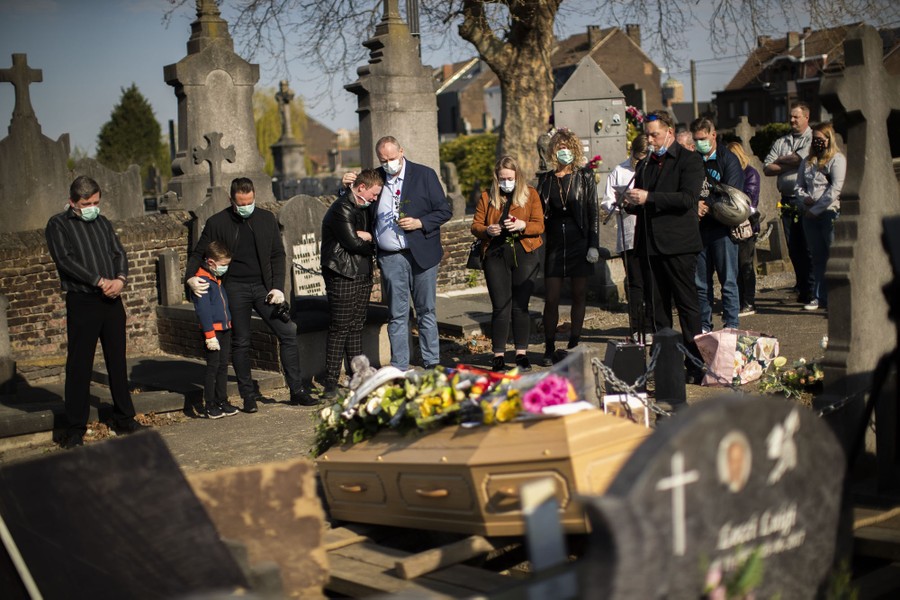
Relatives of Margodt Genevieve, who died of the coronavirus, grieve during her funeral at the Montignies cemetery in Charleroi, Belgium, on April 8, 2020.

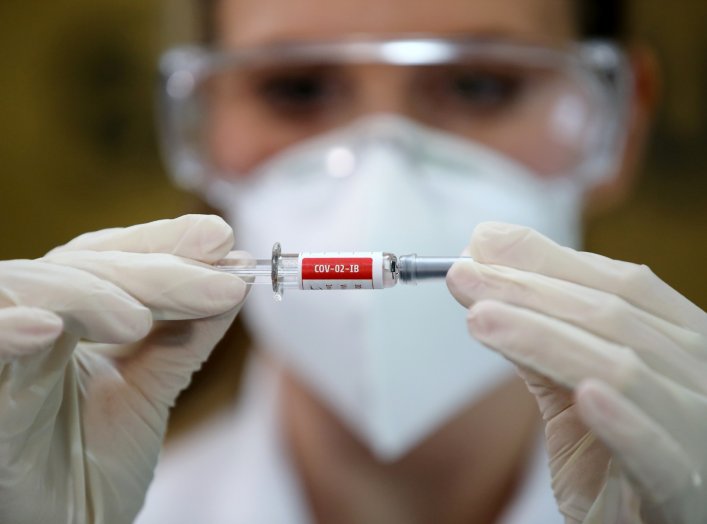
What Will Happen if the Coronavirus Vaccine Fails? A vaccine could provide a way to end the pandemic, but with no prospect of natural herd immunity we could well be facing the threat of COVID-19 for a long time to come. by Sarah Pitt

  There are  over 175  COVID-19 vaccines in development. Almost all government strategies for dealing with the coronavirus pandemic are base...