#Sponsored

Thursday, May 7, 2020

A Black Hole Is ‘Almost on Our Doorstep’ The invisible point of darkness resides in a double-star system just 1,000 light-years away. by MARINA KOREN

In the night sky, far south of the equator, there’s a curious collection of faint constellations embedded in the tapestry of stars. They do not bear the names of myths and legends, because the ancient Greeks couldn’t see them from the Northern Hemisphere. These constellations were charted later, in the mid-18th century, by a French astronomer who sailed south, and he named them in honor of some rather mundane objects of his own time: a telescope, a microscope, a pendulum clock, an easel, various other tools and chisels. “It looked like somebody’s attic!” an American astronomer later remarked.
And just like a cluttered attic, this corner of sky has been hiding something truly remarkable.
Astronomers have discovered a black hole in one of the constellations, the suitably named Telescopium. At just 1,000 light-years away, the black hole is closer to our solar system than any other that astronomers have found to date. A thousand light-years might sound distant to us, but in cosmic proportions, it’s very close.
“On the scale of the Milky Way, it’s in our backyard,” Thomas Rivinius, an astronomer at the European Southern Observatory (ESO) in Chile who led the new research, told me. “Almost on our doorstep.”
For comparison, consider some of the best-known black holes in astronomy, the ones usually intriguing enough to make headlines. The black hole at the center of our Milky Way galaxy is more than 25,000 light-years away, and the black hole that astronomers captured in unprecedented detail last year lies 55 million light-years away, in another galaxy altogether. This one, by contrast, is so close that, on a clear night in the Southern Hemisphere, far from light pollution, the pair of stars that orbit the black hole can be seen with the naked eye. From here, the stars appear as a single pinprick of light.
So if this black hole is, at least in astronomical terms, right there, how has it eluded astronomers for so long?
Well, there’s the obvious: Black holes are invisible. The way to find the darkest points in the universe is to look for luminous clues around them. Most of the black holes that astronomers have found in our galaxy—a few dozen—were spotted because they were devouring nearby stars, pulling material into their maws and past a point of no return. That process is so luminous that not only can black holes be detected from Earth, but they’re actually quite difficult to avoid. “Sometimes they become the brightest objects in the sky,” says Erin Kara, an astrophysicist at MIT who studies black holes and was not involved in the latest discovery. In fact, some black holes emit so much radiation while they feed that telescopes can’t look at them without frying their electronics, Kara says.
The newly discovered black hole doesn’t fit into this category. It resides within a two-star system, but it isn’t close enough to either to ruin their day. Astronomers didn’t go looking for the black hole either; they started examining this system, known as HR 6819, years ago as part of a study of stars that orbit in pairs. When they analyzed the data, they noticed that there was something unusual about HR 6819, particularly the behavior of the inner star. The star’s velocity was so extreme that astronomers suspected a third object was lurking nearby and flinging it around. (The team put this work on hold for several years, after Stanislav Stefl, the astronomer who suggested the missing object could be a black hole, died in a car accident in 2014.)
The astronomers worked out the mass an object must have to jostle the star so much, and their calculations suggested that the object would measure four times the mass of our sun—nearly the same size as the inner star itself. “An object of that mass, you can’t hide it,” Rivinius said. Unless it’s invisible.
The animation at the top of this story shows the arrangement of the two stars and their black hole. Although it appears as if the inner star (whose orbit is shown in blue) and the black hole (in red) are chasing each other, the objects are orbiting each other. The inner star completes a swift loop every 40 days, while the outer star traces a wider orbit around.
Don’t worry: Despite its proximity to Earth, the black hole is no danger to us. It’s a blip compared to the one at the center of our own galaxy, which has a mass 4 million times that of our sun. And, as far as humanity is concerned, it’s not close enough to pose any kind of threat. “One has to be very close to it to be sucked in,” Rivinius said.
There are many more like it. Black holes are the by-products of aging stars that exploded in spectacular fashion at the end of their lifetime. Such supernovas can, briefly, outshine entire galaxies, but nearby, companion stars can survive the cataclysm, which explains why HR 6819 still exists.
Astronomers estimate there are hundreds of millions of black holes in our galaxy. The latest discovery gives them hope that there are others lurking around nearby stars, perhaps even some of the most familiar points of light in our sky. “It’s important to emphasize that it’s the closest we’ve found yet,” says Sera Markoff, an astrophysicist at the University of Amsterdam and a member of the team that produced last year’s historic black-hole photo. “There might be closer ones.”
The general assumption in astronomy is that we humans don’t live anywhere special in the universe, and whatever we encounter here, in our cosmic neighborhood, we should expect to find elsewhere. Dietrich Baade, an ESO emeritus astronomer and one of the authors of the new research, compares the likelihood to seeing hummingbirds in a tropical city.
“If I am in an ordinary hotel and I have breakfast on the terrace and I see a hummingbird flying around, then I can be sure that there must be many more hummingbirds in the area, because my hotel is not in a special place,” Baade says.

There are likely other black holes orbiting “nearby,” hidden in dark crevices around bright stars. Some may not be orbiting alongside stars at all, but drifting along in the darkest crevices of space, without any bright beacons to illuminate their existence like a cosmic flashlight shining on a forgotten box in an attic.

We’re Discovering Our Character The pandemic is reshaping how we understand ourselves and our world. by Eliot A. Cohen

Foon tsuris wird man a mensch was one of my grandpa Sam’s favorite proverbs. It means, roughly, that tough times turn a person from being just anybody into being, well, a mensch. That proverb speaks to our COVID-19 world.
Sam knew tsuris reasonably well. He did not experience the worst that the previous century had to offer his people, but he experienced enough. He grew up in a shtetl in the Pale of Settlement at the end of the 19th century, without much of a formal education. He swam a river one night to escape the border guards (so family lore insists), and got a ticket in steerage from Hamburg to the United States. He had no English, no money, and no skills that would be useful here. He tried his hand at chicken farming, but, as he often said, one day he went out to look at the chickens, and they were all on their backs with their feet in the air. He became a leather cutter in a shoe factory. He ended up owning the shoe factory, and had a long and comfortable retirement in a suburb of Boston.
He lived through pogroms, World War I, the influenza epidemic, the Great Depression, World War II (to which he sent two sons off in uniform), Korea and Vietnam, the civil strife of the 1960s, and much else besides, including family tragedy. But he was a mensch—generous, upright, and principled, even if those principles required sacrifice. He nursed his wife through many years of inability to function, and died as he lived, standing tall, at age 96.
There is much talk about the impact of the coronavirus on electoral politics, on America’s position in the world, on higher education, and on large swaths of small businesses. All of those are, in their different ways, important. Some of them can be evaluated systematically. But none is so important as the virus’s impact on our character.
There is a social science of measuring happiness, which reminds one of the words G. K. Chesterton put in Father Brown’s mouth  about the early lie detectors: “What sentimentalists men of science are! And how much more sentimental must American men of science be! Who but a Yankee would think of proving anything from heart-throbs?” There are not, and cannot be, quantitative measures of character, but what Sam understood was that in the end, character dominated all else. Today the biggest, probably the most important, and almost by definition the least answerable question is what the coronavirus will do to our character.
Anecdote and impression would suggest that the coronavirus may prove Sam right. There is immense human misery: We read about or know directly some of those who have died or who keen over loved ones who are dead or dying; those who suffer illness and isolation; those whose livelihoods have vanished overnight, or who feel the claustrophobic pressures of isolation taking them beyond the reach of sanity. But for the most part, what is striking is the decency and fortitude of average citizens, their willingness to comply with onerous and suffocating restrictions, their willingness to help one another.
It has been troubling for a long time that healthy 21-year-olds who happen to be in the armed forces get boarding priority over grandmothers in their late 60s. This is a misguided tribute to courage and self-sacrifice—misguided because that 21-year-old may have experienced no combat whatsoever. Now, however, we have a more thoughtful understanding of heroism. We know that it is also embodied in the nurse and the doctor, the police officer and the firefighter, the taxi driver and the grocery clerk, the neighbor who goes shopping for an elderly shut-in. In short, we see the heroism that is often latent in everyday life, and—the precious thing—we appreciate and celebrate it.
The United States has the misfortune of being led by a man utterly devoid of character, a razboynik, as Sam, with a curl of the lip, would have termed him—a man who can whine about journalists while seated at the feet of Abraham Lincoln’s statue, disclaim responsibility for anything and everything, bully and abuse subordinates who are infinitely more valuable to public health than he, muse about injecting bleach, and generally disgrace himself and his country with his antics. But that only calls into higher relief the virtues of all the others—the mayors and the governors, the public-health officials and the ambulance drivers, the home manufacturers of masks and ventilators and, yes, the billionaire philanthropists.
It is by now a cliché that the post-COVID-19 world will be different. Unquestionably so. This difference will encompass not just the impact of lives snuffed out or irreparably marred, jobs lost, companies bankrupted, and an economy twisted out of shape. It will encompass how we think about ourselves and our world.
One great seduction of modern times is the notion that human beings can control their environment and their destinies. This belief has manifested itself in many ways. Economists in the 1960s figured that they had discovered the secret of perpetual full production at limited unemployment rates; our legal system implicitly says that when an accident happens, it is somebody’s fault rather than, well, an accident. Clever social scientists come up with ways to “nudge” people into behavior that they are certain is good for them. Predictive analytics, large data sets, and clever algorithms promise to be able to anticipate human desires and behaviors, and even control them. And in some measure they do, until disaster strikes.
At that point, the world changes. Human beings recognize that they are small, the universe is vast, and they are not in charge. Their own machines, connected with one another in unpredictable ways, yield flash crashes of the stock market; their quest for prosperity unleashes climatic changes that almost seem vindictive in their destructiveness. Their cities flood. And suddenly they find that the emergency rooms are jammed with a disease emanating from a bat half a world away.
Generations long past, and the ancient Hebrews and Greeks in particular, understood very well the limits of human control of individual and collective destiny, and accepted them. Which is why so much of their writing and thought returned to the question of character—not because it protected them from life’s vicissitudes, but because it allowed them to survive them with head held high, with personality and integrity intact, no matter how great the suffering. Sam, the product of one of those civilizational streams, understood this intuitively. In the face of the coronavirus, many more may be figuring that out too—and therein lies hope.

The System That Actually Worked How the internet kept running even as society closed down around it. by Charles Fishman

Here’s a question that should make you shudder: What if, in the midst of the coronavirus pandemic, the internet had buckled?
What if, just as the medical-care crisis started to spiral in New York City, in Detroit, in New Orleans, the internet in those places had stopped working—an hour at a time, a couple of hours in the late afternoon? What if the internet had slowed to half its normal speed? What if it had worked only as well as the U.S. distribution system for toilet paper or N-95 masks did?
“Oh my God,” says Avi Freedman, the CEO of Kentik, a company that helps big customers such as Zoom and Dropbox maximize internet performance, “it would all be over.”
Almost the entire nation now seems to be online at the same time, many of us using two or three devices at once—for urgent work meetings and talking with Mom, for college chemistry lectures and neighborhood yoga classes, for grocery shopping and video binge-watching. Digital life has rushed to fill the gaps created by social distancing, allowing some semblance of normalcy and keeping some parts of the economy open for business. Indeed, the things the internet lets us do are a big part of the reason people are comfortable staying confined to home, and are able to. To the degree that any institution is keeping American society knitted together during this crisis, it’s the internet.
In the United States, internet traffic carried by AT&T, one of the nation’s largest internet providers, rose almost immediately by 20 percent starting in mid-March. By the end of April, network traffic during the workweek was up 25 percent from typical Monday-to-Friday periods in January and February, and showed no signs of fading. That may not sound like much, but imagine suddenly needing to add 20 percent more long-haul trucks to U.S. highways instantly, or 20 percent more freight trains, or 20 percent more flights every day out of every airport in the country. In fact, none of those infrastructure systems could have provided 20 percent more capacity instantly—or sustained it day after day for months.
Yes, there have been hiccups. Freedman notes that “we are seeing an increase not only in traffic, but in short-duration outages.” Your laptop—or the apps you’re trying to use on it—may well be advising you, from time to time, that your internet connection is weak. But that’s hardly surprising, or alarming, Freedman says, given that we’ve taken growth “that would happen over a year or two and compressed it into six weeks.”
The story of how that happened may not involve the sort of life-threatening heroics we’ve seen from medical personnel in New Orleans or New York. But amid so much highly visible dysfunction in the American response to the coronavirus, it’s worth appreciating the internet as an unsung hero of the pandemic. It has stayed on because people out there are keeping it on. The internet’s performance is no accident, but rather the result of long-term planning and adaptability, ingenuity and hard work—and also some characteristics that have become part of the personality of the internet itself.
With 250,000 employees and $181 billion in revenue, AT&T is the nation’s largest telecom company by far, and the third-largest broadband-internet provider, after the cable companies Comcast and Charter Communications. It is also one of the largest carriers of internet traffic, and it helps manage the internet backbone—the crucial superhighway of hidden fiber-optic cables that form the bulk of the internet’s carrying capacity, spanning the U.S. and crossing the oceans to Europe and Asia. So as I tried to understand why the internet hasn’t buckled under the current strain, AT&T seemed like a good place to start.
Internet companies don’t routinely reveal their own network performance. But when I reached out, AT&T agreed to pull back the curtain, sharing data and allowing me to interview key staff. In some ways, the story they told is particular to AT&T, but in others, it paints a picture of the industry as a whole, revealing how the pandemic has changed our use of the internet, and also what it has taken to keep the internet running.
In the pre-pandemic world, weekdays on the internet were pretty placid. Most of the normal routines of work are undemanding for the network: emails, Slack messages, loading websites, sharing files.
Web traffic in the U.S. would typically pick up around 9 p.m., as millions of us settled in to decompress with Hulu or Netflix, Disney+ or Amazon Prime Video. Netflix has 60 million U.S. subscribers (and many are multiuser memberships). Hulu has 30 million subscribers, Disney+ 30 million, Prime Video 40 million. Even accounting for overlap, more than half of Americans can watch streaming video on any particular Tuesday night. (One study says that 70 percent of U.S. households have a streaming subscription.) And streaming video takes huge amounts of internet bandwidth. Internet traffic across the network rises each night as people tune in.
“The peak in backbone traffic used to be Saturday and Sunday nights,” said Chris Sambar, who runs AT&T’s technology operations, a division with 22,000 employees who build, maintain, and operate the company’s global network. On Sunday nights, Americans “don’t go out. We stay home and watch videos and movies. Sunday night has always been the high-water mark for traffic.” At least until mid-March 2020.
On Friday, March 13, AT&T told its employees that everyone who could should start working from home, and the following Monday, more than a third of the company’s staff—some 90,000 people—reported to work from their kitchen table. That same week, lots of companies with employees who could work from home did the same. Stay-at-home orders soon followed from state and local governments. Immediately, Sambar said, “we started to see peaks in the middle of the week.” Use was rising sharply during the normally quiet daytime hours, and also on weekday evenings. “We started seeing multiple days during the week equivalent to Sunday.”
Two big things were happening.
First, tens of millions of Americans who normally met face-to-face with colleagues or classmates were now doing so over the internet, using audio- and videoconferencing, Skype, Zoom, FaceTime, Webex. All of a sudden, the daytime internet was filling up with high-demand video traffic.
And second, all those connections were being made from dining-room tables and couches at home. Big downtown office buildings, sprawling office parks—those have robust internet connections because so many people rely on them, and because some work functions (such as stock trading) require superfast, super-responsive connections that don’t slow at all. Residences do not.
In the month since businesses closed and people started working from home, AT&T data show that the amount of phone calling we did using Wi-Fi as the initial connection (so-called “Wi-Fi calling”) nearly doubled during the day. We were jumping on our cellphones at home to talk with our colleagues, and often the phone was deciding that the cellular network itself was so busy that it was best to use Wi-Fi to connect the call.
And in those same four weeks, as we settled in to the fresh daily routine of video meetings and back-to-back conference calls, AT&T says the number of minutes of audio- and videoconferencing across the network, on every platform, went up fivefold—an astonishing jump that squares with everyone’s daily Zoom immersion.
In other words, we began using much more data-demanding technologies, all at once, in precisely the place not designed to handle that kind of demand. “This is an event,” Sambar said, “unlike anything we’ve ever seen.”
As people who explain the internet always say, it’s not one place, and no matter where you’re going, there is not just one route: It is, famously, a web of connections. AT&T’s website reports, with an air of odd precision, that every time you make a call on its mobile network, the call can be connected by 134 different routes. The same is essentially true of any journey you take through the web. If something goes wrong on the best route, the call, the email, the Amazon order takes another.
In that sense, the internet is very much like the highway-and-road system in the U.S. There are small two-lane roads that lead to homes and businesses. There are larger, secondary roads that have larger businesses and residential complexes on them. And there are interstate highways, where the traffic goes fast for long distances without a lot of entrances and exits. The internet has almost exactly the same network of connections—big, high-speed, high-volume ones that cross continents and pass under the Atlantic and Pacific Oceans; medium-size ones inside cities; and “last mile” connections directly to individual homes and businesses.
Having many paths to any given destination is part of the internet’s original design, a characteristic that’s been retained as the network has expanded. It’s much of what gives the internet its adaptability and resilience. Just as the closure of a single road for maintenance doesn’t prevent people from driving where they need to go, so specific local problems or outages in internet technology don’t typically derail traffic.
But it’s also the case that residential areas aren’t designed with the capacity and flexibility of the higher-capacity sections of the internet—any more than a residential street is designed with the capacity of I-95.
Even if you have a fiber-optic connection right to your house, it’s nothing like the connection to an office building. The internet and the mobile-phone network both still rely on a huge array of central switching offices—modeled on the central offices of the telephone system from a century ago—that collect calls and internet traffic from neighborhoods and route them into the larger network, and vice versa. Your home’s fiber-optic connection is part of what’s called the “last mile” infrastructure of the internet—leading from those central offices out to subdivisions and small businesses. In your own neighborhood, there’s less “route flexibility” than in your city or region—just as there is with streets or the electric grid. And it’s turned out that the last mile is what’s preoccupying many internet engineers and technicians today.
Another, more recent element of the internet has turned out to be indispensable for the moment we’re in: the cloud. Much of the software and information that we rely on—our Gmail inboxes, Slack channels, all kinds of essential corporate and government databases—isn’t stored away in a series of tall cabinets behind a locked door on the 24th floor of our company’s office. It’s in the hands of Amazon and Microsoft, Google and IBM, in enormous facilities run by professional data wranglers, who have additional enormous facilities as backup. Amazon and IBM don’t care where we are when we sit at our keyboards and access the data. This cloud infrastructure, combined with the resilience of the internet’s own web of connections, frees us to do our work wherever we happen to be.
It didn’t used to be that way—you used to have to be in the building where both the work and the computers were to do that work. The internet of 20 years ago, Avi Freedman says, would have struggled to help us in a crisis similar to the pandemic. “We are performing right now much better at our worst than the internet did at its best in the 1990s.”
The cloud, too, has efficiency and extra capacity built in as part of its operating structure—the ability to add computing capacity at the click of a mouse—because somewhere, Google and Microsoft have servers waiting. That is part of what they offer fast-growing digital companies, in fact: the power to add capacity instantly, without those companies having to buy and configure their own computers. The cloud means that we can do everything from anywhere.
And it turns out that, during the pandemic, among the things being run from home is the internet itself.
Amanda graham has been at AT&T for two decades—she started in customer service, then got an electrical-engineering degree, and for the past 13 years she’s been a network engineer for the company.
         Graham can see into the internet. When something goes wrong—when a car accident takes out a piece of equipment, when a switch or a network router fails—she can click through to the component that’s not working and get a list of the business customers who are relying on that router or switch, and who might be losing their internet connection.
That’s her job: to keep business customers connected, to see the problems coming if she can and scramble repair service. Graham doesn’t talk directly with AT&T’s customers, but when trouble erupts, she makes sure the people who take care of those customers know what’s happening, often before corporate IT departments figure it out and call AT&T.
Graham spent more than three years doing that at AT&T’s network headquarters, the Global Technology Operations Center (which AT&Ters call the “Gee-tock”) in Bedminster, New Jersey, 40 miles west of the Holland Tunnel. The GTOC has the air of mission control: quiet, dimly lit, with three rows of workstations facing a curved video wall that is 12 feet tall and 250 feet wide, almost the length of a football field. The wall is composed of 141 screens showing the people in the room any kind of vital sign about AT&T’s network, and the internet, that they might want. The video wall also shows real-time weather data and the 24-hour news channels—because the weather and the news often tell you when something is about to happen to the internet. The GTOC has three shifts, every day of the year; inside, 2 a.m. and 2 p.m. don’t feel that different (although our use of the network is).
Graham more recently has worked in a smaller version of the GTOC in Dallas, doing the same job she did in Bedminster. Starting Monday, March 16, she began logging on for her regular shift, from 5:30 a.m. to 2 p.m., from her living room.
Graham can spot congestion in the network—the indicators are red instead of green, just as your route in Google Maps is red when things slow down. But now, instead of watching the cities, the downtowns, the skyscrapers, and the office parks where her business customers are clustered, Graham is watching the suburbs—where the employees of those customers live, and now work.
“The local level is the business level now,” she said, “which is very different. We’re very aware of the stress that people are feeling.” Everyone needs their phone and laptop to stay connected; each of us has become our own IT help desk. “The other day, right here in Texas, we had an outage of U-verse”—AT&T’s residential internet service, the equivalent of Verizon Fios. An ethernet card in the network had failed. “About 1,000 customers down,” Graham said. “It’s very routine.” It’s not pleasant, of course, if you’re one of those customers, but it’s not much different from a brief electric-power failure.
The internet is now so complicated, the traffic is now so enormous and fast-moving, that at AT&T and other companies that manage the internet, much of that management is automated. The network uses artificial intelligence to improve efficiency; it reroutes around backups and outages. All this is watched over by network engineers, but adjusted more quickly than human beings would be able to keep up with in most circumstances.
The network isn’t typically programmed to reroute traffic for small neighborhood outages, though—partly because so few users are involved, partly because that last-mile part of the network doesn’t have much flexibility.
The pandemic is changing that.
When this particular local outage happened at midday, Graham said, “I got a message from one of our sales reps.” The neighborhood is home to a huge concentration of employees from one of the five largest banks in the U.S.—hundreds of at-home users who couldn’t connect. It would normally take a couple of hours for an AT&T tech to get to the right central office and swap out the bad circuit board. And on a typical weekday, with maybe 120 people at home in that neighborhood, AT&T would consider that a reasonable pace of repair.
“But now that’s a bigger deal,” Graham said. It was, in essence, a virtual bank office building with hundreds of people who couldn’t do their jobs. “We wouldn’t take an outage like that and try to reroute it normally.” But in this case, she and her team were able to find a way to do that, so internet service was restored before the actual physical repair could be made.
The surge in traffic, on the internet as a whole and on AT&T’s part of the network, is extraordinary in a way that the phrase 20 percent increase doesn’t quite capture. AT&T’s network is carrying an extra 71 petabytes of data every day. How much is 71 petabytes? One comparison: Back at the end of 2014, AT&T’s total network traffic was 56 petabytes a day; in just a few weeks, AT&T has accommodated more new traffic every day than its total daily traffic six years ago. (During the pandemic, the AT&T network has been carrying about 426 petabytes a day—one petabyte is 1 million gigabytes.)
That puts pressure on the company to ensure that as many routes through the web as possible are open and uncongested at any given time. And the company also has scrambled to add capacity where it’s needed as internet usage has shifted geographically. At one point in March, for instance, traffic was rising so fast in Chicago and Atlanta that dozens of technicians and engineers in those cities worked all night, adding fresh fiber connections and routers. AT&T’s network is designed “to have plenty of headroom,” said Sambar, the network chief. “But we are playing whack-a-mole all over the country.”
The simplest explanation for why the pandemic hasn’t broken the internet is that the internet was designed to be unbreakable, at the very beginning. (The early precursor to the internet, ARPANET, was designed to survive a nuclear attack by rerouting network signals.)
That principle still infuses the way it is built, and also the way it is managed and maintained. And it’s reflected in the sheer number of resources—staff and infrastructure—that network companies such as AT&T and cloud companies such as Amazon devote to minimizing interruptions and slowdowns, even in a normal environment.
Reliability—“uptime”—is a key selling point in the broadband world; internet-service providers staff up to ensure it. They build in excess capacity to enable an effective response to crises, and to stay well ahead of the astonishing growth of internet demand. In the process, the internet’s near-perfect uptime has become an operating characteristic of the internet itself—an assumption built into all kinds of our daily uses, from managing mission-critical systems such as power grids and air travel to sending messages on Slack and streaming music and video. Businesses and government institutions—and each of us, as well—assume an always-on connection that reaches everywhere.
That design philosophy is very different from the way much of the rest of the U.S. economy operates. The pandemic has shown us the downside of perfectly optimized systems—from the supply of ICU beds and virus-sampling swabs to the availability of baker’s yeast. We’ve been desperately short of all three of those things precisely because we’ve spent years tweaking supply chains so we have only exactly the amount we can use right now, without the “waste” of empty ICU beds or idle swab-making machines. In that way, what has saved the internet—redundancy, flexibility, excess capacity—reflects not just a different design philosophy, but a different underlying economic philosophy as well.
At&t rehearses for disaster. Last May, the company ran an internal war game on how a pandemic would affect its ability to keep phone and internet service running. The company does these exercises routinely to try to get ready—to build teams of people and their reflexes, and also to understand what they will need on the ground.
Some of it is simple. In crisis mode, Sambar said, “we do something called ‘hands out of the network.’ Any maintenance that’s not critical, we stop doing. We call it a network freeze. Because any kind of routine software upgrade runs the risk of a human error … we want to do only things that are absolutely critical right now.”
Some of it is considerably more elaborate. The internet doesn’t feel physical as we’re using it every day, but for the companies that build and run it, the internet is intensely physical. AT&T runs 485,000 miles of undersea cable and 1.3 million miles of fiber in the ground—enough wiring to stretch to the moon and back three times. In the U.S., the company has 80,000 cellphone sites and hundreds of central switching offices.
So AT&T has 100,000 technicians, repair people, and engineers in the field—people who mask up, glove up, and make sure that there’s enough service for hospitals, or that failed equipment is replaced quickly. The company has set up dozens of mobile cell units at coronavirus testing sites, to make sure that those places have strong internet connections, for the people standing in line who fear they are sick, and also for the health-care professionals doing the testing through open car windows.
The company’s network-recovery division maintains warehouses filled with equipment—four across the U.S., one outside the U.S.—to be ready to repair the network under a wide range of conditions. Those warehouses have the usual truck- and trailer-based mobile cell towers, portable generators, spare parts of all kinds—all regularly tested to make sure that they work in an emergency. The warehouses also have more exotic supplies—drones and small blimps to provide aerial internet service in the worst disasters, hazmat suits, and MREs in case techs need to take their own food to the site of an outage.
Despite the country’s intense reliance on the internet, the pandemic hasn’t been good for AT&T’s business. The company has closed 60 percent of its retail stores (leaving the rest open for emergency service); at the start of April, 20,000 of its staff were sidelined by the pandemic, sick from or vulnerable to the virus themselves or taking care of family members who were. And AT&T has waived late fees and data-overage fees for its subscribers. On March 19, the company canceled a $4 billion stock repurchase in order to preserve cash for the uncertainty ahead.
But like other businesses and institutions that are indispensable during this period, Sambar said, there is a sense of urgency and mission. “We’re trying to keep the economy going.”
And to keep people who have been ordered to stay apart connected. The data show Americans’ intense desire to keep communicating. On AT&T’s network, customers are spending 33 percent more time talking on their cellphones, and they’re sending 40 percent more text messages, compared with January and February. Twice during the pandemic customers set a record for text messages,—once in mid-March as it started to build, and again on Easter weekend, sending more than 23,000 in a single second, besting the old record of 15,000, set on New Year’s Eve.
The pandemic is even managing to revive a technology long thought passé—the original network technology. We’re talking on our landline home telephones again: Weekday minutes are up 45 percent; Sunday minutes are up 64 percent. America’s cities may be quiet—the malls, the highways, the coffee shops, the downtowns all deserted. But we’re talking with one another every way we can. Your mom appreciates the call.

In a Pandemic, All Some People See Is Your Color What COVID-19 reveals about our fraught relationships. by Calvin Baker

The last night i went out in the city was in late February. I met my friend Grant (whose name has been changed) at the Standard, on Bowery, and we walked over to Bohemian, on Great Jones, to celebrate the 50th birthday of a Broadway producer. After dinner we went down the street to Acme, where a tech entrepreneur was having a dance party to celebrate his 40th. Grant sipped his tequila and began to grow irate because there were so few people of color around. It felt like the 1950s. We were talking to a beautiful Ghanaian woman whom I’d met once before, and when she mentioned a house party in Harlem that a mutual acquaintance was throwing, Grant and I invited ourselves. But as we glided up the FDR we heard the party was a bust. We dropped her off at home and headed to Koreatown, as though we knew it would be one of the last nights we could go out. We ended up in a bar on 34th Street, giving each other the kind of questionable advice that pours out after midnight, when Grant started to thumb at one of his phones.
“It’s Fan,” he said. (Her name has also been changed.) “She’s been under strict quarantine for a month now, and is getting bored.” I shot him a skeptical look as they began to have a text war. They had one of those relationships that reminds you the root of passion is suffering. His parents were immigrants from Taiwan, and he believed he could only ever be happy with an Asian woman. I wasn’t sure I believed him. She wasn’t always as nice to him as she could be. He spoke of his own failings, explained that the friction between them was cultural, and insisted I’d never understand. When he visited China he felt seen, and free of the constant weight of race. I couldn’t argue with that, so I shrugged the way you do when a friend in whom you have faith is navigating something complicated. He told me that weeks in isolation give you time to reflect. “With all that’s going on, though, who knows when I’ll see her.” Neither of us knew we would also go into isolation soon. But before the skylarking ended he told me he’d heard that the official numbers in China were underreported: “They say there were five crematoriums burning around the clock.”
In the United States, the virus was still mostly centered on the West Coast then, but when I spoke with Grant a few days later he told me three cabs had passed him as he was trying to get to a meeting. “I’ve seen it happen to my college roommate. I’ve just never experienced it directly,” he said. “Even an Asian guy looked into my face and kept going.” I wanted to say maybe the cabbie knew about his girlfriend in Sichuan province, but thought better of it. He was still in pain from the affront. Both Grant and his former roommate, who is African American, are Ivy League lawyers, held in high regard by corporate chiefs and presidents. They thought being brilliant, ethical, and successful would protect them. But no matter who you were, or what you had achieved, it could all collapse at any time into race.
Grant’s parents came to America after World War II, part of the second significant wave of Chinese immigration, driven by the new spirit of global cooperation. The first wave had been more than a century earlier, during the California gold rush of the 1850s. But in 1882 Congress passed a law ending further immigration of laborers from China, and the Supreme Court upheld it in 1889. Yet just three years before that, the justices had ruled in Yick Wo v. Hopkins that the Chinese people already here, citizens or not, were entitled to equal protection under the Fourteenth Amendment. At the same time, the Court was engaged in a series of rulings that stripped Fourteenth Amendment rights from the people for whom it had been enacted in the first place: formerly enslaved African Americans. In Plessy v. Ferguson, Justice John Marshall Harlan referenced the Wo decision in his famous dissent, in which he wrote:
There is a race so different from our own that we do not permit those belonging to it to become citizens of the United States. Persons belonging to it are, with few exceptions, absolutely excluded from our country. I allude to the Chinese race. But by the statute in question, a Chinaman can ride in the same passenger coach with white citizens of the United States, while citizens of the black race [cannot].
The messages are more mixed than those in a fraught relationship—sometimes you’re a vile threat; other times you are useful.
Between 1948, when President Harry Truman integrated the armed forces, and 1964, when President Lyndon B. Johnson signed the Civil Rights Act into law, the legal protections that had been ripped away from African Americans post-Reconstruction were slowly restored. That changed with the election of Richard Nixon in 1968: The re-embrace of racist policy began, and white grievance became a core tenet of the Republican Party, culminating in the 2016 election of Donald Trump. By the logic of the radical extremism our current president represents, a global pandemic that began in a province of China was called the “Chinese virus.” Rhode Island sought to bar New Yorkers. Gun sales around the country skyrocketed. My friend was snubbed by taxi drivers, even though the vectors of disease were not Asian Americans but the conditions of global existence. With breathtaking swiftness, he lost his individual status, as well as the group status of model minority (always a muddy buffer between whiteness and the continuing oppression of African Americans). The sense of belonging and accomplishment had been doled out and revoked according to the perceptions and needs of whiteness—a bait and switch that Arab Americans know all too well. This was merely the beginning of the ways the pandemic continues to expose the racism beneath the facade of American diversity and exceptionalism.
In the days before the quarantine I did what everyone else was doing: I bought face masks, hand sanitizer, food. I called family and friends around the world. I heard from a friend in California whose brother works at the Centers for Disease Control and Prevention. She told me he’d said not to worry. Two days later he told her that was only the official line. A friend in Spain wrote, saying: “I’m afraid.” Someone mailed me a thermometer. Buying one had become impossible. I took my temperature three times a day. I called my mother, who was alone on her birthday, only to be met with reproach after I chided her for going to the grocery store. She needed ingredients to make herself something special, couldn’t I understand? I got into an argument with my oldest friend, the kind of friend you’ve been arguing politics with since before you could vote, when he said that we’d beat this soon—“Come on, Cal,” he said, “we’re Americans.”
I’d never thought very deeply about universal health care or a universal basic income until I saw the people who had inveighed against it anxiously awaiting the stimulus package, and cheering when the government saved Wall Street. I saw what was possible when there was something people really wanted to accomplish. Billionaires and celebrities made ostentatious displays of their concern. But it was plain to see that some problems are so large, only a government can solve them—in fact, is designed to solve them. Transportation, war, poverty, education, public health.
A friend of a friend was intubated. A classmate was assigned to an ER in a part of Brooklyn where people weren’t practicing social distancing. Another was running the COVID‑19 unit at a hospital uptown. A third, usually an ice-cold bastard, broke down in tears on the way home from work. We were told there would be no difference in the ways medical care was allocated. People in medical circles were using the word apocalypse. But what happens before you get to the hospital?
By early April, it was well established that black people across the country were dying from the disease at about twice the rate of white people. As New York City Mayor Bill de Blasio noted, there is “a striking overlap of where this virus is doing the most damage and where we’ve had historic health-care disparities.” The situation is much the same in Latino and Native American communities. “We could get wiped out,” the CEO of the National Congress of American Indians, Kevin Allis, said. The virus doesn’t discriminate, but the world we occupy does. In addition to the damage wrought by environmental pollution—higher in communities of color—and discrepancies in quality of care, there is also the stress of racism on the black body, most obviously manifest in the greater frequency of conditions such as high blood pressure. Even in normal times, black people’s life expectancy is more than three years lower than white people’s.
I debated for weeks whether to leave the city—looking for places that had good hospitals and where I’d be socially comfortable—before finally deciding to stay. “You can’t outrun a virus,” I replied to an ex, who had reached out to me from another country, recalling how things were after 9/11. In those days, I would wake early and read Marcus Aurelius before taking long walks next to the river at sunrise, thinking about the first Dutch settlement, the English takeover, the British campaign to hold the city during the Revolutionary War, and the market at the foot of Wall Street where Africans and Native Americans were sold. The ways the country changes and the ways it never seems to. You know how the mind wanders at that hour. Staring down at the streets of Brooklyn now, I think less about the plague and the 1918 flu than smallpox-infected blankets knowingly given to Native Americans; the syphilis transmitted by Europeans into a population that had never encountered the disease before; the yellow-fever epidemics of the 18th and 19th centuries that spread, port to port, from the Caribbean, like a florescent trace mark of the economics of slavery; and the malaria-ridden swamps where Africans died by the boatload to produce cotton, rice, and sugar. Homegrown tragedies for a nation that is as frail as it has ever been, and has still less care for the world.

Wednesday, May 6, 2020

How To Keep the World Free From China After Coronavirus The global pandemic demonstrated the catastrophic consequences of leaving Beijing unchecked. Just as we need a vaccine to deal with COVID-19, we need a prophylaxis to deal with a belligerent, uncooperative Chinese Communist Party.

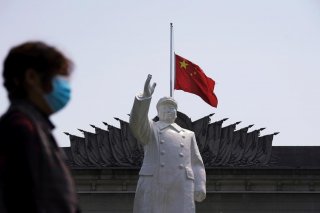
The Chinese national flag flies at half-mast behind a statue of late Chinese chairman Mao Zedong in Wuhan, Hubei province, as China holds a national mourning for those who died of the coronavirus disease (COVID-19), on the Qingming tomb-sweeping festival,
Let’s be realistic. No consensus exists on the future of relations between China and the West. Yet, clearly that is changing. 
Previously, many looked at Beijing as little more than a “checkbook,” an opportunity to make a quick buck and buy cheap stuff. That is quickly becoming the minority view. Even those still anxious to continue to engage know we are heading into troubled waters.
Left unaddressed, the influence of China’s communist government will threaten the freedom, prosperity, and security of the transatlantic community. Only together can the U.S., Canada, and its European partners ensure a stable future that allows free nations to thrive.
It is also not realistic to think the world will harden into new Cold War camps. We live in an interconnected world; a world of independent nations doing business around the clock; where the “freedom of the commons,” including the freedom to cross the seas and transit the skies, is a right.
That means the future is going to be messy. We can’t just wish China away.
To get through this, the family of free nations in the transatlantic community can’t be neutral in our approach to global affairs and China’s role. After all, we believe in popular sovereignty, human rights, and free enterprise. The Chinese Communist Party does not. If we do not stand together and defend these equities, we will lose the world we love.
Increasingly, leaders in Europe and the United States recognize that doing business as usual with China is risky business. So what do we do?
In part, the issue of China has come to the forefront because of the appalling behavior of the Chinese Communist Party in responding to the outbreak in Wuhan of COVID-19, the disease caused by the new coronavirus. No question, the Chinese government allowed people to travel internationally, knowing they had the potential to be highly contagious.
Further, China delayed reporting under international health regulations and did not provide live samples of the coronavirus to other countries for research and vaccine development. The regime’s behavior is not an aberration. China has a long history of bad behavior.
The global pandemic demonstrated the catastrophic consequences of leaving Beijing unchecked. Just as we need a vaccine to deal with COVID-19, we need a prophylaxis to deal with a belligerent, uncooperative Chinese Communist Party. Let’s get to it.
NATO is vital. The alliance needs to take the China threat seriously. Chinese actions and power could well erode NATO’s capacity to exercise self-defense.
From telecommunications to industrial control systems, from space and cyberspace to bridges, railroads, and ports, China already has a heavy footprint presence throughout the transatlantic community. NATO will need all this infrastructure to deter conflict and defend itself.
Yet if China controls the off switch or has the capacity to conduct malicious or denial activities, NATO’s capacity for self-defense will be severely compromised. NATO must be willing to prevent China from having the capacity to interfere in the defense of the alliance’s area of responsibility.
NATO nations all must continue to demonstrate the capacity for self-defense against other external threats.
The U.S. is a global power with global interests and responsibilities; in addition to participating in protecting the transatlantic community, the U.S. must face China in the Indo-Pacific and achieve a stable Middle East. For the U.S. to do all three well, NATO must do its part—particularly in dealing with the great external threats to European security.
NATO’s top priority must be countering the destabilizing activities of Russia. The second major threat is that the problems of the Middle East may spill over into and destabilize Europe. To confront all those very real possibilities, NATO needs to have the capacity and capability to look and act south toward the Middle East.
In short, a strong NATO allows the U.S. to focus more on responding to the global China challenge.
The European Union has a role. In addressing the destabilizing China threat to Europe, the EU is America’s other indispensable partner.
European leaders have seen in the past how China has used its relationships with individual European states to divide and conquer, play one country off against another, and undermine European solidarity to act in its own self-interest. 
Further, the EU manages many of the competencies required to restrain Chinese predatory behavior, particularly in the areas of trade, finance, and investment.
Another area where EU-U.S. cooperation is vital is in taking on the challenges in Africa. Some African nations face a diversity of challenges, from human rights and lack of economic freedom to terrorism and environmental and public health issues, complicated by poor governance and public safety.
China’s incursions into Africa have served only to exacerbate all these problems. The Chinese have enabled corruption, employed predatory lending practices, and spread disinformation. The EU could be a partner for tackling many of these challenges together.
International organizations. Joint U.S.-European efforts to bring greater transparency and accountability in international organizations is also important.
For years, the Chinese Communist Party aggressively has attempted to inject staff and leaders into international organizations who are beholden to the Beijing regime. The World Health Organization is an ice shaving on the tip of the iceberg. The U.S. needs partners to tackle this threat.
U.S.-Europe economic recovery. The U.S. and Europe can’t handle China if our economies are not strong and resilient. The economic recovery of the transatlantic community is intertwined.
We need a joint U.S.-European economic recovery program. This program would not consist of traditional foreign aid but instead rely on investment and partnership engaging the private sector. 
The United States and Europe need each other more than ever. It is time for leaders on both sides of the Atlantic to invest in strengthening the world’s most important partnership.

Coronavirus Vaccine in 2020? Don't Get Too Excited Good research takes time. by Simon Kolstoe

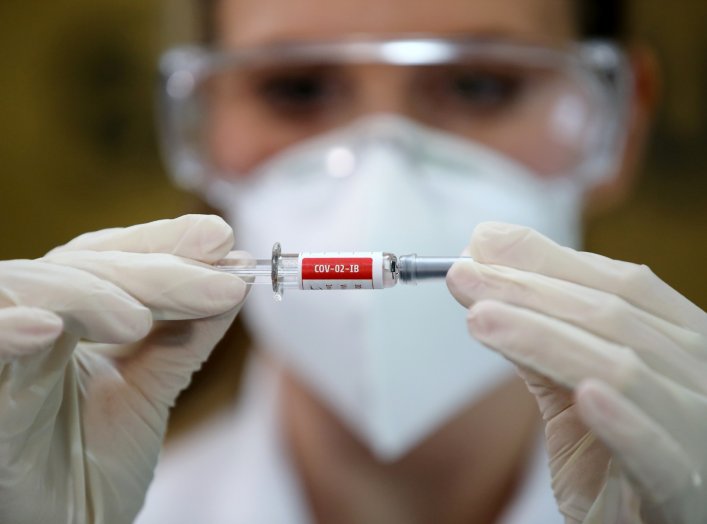
Reuters
Donald Trump may be “very confident” we will have a vaccine for COVID-19 by the end of the year, but the rest of us should be more cautious. Billions of dollars are being spent trying to develop vaccines and treatments as a more permanent solution to the crisis than the lockdowns currently being enforced around the world. 
As of May 2020 there are 182 treatments and 99 different vaccines being developed globally. But, based on recent history, only one or two are likely to be transformative, a couple may be partially helpful, some will be shown as downright dangerous, and the majority will have conflicting evidence as to their effectiveness.
This is because medical research is a slow and painstaking process. It is also very complicated and easy to come to the wrong conclusions.
Trusting the experts
One good thing to have come out of the coronavirus pandemic seems to be a renewed trust in experts. The routine presence of scientists at government briefings seems to recognise that rather than deserving our suspicion, we need these people to beat the virus.
But more trust in experts means more scrutiny of science as it happens – the latest studies showing promising results are now headline news. This can be worrying because, while there is no doubt that treatments for COVID-19 will eventually be found, it is easy for enthusiasm to turn into cynicism if expectations are not met as quickly as the public and politicians may hope.
There seems to be little recognition that, while thousands of drugs have shown promise in early animal or clinical tests – for example, the vaccine trials at the University of Oxford – the vast majority that show early promise will never make it into routine clinical use. On average it takes 12 years and over US$1 billion (£805 million) to get a drug to market.
Good research takes time
I chair research ethics committees. Over the last few years I have reviewed thousands of research protocols representing the very best, and occasionally some quite poor, examples of medical research.
Good research is defined as rigorous and reliable, producing results that are not only interesting, but are practical, useful and in some cases transformative. They are also reported clearly, transparently and in the context of previous studies. This is precisely the type of research we need to address the COVID-19 crisis.
But such good research comes at a cost. Much of society thinks of cost in terms of dollars and pounds, and indeed mindful of our own survival, scientists and researchers are of course always going to lobby for more investment. While it is very helpful to have the funds to order any chemical that is needed, access highly specialised equipment, or pay others to conduct experiments and analyse results quickly, we must take care never to underestimate the importance of taking time to think carefully about what results actually mean.
It is only once researchers have taken the time to understand the context of results that they can start turning them into effective applications or treatments. The real cost of good research is therefore time.
The frustrating truth about medical research is that the majority of experiments appear not to work because the subject being studied is so horrendously complex. In fact, rather than “not working”, many experiments are simply inconclusive. To make progress you have to slow down, look at the evidence and take time to think very carefully about what the results might mean.
The thinking needed for this takes years. I was involved with one project that was delayed for almost ten years while the team tried to work out why a single animal showed cardiovascular complications. Another project I worked on showed promise reducing an Alzheimer-like pathology in mice, yet 18 years later similar effects have yet to be conclusively shown in humans. Commendably, the team is still working on it.
The reality is that the long road to a vaccine or drug for any disease is littered with trials that did not lead to expected results. Even when a study is successful, it takes a long time to go from the lab to the general public.
The pressure to find a cure
One worrying aspect of the current situation is the pressure on researchers to work quickly and come up with solutions for COVID-19 almost immediately. For perhaps the first time, financial resources are not a limiting factor, and so politicians and the public are expecting researchers to take the cash and provide the answers. This has been coupled with significant pressure on regulators to streamline or even suspend some of the normal processes so that treatments can get to the clinic as quickly as possible.
Lured by promises of unlimited funding, and perhaps fame should their chosen idea work, some researchers may be tempted to engage in questionable research practices. History shows that whenever a large amount of money is involved, the temptation to commit, fraud, misconduct or other questionable practices increase. The UK spent more than £400 million during the 2009 swine flu outbreak stockpiling a drug whose effectiveness had been inflated by the manufacturers due to publication bias – where negative or inconclusive results from a trial are not published in scientific journals, but positive results are.
Without appropriate scrutiny there is a real risk that ineffective, or even harmful, treatments begin to get used. This may be considered an acceptable risk in the current crisis, but if so, it is important that any new treatments are monitored very closely and withdrawn without hesitation if the harms mount up.
Given time – maybe two, three or perhaps even ten years – researchers will be able to take stock of the evidence from experiments and trials, perform a meta-analysis and systematic review, hold international conferences, and then, following careful thought, tell the world what the best treatment for COVID-19 is.
The world clearly needs scientific and medical answers to the current pandemic as soon as possible, but we need to recognise that initially we may only find partial or tentative answers. Instead of a quick vaccine that completely prevents COVID-19, a variety of partial successes will be combined until eventually a full solution is found.
There may even be some blind alleys with promising, but ultimately futile, treatment ideas. This is not a failure of research, or misuse of resources. Above all, researchers need to be supported to work with integrity, and not be made scapegoats for the challenges that undoubtedly lie ahead.

What Will Happen if the Coronavirus Vaccine Fails? A vaccine could provide a way to end the pandemic, but with no prospect of natural herd immunity we could well be facing the threat of COVID-19 for a long time to come. by Sarah Pitt

  There are  over 175  COVID-19 vaccines in development. Almost all government strategies for dealing with the coronavirus pandemic are base...