The U.S. Navy is in the early stages of planning a new amphibious transport, or, in the more exuberant language of the day, a “Light Amphibious Warship.” What will this proposed ship be doing, and why?
The U.S. Marines have a fairly ambitious goal for the new ship—and they say they intend to use the vessel for all manner of sneaky wartime behavior—dropping a missile battery or two onto an uninhabited atoll might make competing Navies think twice before approaching too close. But the real utility of this potential pint-sized landing platform rests in its ability to shape the maritime environment during peacetime. If the Navy fails to talk about that potential role, its new ship idea will sink in Congress.
Look At The Peacetime Value:
As landing craft go, the Navy’s notional “Light Amphibious Warship” is pretty puny—the minimum length of the proposed vessel is 200 feet, or about half the size of an Arleigh Burke class destroyer. With a crew of 40, the vessel will have a landing ramp, allowing “at least” 75 marines and their vehicles to arrive onshore at degraded port facilities or on beaches and, if needed, the ship will allow the landed troops to quickly re-embark. But with a minimum transit speed of 14 knots, the final requirements for the vessel really appear to de-emphasize speed, and, if the proposed concept of operations is to be believed, the U.S. Navy seems happy to consign a handful of U.S. Marines on this future platform to a nerve-wracking time spent trundling about some future maritime battlefield at the sedate pace of a tramp steamer.
That might be OK. The proposed vessel—at least according to the basic requirements—looks like a modern day remake of the old World War II-era Landing Ship, Tank (or LST) that is crammed into a Landing Ship Medium (or LSM) footprint. As such, both LSTs and LSMs (and their smaller variant, the LCI, or “Landing Craft Infantry) were great. They were built in extraordinary numbers, modified for various uses, and served as a utility infielder for the forces during World War II and beyond. But platforms that were good in World War II may have some trouble surviving in the modern battlefields of the 2020s.
Congress has yet to hear much about the non-warfighting utility of these vessels. Outside of the lofty doctrinal language used to justify the robust “warfighting” rationale for this new, small platform, these pint-size platforms have the potential to fill a really useful—and really open—pre-fight niche—supporting a range of other necessary functions in “shaping” the battlefield. And given the stakes in the shipbuilding budget, Congressional tastemakers will need to be sold on these types of missions.
The U.S Marines may be loathe to admit it, but these platforms, if procured, will have a busy service life supporting small patrol boats and other forward units while engaging with friends throughout the Pacific and Indian Ocean. They’ll be working hard in peacetime, and, if they don’t do that peacetime work, they won’t be doing much more than sinking quickly in a real high-end fight.
Don’t Short-Sell The Ship:
According to a May 27, 2020 report by Ronald O’Rourke, a long-time naval analyst for the Congressional Research Service, the Light Amphibious Warship “program envisions procuring a class of 28 to 30 new amphibious ships” to support a new U.S. Marine Corps operational concept. These would be procured at a pace of about seven a year between FY 2023 and FY 2026, and potentially reshape the Navy’s demand for the large, bulky amphibious assault ships that have dominated the Navy’s attention since the early stages of the Cold War.
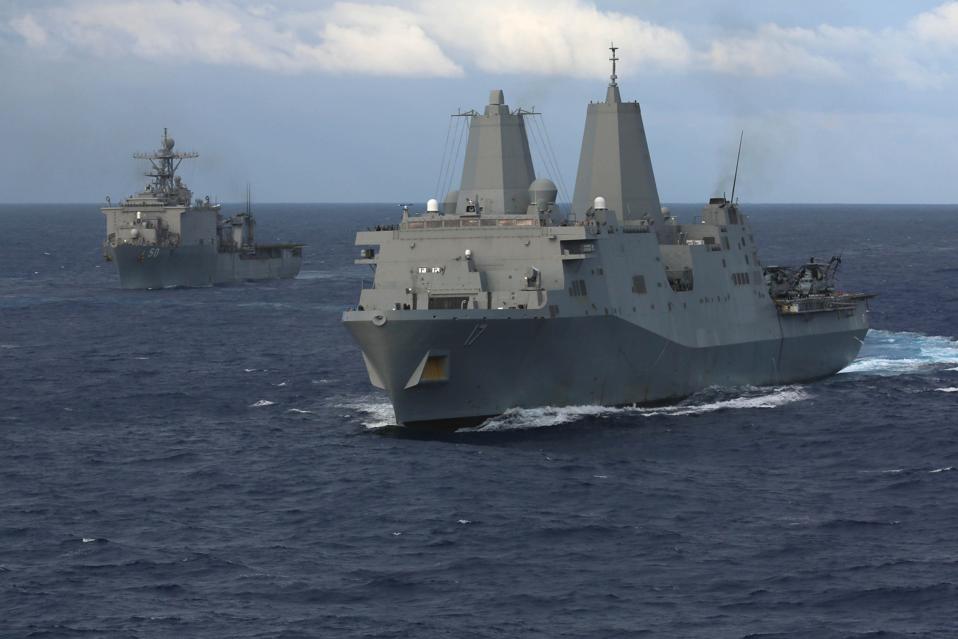
These big ships (the USS San Antonio(LPD 17) is a good representative of the U.S. Navy’s big-ship amphibious fleet) are strong platforms too, but they are somewhat dated. And while many are concerned that America’s big-ship amphibious forces are just too vulnerable and valuable to risk in supporting a conventional amphibious landing except under very particular circumstances, the supporters of these large amphibious vessels will not allow the “Light Amphibious Warship” to suck away shipbuilding money. Unless the Navy have a heck of an advocate, the Light Amphibious Warship program will sink under a welter of Congressional concerns about the viability of a slow, plodding amphibious ship in the battlefields of tomorrow.
Ronald O’Rourke’s report should be something of a shot across the bow for the Navy to make a stronger case to Congress. In the report, O’Rourke warns the Navy that Congress will be very interested in understanding the Navy’s justification for this new departure from post-Cold War status quo.
Conclusion:
Having a whole bunch of these tiny “Light Amphibious Warships” out in the vast reaches of the Pacific Ocean offers a neat new way to work with local friends, conduct outreach, and, just in general, upset the usual order of things in the Pacific. The idea of finding relative anonymity in the background clutter of normal shipping won’t work in a real fight, but it may happen in peacetime—and that would be the right time to do the sneaky things necessary to win a fight that hopefully will never come.
for the city, according to an industry survey, while expressing concerns about foreign sanctions on their operations.
About 61 per cent of the respondents said the law will either have a positive or no impact at all on their businesses over the long term, according to the Hong Kong General Chamber of Commerce. Some 54 per cent of them viewed the legislation as
and hence will have a negative impact on their businesses in the short term, citing foreign sanctions as their biggest concern.
The chamber surveyed its 4,000-odd members last week as Beijing endorsed the legislation tailor-made for the city, of which 418 responded with answers. Since it was unveiled at the annual National People’s Congress on May 21, the proposal that seeks to bypass Hong Kong’s legislature has roiled the local stock market and further widened the rift in US-China ties.
China has introduced a national security law for Hong Kong as it claims the anti-government protests in the financial hub endanger the country. Photo: AP Photo
The US has since determined that Hong Kong has lost its autonomy from China, and President Donald Trump has threatened to withdraw Hong Kong’s special trade privileges and impose other unspecified sanctions. The
the most since March on Monday even as traders braced for more clarity from both sides of the controversy.
“The chamber calls for detailed provisions of the law and specific implementation measures to be announced as soon as possible to address the concerns stemming from the uncertainties,” said George Leung Siu-kay, chief executive of the chamber, an organisation founded in 1861.
to throw his weight behind the proposed security law. More than 2,000 artists including Jackie Chan, whose industry was also upended by street protests for much of 2019, have also voiced their support for the law last week.
“We oppose any sanctions on Hong Kong as they will not only hurt local companies but also all international companies operating in the city,” he said in a phone interview. Leung, who took up the role on May 1 after leaving HSBC, also warned that trade sanctions on Hong Kong may spread the pain overseas.
“If Hong Kong companies are restricted or hurt by the sanctions, their overseas trading counterparts and related parties will be hurt as a result,” he said.
In a Legislative Council meeting on Monday, Financial Secretary Paul Chan Mo-po repeated his belief that the national security legislation for Hong Kong and the US decision to impose sanctions on Hong Kong would have little impact on the city’s economy.
Just days after China’s annual parliamentary meeting wrapped up, the world is confronted with hints of what the international landscape will look like after the coronavirus.
In the face of a global recession, China looks set to be one of the few countries that will expand, economically and politically, analysts say.
“We don’t want to leave China,” said Joerg Wuttke, President of the European Chamber of Commerce in China. “That’s why we engage more with China and ask for more.”
The U.S.-China relationship is at a critical turning point, analysts say, and hints of what the global landscape could look like have emerged in the few days since China’s annual parliamentary meeting wrapped up.
The highly symbolic congress – which concluded last Thursday after nearly a week of meetings – sent a strong signal to its people that China has overcome the disease, and that business is quickly getting back to normal.
Beijing also used the gathering to introduce a new security bill for the special administrative region of Hong Kong, which enjoys a semi-autonomous status. But China’s decision to approve the proposed law, that critics say will grant the central government sweeping powers to crush dissent, set off a strong reaction from U.S. President Donald Trump’s administration which threatened retaliation.
Geopolitics aside, several analysts agree a reality is emerging for businesses: In the face of a global recession, China looks set to be one of the few countries that will expand, economically and politically.
“Given the current pace of things at the moment and the way the (U.S.-China) relationship is shaping (up) at the moment, this is something to be taken seriously by businesses,” said Tom Rafferty, regional director of Asia at The Economist Intelligence Unit (EIU).
The trade war has shifted into a technological, and now, financial conflict, he said in a phone call, predicting targeted actions such as U.S. sanctions on Chinese financial entities.
Investments into China
China, where the coronavirus first emerged late last year in the city of Wuhan, is also the first country to recover from business shutdowns imposed in an effort to control the outbreak.
More than 4,600 people have died from Covid-19 in China, while the death toll tops 100,000 in the U.S., the hardest-hit country in the world. The virus that caused a global pandemic has infected well over 6 million people worldwide.
According to the latest International Monetary Fund projections, China is set to grow just over 1% in 2020, while the U.S. economy will likely contract nearly 6% this year — worse than the global 3% decline in growth.
“Globalization itself is going to survive. It’s going to be adjusted around some of these issues especially the tech,” said Walter Lohman, director of the Asian Studies Center at The Heritage Foundation, from which the Trump administration has drawn many of its staff.
“People are still going to want to invest in China for the China market,” he said in a phone call. “We’ve been talking about it for 100 years. It’s here now and there are companies that want to access it. China isn’t the worst place to do business. Even on the transparency side it’s kind of in the middle.”
For the first time in about two decades, the world’s second-largest economy did not to set an annual GDP target at its latest parliamentary meeting. Instead, authorities set targets for items such as unemployment. Many economists said removing the target will hopefully improve the quality of growth, and predict the economy could expand by about 1% to 3% this year.
Geopolitical tensions and the coronavirus have stalled foreign direct investment into China. But companies have vested interests that are unlikely to change quickly.
Analysts from research firm Gavekal Dragonomics said in a report in August that in 2016, American business sales in China topped $450 billion, while the Chinese sales in the U.S. were less than $50 billion.
“The signals in all of our communications and interactions with government is they are welcoming to American business in China, and really making it a point to ensure that whether it be related to subsidies or other types of support that they are supportive,” Alan Beebe, president of the American Chamber of Commerce in China, told reporters on Friday morning. “That’s been a pretty consistent trend that we’ve noticed this year.”
Beebe also noted the Chinese government has asked for the chamber’s support in recommending to policymakers effective ways that stimulus can be efficiently channeled to small- and medium-sized companies.
Tense political talk
China has been a little more forceful on the geopolitical front. Controversy over the origin of the coronavirus spurred heated commentary from Chinese diplomats that’s spread tensions beyond the U.S. to parts of Europe, Australia and other countries.
So you can’t expect China to be as quiet as it was 20 to 40 years ago ... China is a different China. It should have the right (to express its) point of view around this world.
Wang Huiyao
PRESIDENT, CENTER FOR CHINA AND GLOBALIZATION
China has more students and businesses going global, said Wang Huiyao, an advisor to the Chinese government and the president of Beijing-based think tank, Center for China and Globalization.
“So you can’t expect China to be as quiet as it was 20 to 40 years ago,” he said in a phone call, noting others may begin to see the merits of a different system. “China is a different China. It should have the right (to express its) point of view around this world.”
Growth still remains the bottom line for China’s authoritarian government to ensure social stability. Premier Li Keqiang used a high-profile press conference on Thursday last week to play up China’s openness to foreign investment.
The country’s optimism overshadows remaining challenges at home, and the political risks U.S. and other businesses may face from their own governments.
“China’s problem is this. There are two Chinas. One is the first world cities that we see and go to. The rest is a third-world country,” George Friedman, chairman of Geopolitical Futures, an online publication focused on global affairs, said in a phone call.
He’s skeptical of China’s aim to eliminate poverty this year. “In all likelihood this tension between US and China will likely increase, and China is going to have to deal with the problem domestically, not just to increase domestic consumption but accept the limits of what it can do with the United States.”
The growing U.S. political antagonism toward China will last longer than the current election cycle, said the Heritage Foundation’s Lohman.
“Really, ideally, to get back to a decent place in the relationship, we need a return to real market reform in China,” he said. “That would include privatization, disciplines on state-owned enterprises, better rules around subsidies (and) addressing this issue of technology coercion.”
Trump felled the latest blow by announcing on Friday he would start to take action for eliminating Hong Kong’s special trading status with the U.S. The move was a response to China’s formal approval a day earlier of a new security law for Hong Kong, meant to ease Beijing’s concerns about the threat of year-long protests in the city to its sovereignty.
“The HK legislation’s obviously an expression of political confidence on China’s side,” said the EIU’s Rafferty.
Lack of detail
“One key variable going forward is the U.S. position and whether the U.S. is willing to stay globally engaged in multilateral institutions,” Rafferty said. “My base case is America will stay en
While Trump said the changes would “affect the full range” of agreements that give Hong Kong preferential treatment versus mainland China, he gave few details. Similarly, the new security law leaves plenty of uncertainty over the extent to which the central Chinese government will begin to actively control affairs in Hong Kong, which has so far remained a city with greater freedom of speech and alignment with international financial standards than the mainland.
“This announcement does not mean that US companies will be flipping a switch in HK and running for the exits,” American Chamber of Commerce in Hong Kong President Tara Joseph said in an email to CNBC. “There are many unanswered questions about how the US – HK special status could be unwound. The more clarity business receives, the more helpful it will be at this challenging juncture.”
In the immediate future, many analysts point out that the U.S. has far more business interests at stake in Hong Kong. On the other hand, pressure in U.S. financial markets will likely send more Chinese companies to the Hong Kong exchange for listings, which will likely offset outflows, according to Bruce Pang of China Renaissance.
China has also taken few actions against U.S. businesses.
Leaders have emphasized how they will increase the industries available for investment, while threatening to put foreign firms on an “unreliable entity list,” a blacklist for foreign organizations and individuals that damage the interests of domestic firms. But no details have emerged 12 months out.
“We find ourselves in a moment where the voices of scapegoating (foreign countries for the pandemic) are getting louder,” Jeffrey Lehman, Vice Chancellor of New York University in Shanghai and chair of the board for the American Chamber of Commerce in Shanghai. “But I’m an optimist and I think over time, those voices will subside as leaders in the business community step forward and say, ‘We know the benefits that humans everywhere enjoy (from globalization).’”
Until the details on recent political proclamations become clear, China and the U.S. publicly maintain that communication channels are open – for now. And others in international business hold out hope for more constructive discussions.
“We don’t want to leave China,” Joerg Wuttke, President of the European Chamber of Commerce in China, said in a phone call. “That’s why we engage more with China and ask for more.”
In an increasingly tense environment, Wuttke said the EU Chamber is looking for incremental areas of cooperation around China. “In this kind of situation, there are no big solutions anymore.”
Taking Taiwan by force is an option for Beijing and it will take steps to “resolutely smash” any separatist moves made by the island, a top PLA general said on Friday.
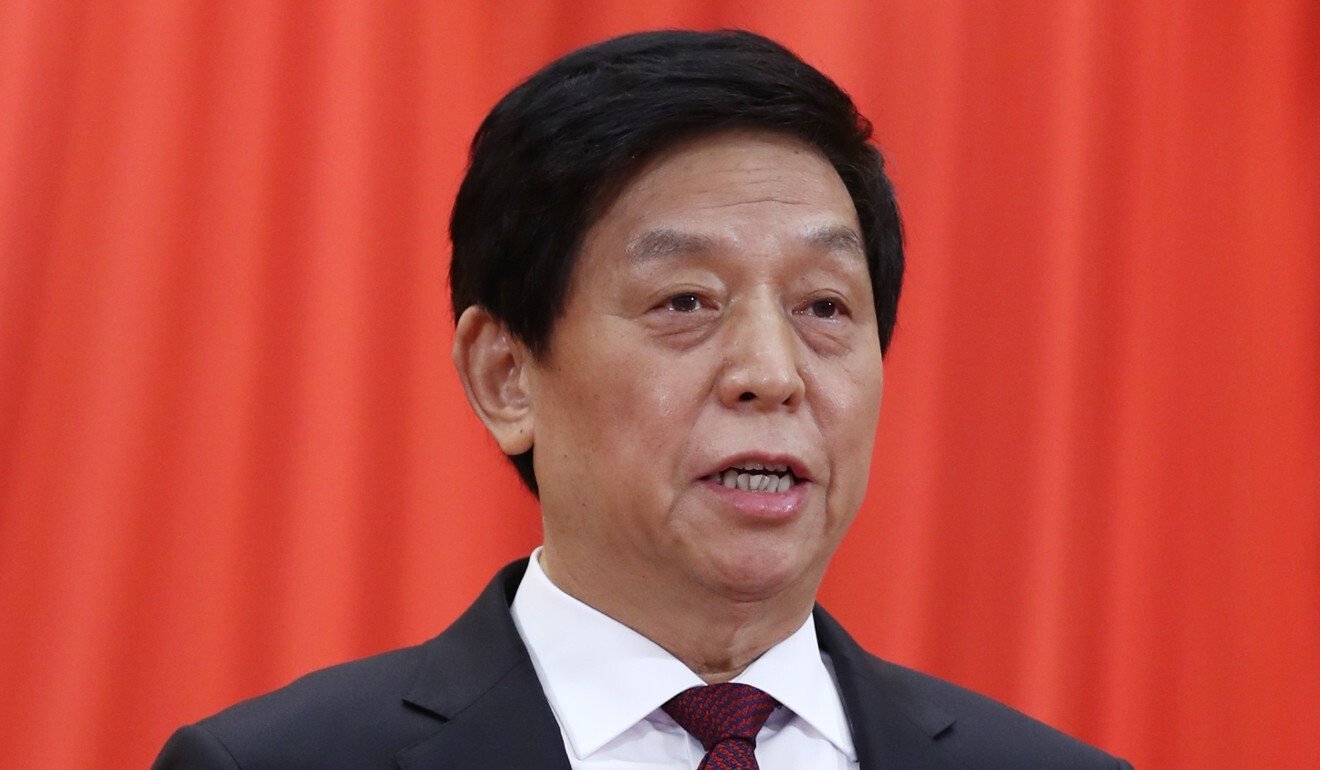
At the same event, Li Zhanshu, the third most senior leader of the ruling Communist Party, said using force was a last resort and Beijing had not given up on peaceful reunification with the island, which it considers a part of China.
They were speaking at a gathering in Beijing to mark the 15th anniversary of the Anti-Secession Law that gives the People’s Liberation Army a legal basis to take military action against Taiwan if it is deemed to have seceded.
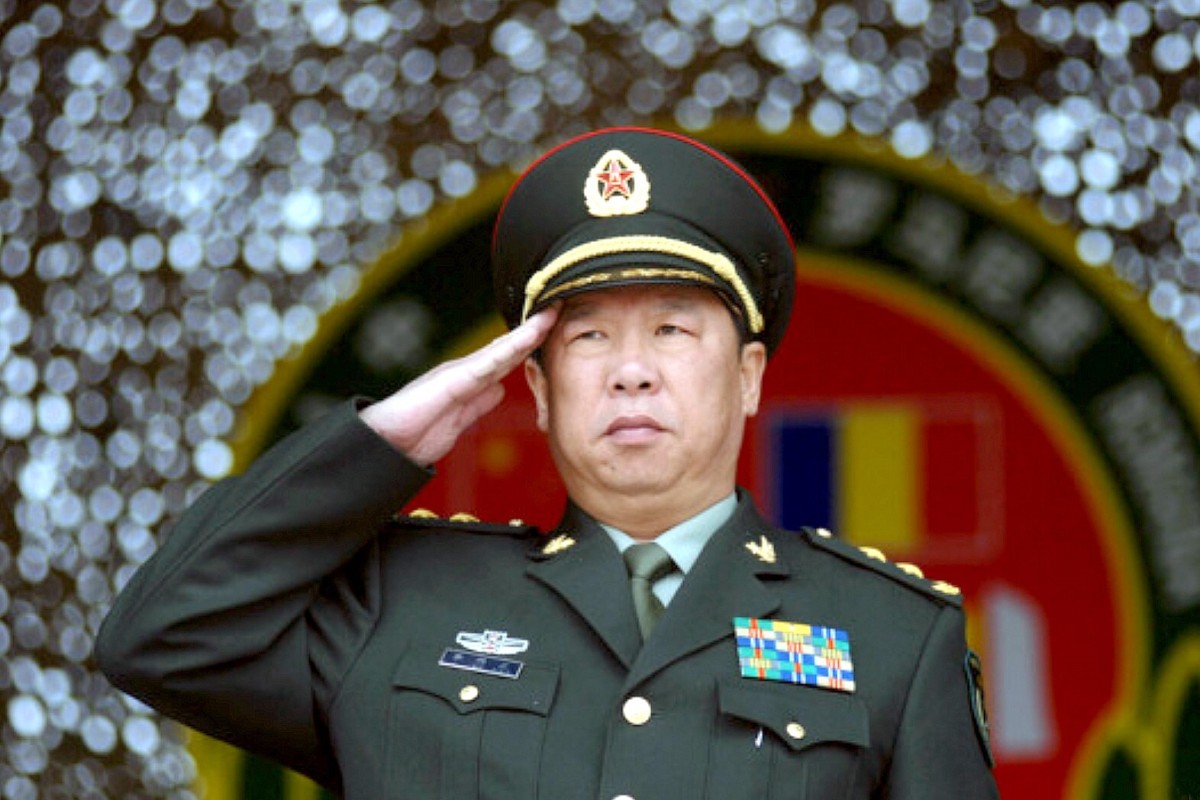
General Li Zuocheng, chief of the PLA Joint Staff Department, said collusion between Taiwan independence forces and foreign forces posed a “great and realistic threat” to the peaceful development of cross-strait relations.
“If the possibility for peaceful reunification is lost, the People’s Liberation Army will, with the whole nation – including the people of Taiwan – take all necessary steps to resolutely smash any separatist plots or actions,” said Li, who is also a member of the powerful Central Military Commission.
“Today’s China is not the previous frail old China … We do not promise to abandon the use of force, and reserve the option to take all necessary measures to stabilise and control the situation in the Taiwan Strait.”
Li is a decorated war hero for his actions during China’s conflict with Vietnam in 1979, one of a few senior PLA officers with combat experience.
National People’s Congress chief Li Zhanshu said separatists would be “severely punished”. Photo: Xinhua
Head of China’s legislature, Li Zhanshu, warned that separatists would be “severely punished” in accordance with the Anti-Secession Law. Without naming the United States, he said no matter how “separatists colluded with foreign forces” they could not succeed.
“As long as there is a slightest chance of a peaceful resolution, we will put in 100 times the effort,” the National People’s Congress chief said. “We warn Taiwan’s pro-independence and separatist forces sternly, the path of Taiwan independence leads to a dead end.”
Taipei denounced the comments, saying that threats of war were a violation of international law, while the 23 million people on the self-ruled island all strongly opposed the “one country, two systems” model.
“Taiwan’s people will never choose dictatorship nor bow to violence,” Taiwan’s Mainland Affairs Council said. “Force and unilateral decisions are not the way to resolve problems.”
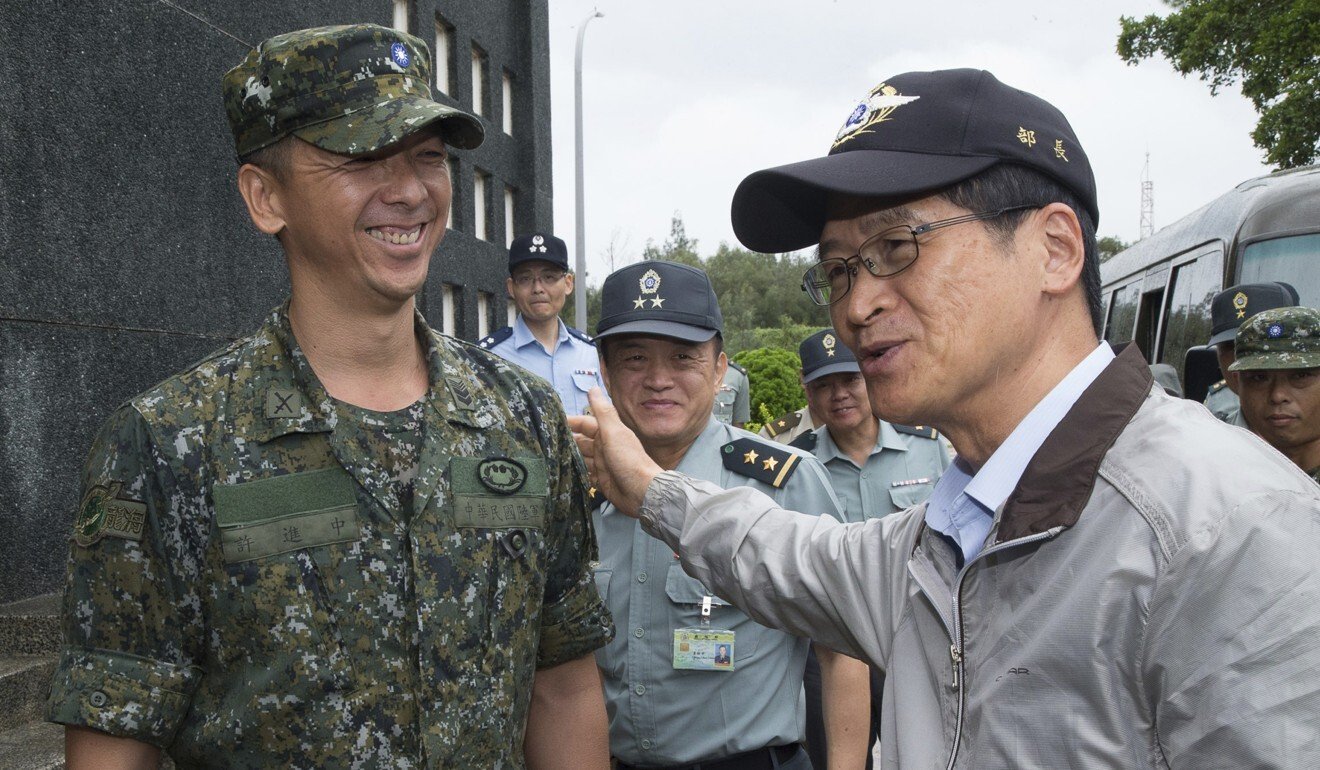
Defence Minister Yen Te-fa said the island’s military would prepare for the worst-case scenario, Central News Agency reported. He added that the PLA had conducted eight drills and other military activities targeting Taiwan since the start of the year.
Taiwanese Defence Minister Yen Te-fa (right) said the island’s military would prepare for the worst-case scenario. Photo: CNA
It came after Beijing appeared to harden its rhetoric towards Taiwan at the annual parliamentary meetings, with
– it has been included in the past six – at the opening session. But the wording reappeared in a final draft of the annual report at the closing session on Thursday.
Former Taiwanese defence minister Andrew Yang Nien-dzu said Beijing had not abandoned its carrot-and-stick approach to the island, but its priority during this year’s parliamentary meetings was the national security bill for Hong Kong.
“Beijing realises that both the Taiwan and Hong Kong issues involve foreign intervention, but compared with Taiwan, the problems in Hong Kong are more critical and urgent,” Yang said.
Chao Chien-min, former deputy minister of Taiwan’s Mainland Affairs Council, agreed that the focus was “the Hong Kong problem”.
After China passed legislation to allow its security forces to patrol Hong Kong, President Trump announced that the US would retaliate with a range of measures, from studying Chinese companies on US stock exchanges, to sanctioning individuals in Hong Kong and China who "erode Hong Kong's autonomy."
This is merely the culmination of months of heated action and rhetoric between the two countries since the coronavirus pandemic reached the US. And it is dangerous for the entire world.
To fight the pandemic on both domestic and global scales the US and China need each other now more than ever.
The US needs supplies made in China's factories to fight the virus, and China desperately needs US markets open to rebuild its economy.
Neither country is adjusting its diplomacy to that reality. Hostility will continue to rise. Flashpoints are multiplying, and Trump intends to make China the boogeyman of his reelection campaign. Strap in, America.
There comes a moment in all close relationships when both parties must decide whether they will work through their problems together, or if they will engage with those problems in a state of open hostility. The US and China — in the midst of a global health catastrophe and facing the worst economic crisis since World War II — have chosen the path of open hostility.
On Friday the Trump administration responded to that by listing a slew of ways it would change the US's relationship with Hong Kong and announced plans to investigate Chinese companies on US stock exchanges and sanction individuals involved in enforcing the new Hong Kong security measures.
After weeks of escalating tensions over the coronavirus, Chinese telecom company Huawei, Taiwan, national security and technological development — literally everything that matters between the two countries — these Hong Kong measures take the fight between the new countries to a new level.
Taken all together this means that right now the China and the US are living out a dangerous paradox. Never since China reemerged on the world stage in the 1970s has there been more vitriol between the two countries. But never in their history have they needed each other more than they do now.
China needs US money to get out of its coronavirus depression. The US needs Chinese-made medical supplies to specifically fight the coronavirus as well as China's products for its consumers and business in general.
This necessity for cooperation is very real, but the capacity for it is almost nonexistent in both countries.
In the US both Republicans and Democrats have turned against the Chinese government. An extreme group of politicians within the GOP — led by Secretary of State Mike Pompeo — is still claiming, without providing evidence, that the virus may have escaped from a Chinese research lab in Wuhan.
China has met the US's frustration with aggression and outright lies about the coronavirus' origin. The world won't stop asking questions about the country's initial response to the virus — which was horrendous — and President Xi Jinping is encouraging diplomats to respond to those questions with something called "wolf warrior diplomacy" — a heightened public aggression against any Chinese descent from anyone anywhere.
Trump also on Friday announced that the US would no longer cooperate with the World Health Organization because, according to Trump, China "has total control over" the organization and the country pressured to WHO "mislead the world" about the virus. The rivalry between the US and China is eroding trust in the very institutions meant to bring us through this crisis. It's a contest in which we all lose.
China needs our help with its money situation
China's coronavirus lockdown absolutely savaged its economy.
Analysts at Societe Generale estimate that the country's unemployment number sits between 70 million and 80 million people at the end of March. According to official figures, China's GDP contracted by 6.8% in the first quarter, a historic drop.
It sounds horrible, but it may actually be too rosy a picture. China watchers like Charlene Chu, an analyst at Autonomous Research who is known for her deep knowledge of China's financial system, find it impossible to square that GDP number with the rest of the stats that came out of China in the first quarter.
Here's a rundown:
Retail sales -19.0% year-over-year in the first quarter
Fixed-asset investment -16.1% year-over-year in the first quarter
Exports -13.3% year-over-year in the first quarter
Industrial production -8.4% year-over-year in the first quarter
Chu thinks that China's actual GDP drop in the first quarter was closer to -12%, but authorities would never publish that.
"This is the workshop of the world and if the world is just down, that has a devastating impact on China," Chu said in an interview with Business Insider. "They can't get back to normal themselves without the US and the world."
While 91% of Chinese companies have reopened, two-fifths of them are operating at under 50% capacity according to Chinese business surveyor China Beige Book. With the world shutdown there's no one to sell to.
When global demand collapsed back in 2008 China's exports fell by 30% and 23 million workers in export oriented jobs were suddenly out of work. Analysts at Societe Generale think we could see something similar happen this time around, which could push China's unemployed up by 35 million in the second quarter. Supply is recovering, but demand is still extremely weak.
So yes, the situation is dire, but China's policymakers are being extremely careful about what they do try to fix things. During previous economic crises in 2008 and 2015, China's go-to response to stabilize its economy was spraying credit all over the place and loading the banks, corporations, and local governments with debt. This debt has made China's financial system fragile and created a new flavor of economic instability — such as the mini-banking crisis in 2019.
Prior to the coronavirus, policymakers were trying to slowly deflate the debt bubble and are still reluctant to add to it. So while the rest of the world is taking extraordinary, historic measures to push money through their financial systems, China is taking it slow.
Naturally, the Chinese people want more help. But so far, China's coronavirus economic stabilization effort is both smaller compared to its efforts in the past and smaller compared to the rest of the world's.
Deutsche Bank
"I think they [China's policymakers] are still playing this gamble that the US and Europe will come back," Chu said. "They're thinking 'instead of us going crazy and lifting the world we'll let the rest of the world lift us.'"
The US needs all the PPE China can make
Of course, the rest of the world can't do much economic lifting until the virus is under control. To get it there and keep it there the world needs supplies manufactured in part by China — facemasks and ventilators and all manner of equipment. Neither the US nor China has grappled well with that reality, revealing a massive leadership deficit in both governments and on the world stage.
In 2018 — the most recent year for which we have data — China supplied the world with 50% of its respirator masks and surgical masks, medical goggles, and protective garments. Once China started fighting the coronavirus in January and February, those exports plummeted, and they have yet to return to 2019 levels, according to data compiled by trade economist Chad Bown of the Peterson Institute for International Economics.
The Peterson Institute for International Economics
With the whole world — and even individual US states — competing to buy these goods prices have gone up. According to Bown, prices for respirators and surgical masks surged 182% in March, compared to January and February, for example. China says that it has ramped up production of these goods, but it isn't being particularly transparent about what that means. Meanwhile US hospitals still complain of PPE shortages, state governments are bleeding money building necessary stockpiles of equipment, and the White House's own internal projections see cases of the virus increasing to 200,000 per day by June.
We don't act like we need each other
It's impossible to fault China for using the goods it manufactures take care of its own people first. So obviously managing this relationship in order to keep goods flowing to the US is not only a feat of detailed economic and logistical planning, but also diplomatic agility. The Trump administration has demonstrated none of that.
The US was caught unprepared for the coronavirus pandemic. President Trump's response to the crisis has been slow, inefficient, and insufficient. Some of his administration's biggest mistakes have been in its handling of the purchase of vital supplies for fighting the virus. But Trump will not acknowledge that.
Instead, in press conference after press conference, Trump has cast blame on China for the coronavirus. During a Fox News virtual town hall he accused China of trying to cover up the crisis. And in previous press briefings he's accused the World Health Organization of helping China in this cover up, damaging the organization's credibility when we need it most.
All this despite the fact that Trump has sporadically defended Xi Jinping's leadership throughout this crisis in hopes of still negotiating a trade deal with China. If you are confused about where he stands here you have every right to be.
Trump's cabinet and party have been more on message, though. The Trump campaign is turning China into an election issue, trying to paint Vice President Joe Biden too friendly to the country (Biden is similarly attacking Trump with the same accusation). Secretary of State Mike Pompeo is spouting his still-evidenceless theory about the origins of the coronavirus — claiming that it was from a Chinese lab — all over conservative media.
In the Senate, Republicans like Florida's Marco Rubio and Arkansas' Tom Cotton are calling for more aggressive restrictions on China from limiting investments in the country to blocking Chinese students from studying math and science in the US.
Expect the rhetoric to ratchet up as election day nears too, and not just because of the US side. China's diplomats are currently armed with a new mandate from Beijing to be as aggressive as possible, especially when it comes to messaging about the virus in keeping with something China is calling "wolf warrior" diplomacy.
It's a heightened state of aggression where Chinese diplomats attack anyone from anywhere who says anything negative about China. Chinese state tabloid the Global Times put it has described it as an end to the days when China could be put "in a submission position." And reasoned that it is a logical response to The West's "hysterical hooligan style diplomacy." Wolf Warriors, it said, are a necessary byproduct of China's rise.
That is to say, get used to it.
This new strategy is part of why China's attempts at flexing its soft power by flying around the world with medical supplies for other nations early on in the pandemic devolved from hiccups to open hostility.
The stories of China's bellicosity have come streaming at a steady clip from all over the world. Chinese diplomats spread rumors about the virus originating in the US and Italy, angering not just those governments but governments all across Europe too.
Angry French officials summoned China's ambassador to the country after an online post from an unnamed Chinese diplomat claimed French healthcare workers were allowing COVID-19 patients to die in nursing homes. US intelligence officials believe that Chinese agents were behind fake government text messages that alarmed Americans about a coronavirus shutdown in early March. In China hostility to foreigners has resulted in racist attacks against Africans , a reality African diplomats have complained about only to be met with aggressive denial from Beijing.
China is doing precious little to show it can be trusted and its government's attempts to bury the memory of the virus' surge within its own country cast even more doubt on its official narrative. Take the case of a woman named Fang Fang, who kept a diary during her lockdown in Wuhan. At first it was welcomed on China's internet as a true account of the chaos the virus wrought in an unprepared city.
But as the government attempts to make itself look like it handled the virus competently, Fang Fang is being systematically discredited. It's clear the government is behind it too. Weeks ago she was attacked by the editor of the Global Times, Hu Xijin, a man known for being a megaphone for Chinese government propaganda. The attack went viral on Chinese social media, which the government has a firm handle on.
If the Chinese government is not interested in letting its own people rehash what happened, it will be even less interested in letting the outside world do so. Demanding accountability will only lead to more friction, which leaves the world's two economic powers at an impasse.
A stoppable force and a movable object
All of this aggression is setting the world down a bad path. Trust is dissipating. There is little hope for cooperation in the near term. Global conflict is getting more likely. Potentially lasting pressure points are beginning to reveal themselves.
The fight over China's handling of the virus is unlikely to go away. Here in the US even more moderate politicians are calling for a rethinking of our relationship with China. In the Washington Post GOP Sen. Mitt Romney of Utah, called for a commission to deal with China's "predatory" behavior, which runs the gamut from stealing intellectual property to putting Uighur Muslims in concentration camps. Congress is looking at legislation that could move this fight even more firmly into the financial realm, targeting Chinese banks. If Beijing thought it was friendless in Washington during last year's Hong Kong protests, it likely feels even more abandoned now.
In an interview with the Center for Strategic Strategic and International Studies, Professor Minxin Pei of Claremont McKenna — one of the world's top China experts — said that this is putting China in a position it has never been in before.
President Xi Jinping has made China more assertive and expansionist and in doing so antagonized the United States in Europe. This was something the Chinese Communist Party had always said it would not do, vowing instead to focus on economic development.
"The party systematically forgot those precious lessons," Pei said, referring to the lost focus on economic development.
But now economic development is at risk as well. The UK and Japan are rethinking their economic ties. Here in the US the Trump administration is working with countries like Vietnam, Australia and India to form an "economic prosperity network" that would think through how to move supply chains out of China.
Chu told Business Insider that over the next few years this is something China may need to worry about — a world where countries no longer trust it to be the maker of things. Pei put the country's economic prospects in more stark terms. Its population is shrinking rapidly, debt levels are high, global trade is evaporating, and it's unclear if Xi's style of strongman leadership will be flexible enough to weather the storm.
"I think fundamentally... China today has a different political regime," Pei said. "It used to have collective leadership. Now it has one man rule. The good thing about one man rule is that decisions can be made really fast. The bad thing about one man rule is that decisions can be made really fast."
There is a sense that this is an unstoppable force meeting an unmovable object. Pei insists this is not the case. Regime change in either country could offer the opportunity for something of a reset — a redrawing of boundaries. But that will not happen as things stand now. There is no one to lead it.