#Sponsored

Tuesday, June 30, 2020

Ten Reasons Why the F-35 Remains the World's Dominant Stealth Fighter The rough edges are still being smoothed. by John Venable

Key Point: The F-35 provides the capability America needs to engage in strategic competition.

The F-35 Lightning II is now the world’s most dominant multi-role fighter. Its detection range, geolocation, threat identification, and system response capabilities allow the jet to precisely fix and destroy the most advanced threats in the world including every layer of Russia’s latest SA-20 surface-to-air missile (SAM) system.  

While it still has several rough edges, the F-35 has now crossed several thresholds that make it the most lethal and cost-effective fighter in or nearing production within the NATO Alliance.  Here are 10 updates you need to know about this stealth fighter.               

1.  The first U.S.  F-35A wing is fully equipped and already executing combat deployments.  The maneuvering restrictions the jet had when first introduced are now completely removed. Even with a complete internal weapons load-out and full internal fuel, pilots can fight without limitation.  Last year, I interviewed 30 pilots at Hill Air Force Base, and all 20 with previous experience in fourth-generation fighters said they would rather fly the F-35 in combat than their previous rides. That preference held for almost every dogfight scenario they could imagine. 

2.  The price of the Lightning has fallen below even the most optimistic government targets.  In 2018, the Congressional Research Service estimated that an F-35A produced in 2020 would cost $77.5 million using constant 2012 dollars.   Translating that cost estimate to current year dollars makes the price of each F-35A $87.1M.  The actual cost of an F-35A in fiscal year 2021 is $79.2M, and it is expected to fall to $77.9M in 2022 – $9.2M cheaper than the government’s best estimate using current year dollars. 

3.  The F-35A now costs less than any other ally-produced fourth-plus generation fighter.  A fully combat-equipped F-35A is the same price of an F/A-18 E/F, $9.8 million below the $87.7 million base price of an F-15EX, and $40 million less than the Eurofighter—and all three of those competitors require additional equipment like multi-million dollar targeting pods before they can employ weapons in medium threat combat environments.  The F-15EX self-protection system is estimated to cost $7.5 million, and the Sniper Targeting pod costs more than $1.7 million per jet, making the total cost for a combat configured F-15EX $19 million more than a fully combat configured F-35A.  And none of those other jets would last for a day in a modern-day high-threat environment.

4.  Competition has increased performance and driven down costs.  The total price of an F-35 is comprised of the aircraft, assembled and produced by Lockheed Martin, and the F135 engine produced by Pratt and Whitney -- plus profit.  When a Northrup Grumman-produced aircraft subcomponent called the Distributed Aperture System (DAS) failed to meet reliability thresholds, that system was replaced with a DAS produced by Raytheon that delivers twice the performance and five times the reliability at a per-unit cost 45 percent lower than the Northrup Grumman model. This switch alone will save the government $3 billion over the life of the program. 

5.  Not all manufacturers who help build the F-35 have moved aggressively to reduce costs.  Assuming it has stayed on track with Pentagon acquisition estimates, Pratt and Whitney is now delivering F-35 engines for $11.8 million a copy.  With production efficiencies, that price was expected to fall to $10.7 million by FY 2025 (FY12 dollars), saving the taxpayer another million dollars per fighter.  Unfortunately, without a competitive motor available, Pratt and Whitney has made it clear that further savings are no longer in the cards.  The ability to competitively reduce engine cost and improve performance was lost when Congress killed funding for the F-35 alternative engine contract in 2011, leaving Pratt and Whitney as a sole-source supplier with no incentive to reduce its profits.

6.  The F-35A cost per flying hour (CPFH) is falling, but one must wade through Mark Twain’s “lies, damned lies and statistics” to find out how the jet is doing with this often misconstrued metric.  CPFH calculations vary significantly between evaluating agencies, but all of them add costs for the F-35 that they do not include for the fourth-generation fighters they compare it to. Electronic countermeasures (ECM) and a precision infra-red targeting system are built into the F-35, elevating its maintenance requirements and ultimately its CPFH. Fighters like the F-15E and E(X), F-16C and FA-18E require additional equipment like external pods to give them similar capabilities but, because they are not “built in,” the pod’s acquisition price is not factored into those fourth-generation jets’ purchase price, nor are maintenance costs for those systems included in their CPFH calculations. 

CPFH calculations by the Defense Department Selective Acquisition Reports (SARs) still benefit fourth generation systems. They show the F-35A CPFH has dropped from $32,554 an hour in 2014 to $30,137 in 2018 (FY 2012 dollars).  When you consider maintenance for the F-35’s targeting and ECM systems are included in that price, it begins to compare much more favorably with the F-16 CPFH of $25,541 (FY12 dollars) as well as the elusive CPFH for the F-15E and its sibling the F-15E(X). Time will tell if the F-35 CPFH make it down to the target of $25,000, but if Lockheed-Martin’s work reducing the F-35A’s cost can be used as a guide, the jet’s CPFH may very well fall below the historic cost for the F-15E (and F-15EX) and compete favorably with the F-16C—even with CPFH calculations that favor those jets. 

7.  Mission capable (MC) rates for the F-35 rose considerably over the last year, but they are still below the 80 percent mission capable threshold set for the fleet by Secretary of Defense in 2018.  According to Lt. Gen. Eric Fick, director of the F-35 Joint Program Office (JPO), the MC rate rose to 73.2 percent in 2019—up 18.5 percentage points from the previous year.  With priority for parts, forward-deployed F-35 combat squadrons were able to sustain an 89% MC rate, which means parts availability for the fleet is still an issue.

8.  Depots limit F-35 mission capability. When an F-35 component fails, it is replaced with an available spare, and the failed part is shipped to a depot for repair. A total of 68 depots are required to effectively sustain the F-35 weapons system, but just 30 are up and running and only 11 of those are fully operational. Parts availability for the F-35 will continue to hold down MC rates until all depots are operating at capacity.  Lockheed Martin and the F-35 Joint Program Office have accelerated their efforts to get depots up and running and now project that 64 depots will be operational by 2024 – five years earlier than the estimated 2029.  Assuming funding for parts remains consistent, the parts shortfall will end, allowing fleet-wide F-35 MC rates to meet or exceed 80%. 

9.  The Helmet Mounted Display System (HMDS) for the F-35A is still having problems. The HMDS gives pilots an unparalleled level of situational awareness in combat as it displays all critical flight and weapons systems data on the inside of the pilot’s visor. The image from the system’s built-in night vision camera is also projected onto the visor, as is the image from the Distributed Aperture System (DAS) that automatically tracks and provides vivid cues directly to the pilot on the location of friendly and enemy aircraft. The HMDS is a game-changer in combat, but interface issues with its display have caused pilots to become disoriented when refueling, or while landing the jet at night.  Lockheed Martin went to work fixing this system just as soon as pilots flagged it as an urgent operational need, and that fix is currently being fielded for Navy F-35Cs. It may take several years before the HMDS fix makes its way to the Air Force.

10.  The Autonomic Logistics Information System (ALIS) is still too big, slow and suffering too many problems. Every aspect of the F-35A’s maintenance, supply, and operations are managed through the F-35A ALIS. Much like an Apple iPhone Operating System (iOS), ALIS is a computer operating system that holds a conglomeration of 65 applications, sub-programs, or modules. Some were built exclusively for the F-35A; others are commercial-off-the-shelf (COTS) programs. The problems arise when digital inputs from either the jet or a more modern ALIS application meet analog inputs or processing from another module.  The Department of Defense has elected to replace ALIS with a cloud-based operational data integrated network (ODIN). The new system is designed to decrease workload and increase mission capability rates for all F-35 variants and should begin fielding later this year.  

Overall, the F-35A fighter is flying exceptionally well. It now provides the United States with a significant competitive advantage against a peer competitor threat. Shortfalls in repair parts and other smaller issues need to be fixed as soon as possible, but the capabilities that the F-35 provides the nation today along with the dramatic drop in price make Air Force decisions to procure the F-15EX and to not ramp up F-35A procurement very puzzling indeed. The aircraft provides a capability America needs to engage in strategic competition.

Monday, June 29, 2020

Philippines challenging China in South China Sea Manila seeks with likely US nod to tap oil and gas in sea areas disputed by China and earlier proposed for joint development By RICHARD JAVAD HEYDARIAN

Filipino soldiers sing the national anthem in Philippine occupied (Pagasa) Thitu island in disputed South China Sea, April 21, 2017. REUTERS/Erik De Castro - RTS1393L
Filipino soldiers sing the national anthem in Philippine occupied (Pagasa) Thitu island in disputed South China Sea, April 21, 2017. Photo: Agencies

MANILA – The Philippines is slowly but surely pushing back against China in the disputed South China Sea, a reflection of revived strategic relations with the United States and a rising need to secure new indigenous energy sources amid an impending economic crisis.   

Philippine Department of Energy (DOE) and Department of Foreign Affairs (DFA) officials are now lobbying President Rodrigo Duterte to resume stalled energy exploration in the sea to shore up the nation’s sagging energy security and reassert sovereign claim to seabed energy resources contested by China.

Meanwhile, the Department of Justice (DOJ) is pushing for Chinese compensation for Filipino fishermen who nearly drowned during an incident last year in which a Chinese militia vessel sank their wooden boat, named F/B GimVer 1, in waters near the contested and energy-rich Reed Bank.

The distinct and firm shift in the Philippines’ stance vis-à-vis China also reflects the still-strong influence of the country’s defense and foreign policy establishment, which has been skeptical of Duterte’s Beijing-friendly stance from the outset of his tenure. 

In that direction, Philippine diplomacy is shifting back towards the US, with which the Philippines shares a Mutual Defense Treaty (MDT). Earlier this month, the Filipino president rescinded his earlier move to abolish a crucial defense pact to restore temporarily lost US deterrence against China’s creeping intrusion into Philippine-claimed waters. 

It’s not immediately clear, though, that the US would come to the rescue of Philippine energy exploration activities if they faced Chinese harassment. The Reed Bank area, situated northeast of the Spratly islands, is known to hold rich untapped oil and gas stores, which both Manila and Beijing claim. 

A Philippine naval officer stands guard during the arrival of American missile destroyer USS Chung Hoon before US-Philippine joint naval military exercises in a file photo. Photo: AFP/Noel Celis/Getty Images

Duterte has lobbied for “co-ownership” of disputed resources through joint exploration and development projects with China, which has lauded his approach as “a prudent and steady way” to manage the disputes. 

In mid-2018, following an official visit to Beijing, then Philippine foreign secretary and current Speaker of Congress Alan Peter Cayetano hailed a “golden period” in Philippine-China relations and reiterated Manila’s commitment to cooperative resource-sharing with China in the South China Sea. 

Disputed sea areas “will be turned into a source of friendship and cooperation between our two countries,” the then Philippine diplomatic chief said after discussing with Chinese counterparts possible joint offshore oil and gas exploration projects based on a mutually acceptable “suitable legal framework.”

During a late-2018 visit to Manila, Chinese President Xi Jinping had hoped to finalize a joint development agreement (JDA) with the Philippines. 

But still internal resistance within the Philippine bureaucracy, however, left the Chinese leader with only a preliminary agreement to explore the possibility of resource-sharing deals in the South China Sea. 

Following Duterte’s fifth visit to China last August, the two sides again reiterated their commitment to exploring resource-sharing in the maritime area. 

According to the Philippine Ambassador Jose Santiago Santa Romana, the two countries would form a joint commission composed of relevant government agencies and key energy companies to finalize the legal framework for a joint exploration agreement.

The special commissions were supposed to forward the framework of a final agreement by November of last year but failed to do so. 

A significant obstacle, insiders say, is the difficulty of harmonizing China’s sweeping claims to the South China Sea with the Philippine constitution, which treats the country’s exclusive economic zones (EEZ) as an extension of national sovereign territory. 

Crucially, the Philippines’ arbitration award at The Hague’s Arbitral Tribunal in July 2016 ruled against China’s “nine-dash line” expansive claims to the sea, including within the Philippines’ EEZ. Beijing rejected the ruling, which lacked an enforcement mechanism.  

China’s growing assertiveness in the sea amid the ongoing pandemic, including ramped up naval exercises in contested areas, seems to have torpedoed previous Beijing-Manila efforts towards a resource-sharing deal.

In response, the Philippines seems to be exploring the unilateral development of the resources, likely in conjunction with multinational, including possible US, energy companies. The Philippines may be taking a page from neighboring Malaysia’s strategic playbook. 

The West Capella drillship, contracted by Malaysia’s state-owned Petronas energy company, has pushed ahead with its own oil exploration initiatives in waters claimed by both China and Vietnam since last November. China has sent boats to the area to intimidate Malaysia’s exploration, a move that drew US naval vessels to the area.  

Philippine Energy Secretary Alfonso Cusi announced last week that the Philippines is now weighing its options in the South China Sea.

Chinese President Xi Jinping shows the way to Philippine President Rodrigo Duterte in a file photo. Photo: AFP

“While we are protecting our territories, the DOE is trying to work together with the DFA on how we can continue exploration in the area,” said the Filipino energy chief. He has also been coordinating on the issue with regional governments, including in the island province of Palawan, which lies closest to the contested Reed Bank’s energy-rich waters.

“We are doing this without compromising our sovereignty. That’s one thing we can assure you as we progress in our exploration on how to develop and utilize the resources there at the West Philippine Sea,” he added, reiterating the government’s bid to “to attain energy security” during the pandemic-caused economic crisis. 

Duterte, entering his fifth year of a single six-year term, is not expected to renew his push for a controversial and potentially unconstitutional resource-sharing deal with China. Manila may thus once again explore the possibility of teaming up with multinational companies to resume sea exploration. 

Indeed, Manila seems more bent on confrontation than cooperation with Beijing these days. Philippine Justice Secretary Menardo Guevarra announced on June 22 a government plan to push Beijing for greater compensation for the 22 Filipino fishermen sunk by a Chinese boat in the Reed Bank area last year. 

“I have already given instructions to the provincial prosecutor’s office nearest the place of residence of the fishermen concerned to gather the necessary information,” the Philippines’ top government lawyer said amid a growing call for tougher action against China. 

“As you know, damages comprise the civil aspect of any criminal case,” Guevarra added, claiming “the Chinese side has expressed willingness to pay for any reasonable amount of compensatory damages.”

Philippine Foreign Secretary Teodoro Locsin Jr told the media (June 22) that he will “bring it up again” with his Chinese counterparts, who he claimed have admitted the incident “is the fault of the Chinese vessel and the question is the damages.”

Previously, a Chinese association offered compensation to the Filipino fishermen, but the DFA clarified that any compensation “should come from the vessel owner, not somebody else’s generosity in China.”

Experts argue that Chinese militia masquerading as fishermen operate with virtual impunity in the sea due to the strong support they receive from local and national governments. 

Duterte, who consistently downplayed China’s aggression in the South China, including the Reed Bank incident last June, is now also taking a tougher stance. 

During a recently concluded Association of Southeast Asian Nations (ASEAN) summit, Duterte called on all parties to “adhere to the rule of law and to their commitments to international instruments”, including a 2002 declaration on conduct in the South China Sea.

Notably, the appeal to the rule of law echoes the US’s position on the South China Sea, where it has recently ramped up freedom of navigation operations, which China has protested as a violation of its sovereignty. 

“Even as the region struggles to contain Covid-19, alarming incidents in South China Sea occurred,” Duterte said in a video message at the summit held on Friday.

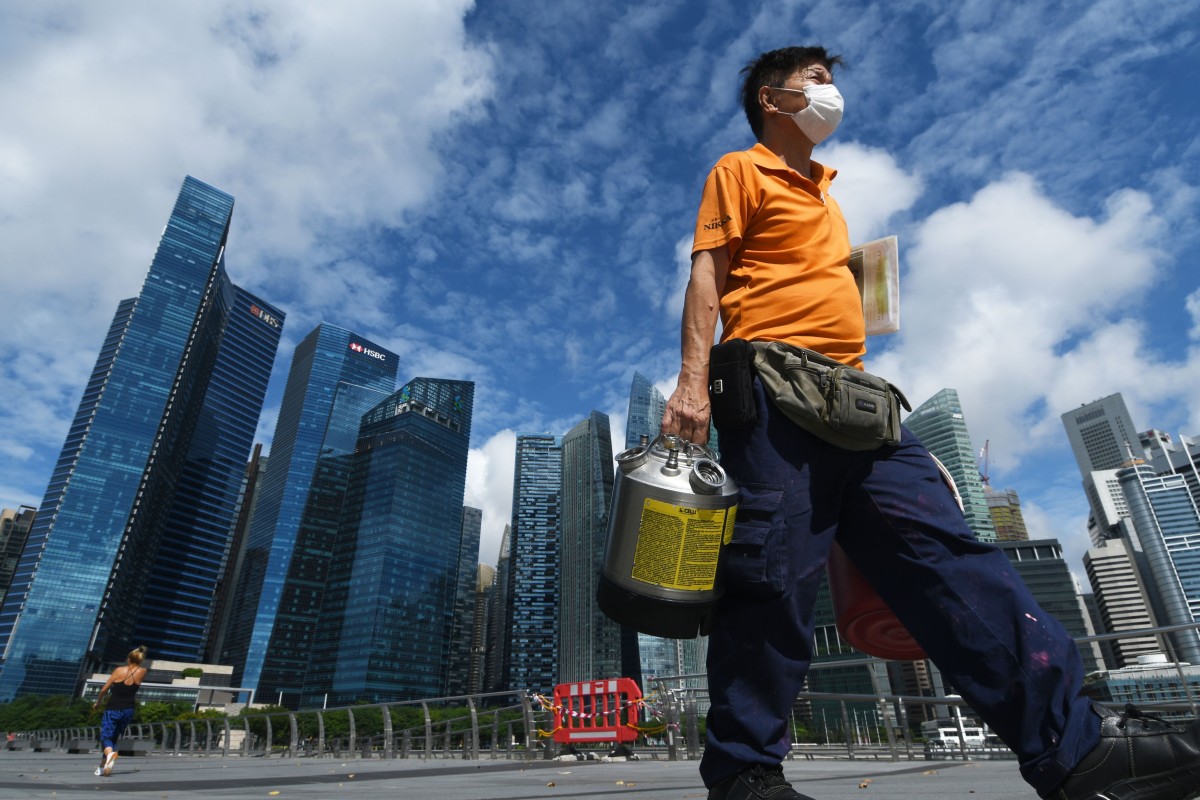
National security law: could Singapore take Hong Kong’s finance crown? It’s keeping mum. City state has been clear it does not want to be seen as taking advantage of Hong Kong’s political turmoil Yet its similar tax rates, lower rents and safe streets are likely to appeal to any businesses that do decide to relocate. by Kok Xinghui

Singapore: a financial rival to Hong Kong? Photo: Xinhua
Even as 
Japan
 and 
South Korea
 seek to woo 
Hong Kong’s
 financial firms considering a Plan B in the face of Beijing’s tightening control, one Asian city seen as the most obvious beneficiary is keeping mum.
In 
Singapore
, which is in the thick of election fever ahead of the July 10 polls, there has been little market chatter about whether the republic should try to woo businesses and talent concerned about the new 
national security law
 in Hong Kong.
In fact, Singapore’s central bank told wealth managers last July, as the city was roiled by massive 
anti-government protests
, not to take advantage of Hong Kong’s political turmoil.

This month, the Monetary Authority of Singapore (MAS) issued a statement after media reports cited its figures showing foreign currency deposits jumped almost fourfold from a year earlier to US$27 billion in April, while deposits from non-residents rose 44 per cent to US$62 billion. The amounts, the highest on record since 1991, were due to risk-averse investors and inflows from markets including Hong Kong, the reports said. But MAS stressed the deposits had come from a variety of sources and were not overwhelmingly from a single region or country.

Said Antonio Fatas, economics professor at INSEAD: “It is a delicate issue and I cannot imagine a government in Asia making a strong public announcement to lure firms into their country. Not sure China would see this as wise.”

The law, which targets secession, subversion, terrorism and collusion with foreign and external forces endangering national security, could be imposed on the city as early as this week, with Beijing describing it as a necessary tool to restore stability.

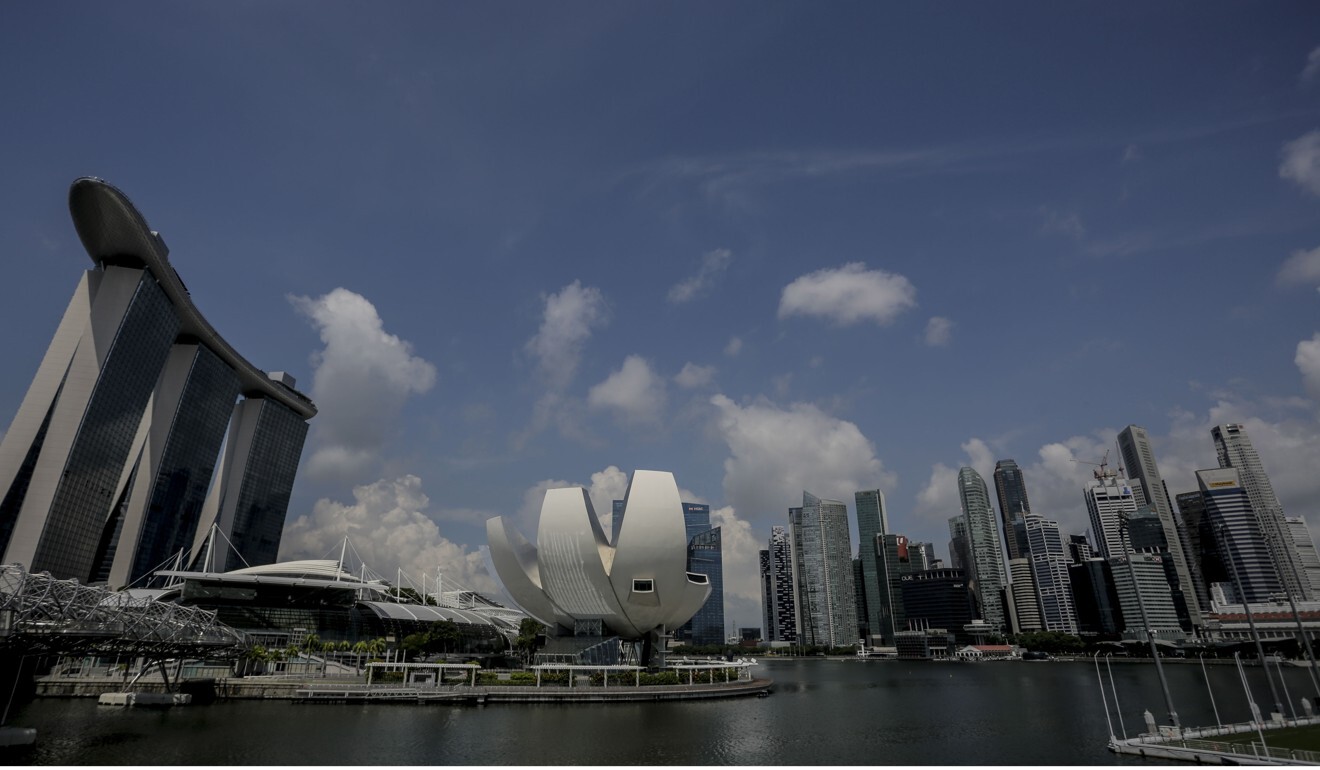
The Singapore skyline. Photo: EPA

Full details such as the offences considered crimes have not yet been released but there are palpable worries it could undermine the qualities that have underpinned Hong Kong’s rise to be Asia’s financial hub, such as the rule of law and freedom of information.

In the absence of the full facts, concerns raised have included the free flow of information, the finances of foreigners critical of China, and even whether financial sector analysts should worry about repercussions if they put forth viewpoints critical of Chinese policies.

CIMB Private Banking economist Song Seng Wun said he doubted that Singapore would be seen as preferable just because of the national security law in Hong Kong.

Singapore had “very tough” equivalent laws to prevent foreign interference in local politics and the spread of fake news, he pointed out, adding: “Yet, Singapore is a super-safe haven.”

Worries about the law could just be a fear of the unknown, Song noted.

“Just like the fears that existed the days and months before the return of Hong Kong to China in July 1997,” he said.

INQUIRIES, NOT ACTION

Comparisons have long been made between Hong Kong and Singapore as competing financial centres but the former is often seen as having an edge due to its proximity to mainland China’s economic powerhouse.

Both have competitive tax rates for companies – Hong Kong’s is 16.5 per cent, Singapore’s is 17 per cent. Hong Kong’s financial services sector accounts for 20 per cent of GDP, employing about 7 per cent of the workforce in 2018, compared to 13.9 per cent of GDP in Singapore and five per cent of the workforce.

Hong Kong has a more vibrant capital market – its stock exchange market capitalisation this month was more than seven times larger than Singapore’s at HK$367.7 billion (US$47 billion), compared to S$9 billion (US$6.4 billion) – with more Chinese companies choosing to raise funds there. It is also where wealthy mainlanders stash funds.

More than 420 hedge funds are based in Hong Kong, and these funds manage assets worth almost US$91 billion, more than is managed in Singapore, Japan and Australia combined, according to a Financial Times report this month.

About 650,000 foreign residents, including domestic helpers, live in Hong Kong, out of a total population of more than 7 million. Singapore has a population of 5.7 million, of whom almost 1.7 million are foreigners. About 400,000 are foreigners on employment passes that mean they earn at least S$2,400 or S$3,900 a month.

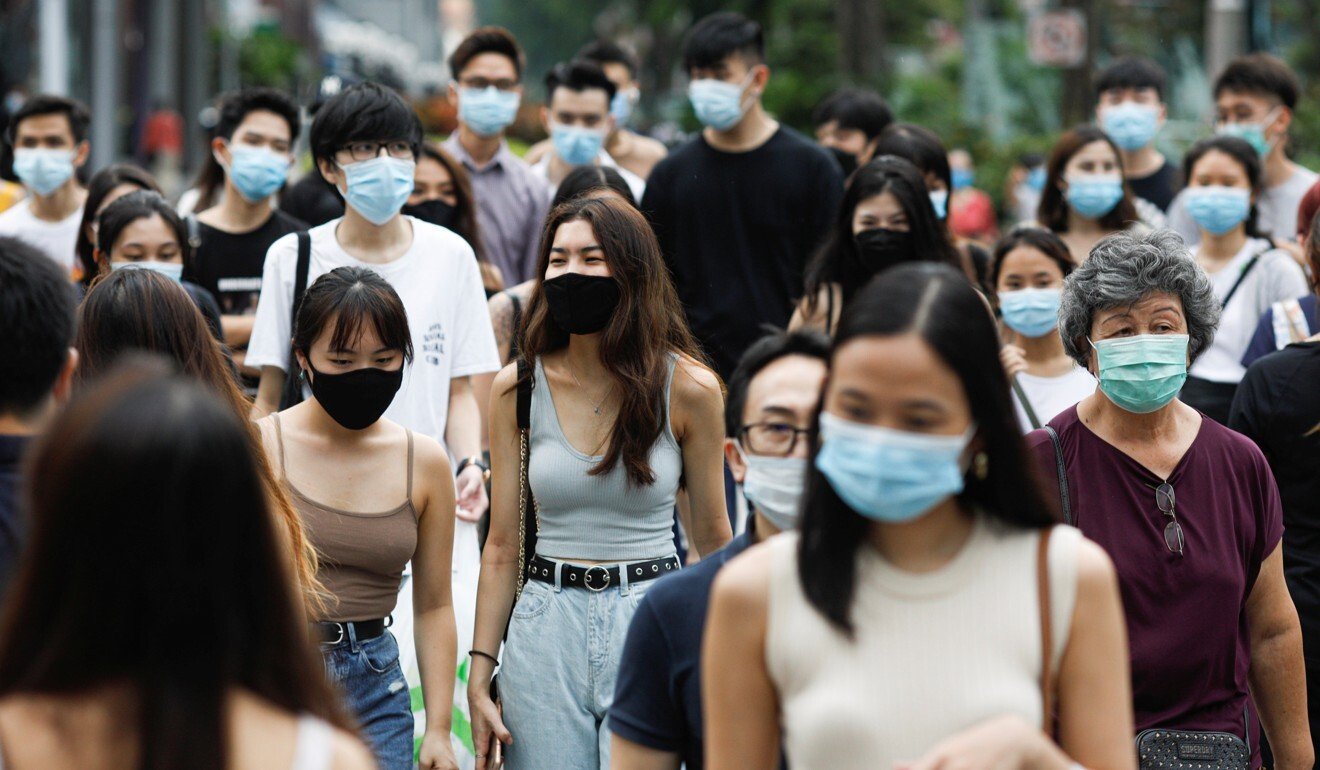
People cross a street in the shopping district of Orchard Road, Singapore. Photo: Reuters

While there have been no signs of an exodus from Hong Kong, bankers and business professionals in Singapore say there have been inquiries from wealthy investors seeking to move more money there and firms mulling over an expansion or relocation of their operations.

One senior banker said banks had been allocating staff to receive any funds flowing out of Hong Kong and into the city state, but they were not expecting businesses to abandon Hong Kong just yet.

The banker, who did not want to be named as he was not authorised to speak on behalf of his organisation, said businesses would be mindful that moves to or talk of relocating could be perceived by Beijing as the brand being “unsupportive” of its policies on Hong Kong.

TMF Group, a professional services firm that provides accounting, tax and human resources support to businesses, said it had received inquiries from companies exploring the possibility of leaving Hong Kong for Singapore. But many of the inquiries “have not translated into action”, said Paolo Tavolato, its head of Asia-Pacific.

“Almost no firm with a head office or regional head office in Hong Kong has chosen to relocate it.”

Over at real estate consultancy Knight Frank, head of capital markets Ian Loh said that since January he had got roughly 30 per cent more inquiries from investors based in Hong Kong.

He has had more clients, ranging from family offices to investment funds, asking about buying strata offices, shophouses and buildings in Singapore, but while some deals have concluded and the investors have moved some business operations to Singapore, Loh said most investors were still in the early stages of exploring their options and were not ready to make decisions yet.

Business consultancy firm Vistra said it had seen “a strong pickup” of new business enquiries from Hong Kong-based companies in the last month, especially from fund management companies.

“The intention is to expand their operations in Singapore to complement their Hong Kong operations,” said Otto Von Domingo, head of commercial Southeast Asia at Vistra Singapore.

Tavolato said his conclusion was that Hong Kong’s strength as a financial and business capital remained, it was “stronger than many give it credit for”, and it had an “incumbent’s advantage” of firms being reluctant to move head offices.

Fatas, the economics professor at INSEAD, said Hong Kong’s proximity to mainland China was a winning factor, echoing a point made by Hong Kong business leaders, who said the city was the gateway to the mainland for both foreign and local firms.

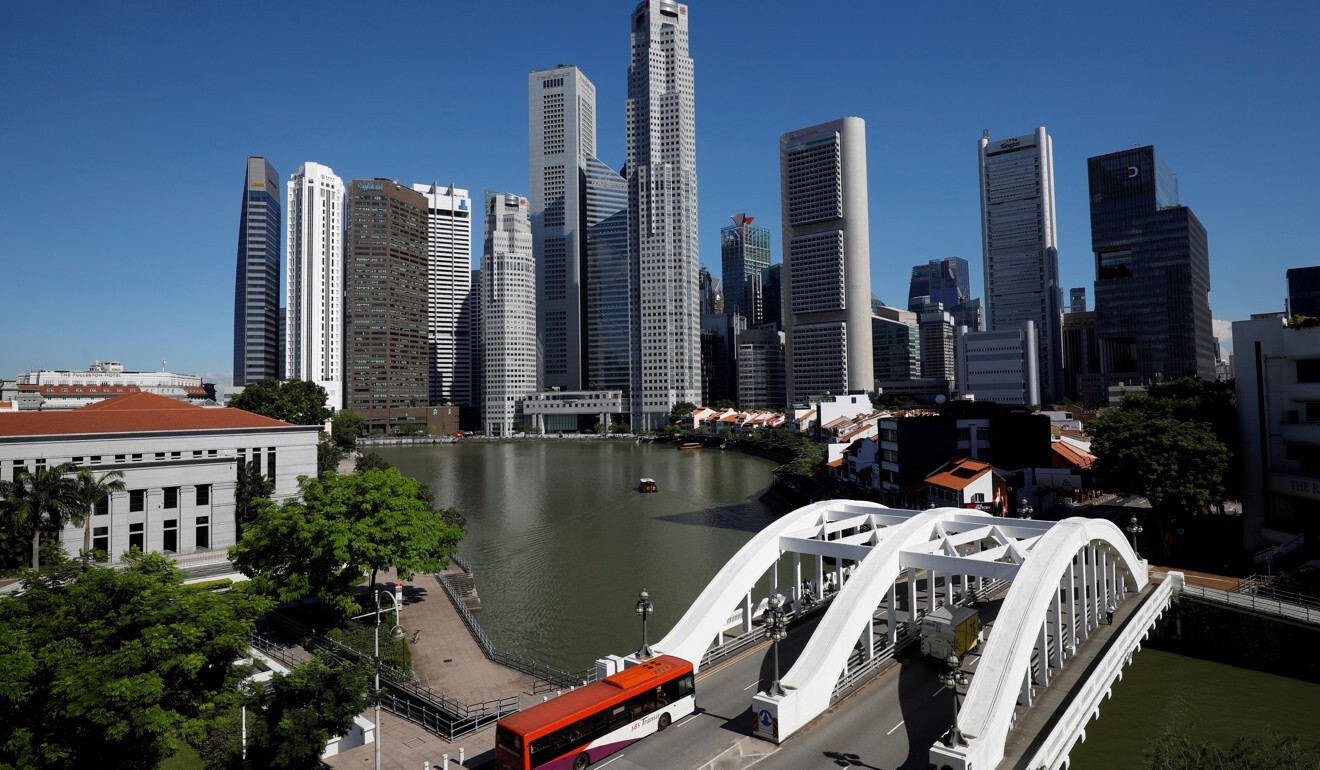
The central business district in Singapore. Photo: Reuters

FUTURE PLANS

For businesses unfamiliar with Hong Kong, and some of the city’s foreign residents, Singapore’s appeal has grown. The economic disruption caused by the protests has hurt Hong Kong’s reputation, experts said, and Singapore’s lower rents, safe streets and growing leisure amenities are plus points for families.

A survey by the American Chamber of Commerce in Singapore last August of 120 of its members found 67 per cent felt the protests had tarnished Hong Kong’s reputation as a regional base of operations for businesses. The sentiment was stronger among those without offices in Hong Kong. 

The same survey found that of the companies considering relocation, nine in 10 would pick Singapore as their new home.

David Kelly, executive director of the British Chamber of Commerce Singapore, said Singapore was “pro-business”.

“Initial company set-up is a smooth process, particularly with support from companies such as Vistra, while regulatory and tax information is clear and readily available to ease the transition.”

Singapore’s Economic Development Board is tasked with billing the country as a global centre for business, innovation and talent, and it also woos foreign direct investments into Singapore. There is a section on its website devoted to setting up shop in Singapore, outlining how businesses can be registered online and linking to various government incentives and schemes.

Foreign manpower, however, has been a contentious issue in the city state, over concerns of competition for jobs and a strain on transport and housing. The government assiduously manages the issue, but has stressed that given Singapore’s low birth rate and high labour participation rate, it does need foreigners to woo investment and grow industries, such as cybersecurity, artificial intelligence and big data analytics.

Fatas said Singapore was always keen on companies setting up their headquarters there and government incentives were not a response to what was happening in Hong Kong.

Tavolato, head of TMF, said: “In the long term, Singapore will continue to attract businesses, but we do not see it as being locked in a zero-sum, win-lose relationship with Hong Kong. They are both attractive business hubs. Once Covid-19 is over, and if and when the disruptions in Hong Kong cease, we expect both locations to continue thriving.”

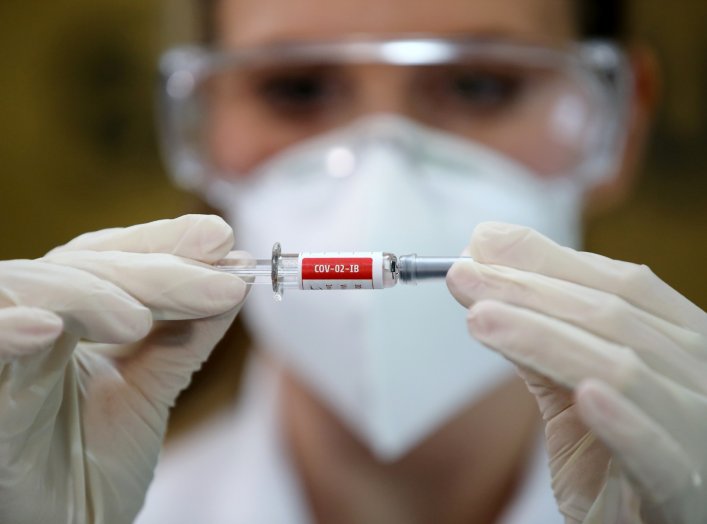
What Will Happen if the Coronavirus Vaccine Fails? A vaccine could provide a way to end the pandemic, but with no prospect of natural herd immunity we could well be facing the threat of COVID-19 for a long time to come. by Sarah Pitt

  There are  over 175  COVID-19 vaccines in development. Almost all government strategies for dealing with the coronavirus pandemic are base...