#Sponsored

Monday, July 6, 2020

Political Commissars on Chinese Warships Play Crucial Role in Interactions With Foreign Vessels By: John Grady

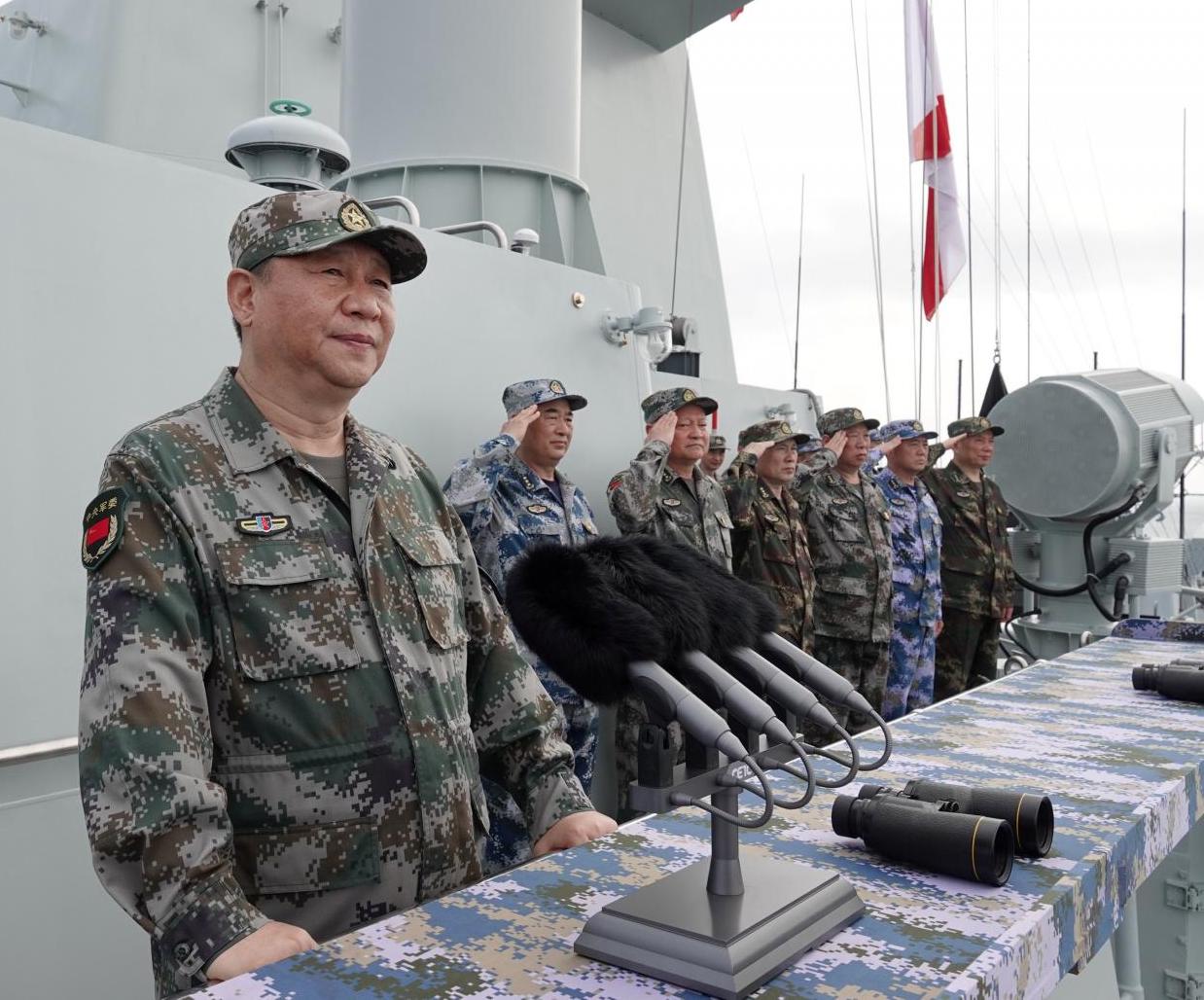
Chinese leader Xi Jinping aboard a PLA NAvy ship. Xinhua photo

Confrontational or irrational moves by Chinese warships and planes may not be actions of a “rogue commander” but rather decisions by a political commissar, a new report describes.

Cmdr. Jeff Benson, a senior military fellow at the Center for Strategic and International Studies and a former U.S. Naval Institute fellow, said Tuesday at a CSIS event that the role the political commissar plays aboard a People’s Liberation Army Navy warship is little understood but critically important in assessing Chinese short-term intentions and Beijing’s longer-range goals. The radically different command structure from the American hierarchy of a single skipper at the top also puts into play questions about “what is the party trying to achieve” by having a destroyer sail dangerously close to another vessel or an aircraft buzz a naval formation.

Zi Yang, co-author of “Party on the Bridge: Political Commissars in the Chinese Navy,” said President Xi Jin-ping “has tipped the balance a little more to the commissar” over the military commander in operations of a submarine, surface vessel or aircraft squadron to ensure adherence to party loyalty across the military.

One way of ensuring that shift is to ensure that political commissars are trained and skilled in the operations of the class of vessel or aircraft squadron they are assigned to. They “learn how to take command,” as one had to do during a confrontation with the Vietnamese after the ship’s commander fell ill.

What is often overlooked in examining Chinese military operations and its strategy is Xi’s emphasis on party-building during day-to-day operations.

“It’s time to understand” how decisions are made in the dual-command Chinese military structure. A commander and a commissar are aboard every vessel, Zi said. Benson added, “command and control are integrated as one; there is shared authority.”

Benson said the commander and the commissar have “distinct responsibilities” when it comes to serving aboard a warship. Among the commissar’s duties are personnel, including evaluating the commander, maintaining military and political discipline, checking on morale, conducting psychological operations and serving as a co-equal with the skipper.

Decisions are reached through an on-board party committee with at least two other members participating.

In short, the committee “decides to confront or not” or “whether to surface of not” for submarines underwater, Zi said, but “they first try to sort out matters in a personal manner.” Benson added, “it’s all about managing risk, and the commissar is in on that.”

This system can reduce unnecessary errors in operations, but it also is time-consuming in a rapidly developing emergency. Benson said “it’s up to the military commander to execute the military part of the operation.”

But in the end, even after handling an emergency, Zi said the commander’s decisions would be evaluated by the commissar.

Benson said the Kremlin had tried the dual command system but scrapped it. Before its collapse, “the commissar in the Soviet system was subordinate to the commander” when it came to operations.

Zi added there was a historical precedent for insisting on party loyalty in the Chinese navy. In the 1949 revolution that brought the Communist Party to power, most of the vessels in the fleet had been commanded and crewed by defectors from the Nationalist regime under Chiang Kai-shek.

Mao Tse-tung “wanted to ensure absolute loyalty to the party” from the start, he said.

The Communist Party under Xi doesn’t “want to fall into the same mistake as the Soviets” in downplaying loyalty in its military forces, Benson said.

Everyone Wants an 'F-35' Stealth Fighter. Several Countries Have Plans to Go 'Stealth' by Caleb Larson

Key Point: The F-35 is a great plane. But militaries around the world are planning for sixth-generation fighters.

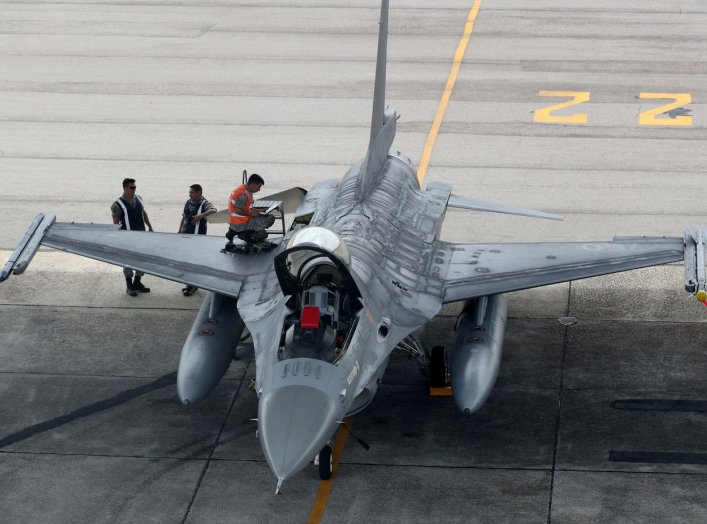
The F-22 Raptor and F-35 Lighting II have stolen the spotlight in the world of aviation. So here are three stealth fighters under development that you may have never heard of. 

​This first appeared in 2020 and is being reposted due to reader interest.

Generic Future Fighter

Engineers at Saab are already beginning work on Sweden’s newest fighter, which will be designed from the get-go as a stealth fighter. 

Working with Linköping University in Sweden, Saab created a sub-scale model of what they envision as their Generic Future Fighter. Though the demonstrator airframe was only a 13 percent scale model, it reportedly is able to fly and gave researchers some insights into stealth fighter development. 

In keeping with Saab’s delta wing heritage, the Generic Future Fighter model has a modified delta wing and smaller canards just below and rear of the cockpit. It has an F-22 style bubble canopy with a chine running the length of the nose. Also, like the F-22 Raptor, the Generic Future Fighter uses a canted tail design. 

The small size of the demonstrator served to quickly and cheaply gather real-world flight data. The demonstrator reportedly performed as expected. 

KAI KF-X

The KAI KF-X is a joint South Korean-Indonesian stealth fighter project. The project was conceptualized as far back as 2001, but was initially dismissed as too technologically challenging for South Korea’s domestic aircraft manufacturing sector, and too expensive. 

The project was reassessed in 2010 and a joint partnership was Indonesia was created to help offset some of the research and development costs. Indonesia holds a 20 percent stake in the project and has committed to buying approximately 50 of the airframes once they enter production. 

The KAI KF-X superficially appears similar to the F-35 stealth fighter, though its capabilities are likely much less stealthy. It too has a canted tail and a nose chine, although the overall airframe appears to be more compact than the F-35. It is intended to be stealthier than the Eurofighter Typhoon and Dassault Rafale, and have more capabilities than the F-16 with greater range and service life. 

Project AZM

In tandem with China, Pakistan is reportedly developing a 5th generation stealth fighter. Like Pakistan’s previous venture with China, the JF-17, the AZM will likely be largely dependent on Chinese technology and assistance, though the final airframes may be assembled in Pakistan. 

China’s FC-31 stealth fighter may be a starting place for the Project AZM idea. It is lightweight, compact, and presumably on the cheaper (and less capable) side when compared to China’s Chengdu J-20. 

A home-grown stealth fighter would be a prestige win for Pakistan, though the likely focus on cost-reduction raises questions about the airframe’s final capabilities. Still, developing a stealth fighter would be an impressive feat for a country with a defense budget under $8 billion. 

Proliferating Capabilities

The proliferation of stealth technologies is the next frontier of weapon control regimes and may well rule the twenty-first-century.

Scientists say WHO ignores the risk that coronavirus floats in air as aerosol

Choir members wear masks during a May 31 service at the Yoido Full Gospel Church in Seoul. <span class="copyright">(Ahn Young-joon / Associated Press)</span>
Choir members wear masks during a May 31 service at the Yoido Full Gospel Church in Seoul. (Ahn Young-joon / Associated Press)

Six months into a pandemic that has killed over half a million people, more than 200 scientists from around the world are challenging the official view of how the coronavirus spreads.

The World Health Organization and the U.S. Centers for Disease Control and Prevention maintain that you have to worry about only two types of transmission: inhaling respiratory droplets from an infected person in your immediate vicinity or — less common — touching a contaminated surface and then your eyes, nose or mouth.

But other experts contend that the guidance ignores growing evidence that a third pathway also plays a significant role in contagion.

They say multiple studies demonstrate that particles known as aerosols — microscopic versions of standard respiratory droplets — can hang in the air for long periods and float dozens of feet, making poorly ventilated rooms, buses and other confined spaces dangerous, even when people stay six feet from one another.

“We are 100% sure about this,” said Lidia Morawska, a professor of atmospheric sciences and environmental engineering at Queensland University of Technology in Brisbane, Australia.

She makes the case in an open letter to the WHO accusing the United Nations agency of failing to issue appropriate warnings about the risk. A total of 239 researchers from 32 countries signed the letter, which is set to be published next week in a scientific journal.

In interviews, experts said that aerosol transmission appears to be the only way to explain several “super-spreading” events, including the infection of diners at a restaurant in China who sat at separate tables and of choir members in Washington state who took precautions during a rehearsal.

WHO officials have acknowledged that the virus can be transmitted through aerosols but say that occurs only during medical procedures such as intubation that can spew large quantities of the microscopic particles. CDC officials did not respond to multiple requests for comment.

Dr. Benedetta Allegranzi, a top WHO expert on infection prevention and control, said in responses to questions from The Times that Morawska and her group presented theories based on laboratory experiments rather than evidence from the field.

“We value and respect their opinions and contributions to this debate,” Allegranzi wrote in an email. But in weekly teleconferences, a large majority of a group of more than 30 international experts advising the WHO has "not judged the existing evidence sufficiently convincing to consider airborne transmission as having an important role in COVID-19 spread."

She added that such transmission “would have resulted in many more cases and even more rapid spread of the virus.”

Since the coronavirus was first detected in China in December, understanding of how it spreads has evolved considerably, resulting in shifting guidelines regarding the use of masks.

At first, the WHO and CDC said masks were overkill for ordinary people and should be conserved for health workers. Later, the CDC recommended masks only for people with COVID-19 symptoms.

Then in April, after it became clear that people without symptoms could also spread the virus, the CDC suggested masks for everybody when physical distancing was difficult, a position the WHO eventually adopted.

Now as outbreaks proliferate and governors order a new round of closures, nearly all U.S. states have made face coverings mandatory or recommended them, primarily to prevent wearers from spreading the disease.

The proponents of aerosol transmission said masks worn correctly would help prevent the escape of exhaled aerosols as well as inhalation of the microscopic particles. But they said the spread could also be reduced by improving ventilation and zapping indoor air with ultraviolet light in ceiling units.

Jose Jimenez, a University of Colorado chemist who signed the letter, said the idea of aerosol transmission should not frighten people. "It's not like the virus has changed," he said. "We think the virus has been transmitted this way all along, and knowing about it helps protect us."

He and other scientists cited several studies supporting the idea that aerosol transmission is a serious threat.

As early as mid-March, a study in the New England Journal of Medicine found that when the virus was suspended in mist under laboratory conditions it remained “viable and infectious” for three hours, which researchers said equated to as much as half an hour in real-world conditions.

It had already been established that some people, known as “super spreaders,” happen to be especially good at exhaling fine material, producing 1,000 times more than others.

A recent study found coronavirus RNA in hallways near hospital rooms of COVID-19 patients. Another raised concerns that aerosols laden with the virus were shed by floor-cleaning equipment and by health workers removing personal protective gear.

Researchers in China found evidence of aerosols containing the coronavirus in two Wuhan hospitals.

It was the outbreak among choir members in Mount Vernon, Wash. — and a report about the incident in The Times — that first piqued the interest of several of the aerosol proponents. Of 61 singers at a March 10 rehearsal, all but eight became sick, despite the members using hand sanitizer and avoiding hugging or shaking hands. Two people died.

Researchers analyzed ventilation in this church hall, where Skagit Valley Chorale members met for a rehearsal that led to a fatal outbreak of COVID-19. <span class="copyright">(Karen Ducey / For The Times)</span>
Researchers analyzed ventilation in this church hall, where Skagit Valley Chorale members met for a rehearsal that led to a fatal outbreak of COVID-19. (Karen Ducey / For The Times)

A team led by Shelly Miller, a University of Colorado professor of mechanical engineering, dug into church-hall blueprints, furnace specifications, locations of choir members and hours of attendance. The researchers diagrammed movements of the singer who was identified as the person who unwittingly brought the virus to practice.

Inhalation of aerosols “most likely dominated infection transmission during this event,” the researchers wrote in a paper undergoing peer review, concluding that the ill person, who had symptoms similar to a common cold, was unlikely to have spent time within six feet of many singers or to have touched surfaces in common with them.

“We believe it likely that shared air in the fellowship hall, combined with high emissions of respiratory aerosol from singing, were important contributing factors,” the paper said.

Eventually researchers from a broad spectrum of disciplines, including several who have studied the role of aerosols in the spread of the flu, SARS and other infectious diseases, joined forces to campaign for greater recognition of aerosol transmission.

They said that the coronavirus is less contagious through the air than measles but that the risk of transmission goes up the longer air remains stagnant and the longer people continue to breathe it.

In interviews, they said WHO officials had unfairly set a higher bar for showing aerosol spread than was required for acceptance of the other two pathways. “For them, droplets and touch are so obvious that they’re proven, but airborne is so outlandish that it needs a very high level of evidence,” Jimenez said.

Proof would require exposing large numbers of healthy people to aerosols emitted by COVID-19 patients, a study that scientists said would be unethical.

Donald Milton, a University of Maryland environmental health professor and an expert on aerosols who co-wrote the letter, said the average person breathes 10,000 liters of air each day.

"You only need one infectious dose of the coronavirus in 10,000 liters, and it can be very hard to find it and prove that it’s there, which is one of the problems we’ve had,” he said.

Watch China’s actions, don’t listen to its words

A family member cries and bids farewell to a prison van after an anti-government protester Sin Ka-ho was sentenced to four years for rioting, in Hong Kong on Friday

Beijing’s parasitic model weakens the global economy, its traditional hosts are becoming poorer. Which is likely one of the reasons why Beijing is now so focused on leeching off of Africa, South America, and others. It’s also why being blocked from a market such as India could be a serious problem.


Miami: Words matter. They shape your thoughts and your thoughts shape your actions. The more complex the situation, the more important the need to use precise words. They are the solid stepping-stones that can lead you to real solutions, and help you avoid the sucking quagmire of obfuscation.

One of the most complex situations at the moment is the changing nature of nation-to-nation relationships with China. The words China wants us to use are telling.

In the case of the US-China relationship, the Chinese Communist Party has been very keen to use words (both positive and negative) that create an impression of equality between Beijing and Washington.

A few years ago, Beijing promoted the idea of China and the US being the “G2”—two equal governments, with primacy over the rest. The G2 construct allowed Beijing to imply that the world should be divided into two colonial-style spheres of influence, one for the US, and one for China.

This was explicit. In 2008, US Navy Admiral Timothy J. Keating told the Senate Armed Services Committee about a comment a senior Chinese officer made to him: “As we develop our aircraft carriers, why don’t we reach an agreement, you and I? You take Hawaii east. We’ll take Hawaii west. We’ll share information, and we’ll save you all the trouble of deploying your naval forces west of Hawaii.”

While American allies west of Hawaii took China at its word, and became increasingly concerned, Washington insiders seemed largely to accept the inevitability of the G2 narrative—that also conveniently provided substantial financial returns and opportunities for key bridging individuals, including some American CEOs, academics, policy analysts, politicians, consultants and others. When pressed by doubters, obscuring verbal dust was thrown in the air in the form of the term “China’s peaceful rise”.

More recently, especially as a result of Beijing’s mismanagement (at the very least) of the Covid-19 outbreak, its aggression along its land and maritime borders, its repression in Hong Kong, and its overt talk of doing things like withholding antibiotics to put pressure on the US, the terminology has turned to, at least economically, “divorce” from China.

The word “divorce” again implies the situation involves equals, with the added element that divorce is a loaded, negative word, with deep emotional baggage for many—something to be avoided if possible.

“Divorce” is a word that suits Beijing. It is also completely inaccurate.

The US and China were never “married”, economically or otherwise. A marriage is a partnership of complimentarily, of sharing, of trust, in which both members are enriched, and become stronger.

The US-China relationship is much more like the relationship between a host and its parasite.

Let me tell you about the castrator barnacle (sacculina carcini). The female slug-like barnacle finds a crab and probes its hard shell until it finds a weak point where it can inject part of itself into the crab’s bloodstream. Once inside, it spreads its tendrils throughout the crab’s system, feeding on it, controlling its behaviour, and growing. If the victim is a male crab, the parasitic process castrates it. Sacculina carcini uses the crab to host its reproduction and help it spread across the ocean—riding in it until it dies. At which point, the parasite also dies, because it depended on leeching off the host for sustenance.

Can you see where I’m going with this?

Since at least the 1970s, and accelerating since joining the WTO, the Chinese Communist Party and its related entities have latched on to the US (and others) probing for entry points, enmeshing with systems, sucking out capital and intellectual property, weakening defences, modifying behaviour, neutering response, and spreading from there. It left its hosts sickened and disoriented. Even though, more often than not, the host at least initially, welcomed the barnacle.

China calls this approach comprehensive national power—and includes opaquely intermeshed tendrils such as economic, diplomatic, military, cyber and soft power.

Think this is an overstatement? The effects can be seen more clearly in smaller economies. Take, for example, the Kingdom of Tonga in the South Pacific, population 100,000. Within the last twenty years or so, recently established Chinese-run shops have taken over about 90% of the retail sector. The vast majority of the products sold are sourced from China, and most of the profits are repatriated to China.

This isn’t normal economic engagement. There are links between major Chinese investors, the Chinese Embassy, and some key decision-makers in the country, facilitating illegal and corrupt behaviour, further distorting the market and politics. There are regular issues with these shops selling expired or mislabeled items, hiding revenue and attempting to illegally transfer money out of the country. They are operating, essentially, like they would operate in China—doing what they can get away with. The Chinese Embassy does not help in investigations, background checks, or information sharing.

This isn’t about the individual, hard-working ethnic Chinese. If they have family or business ties to the mainland, and someone with power in the Chinese system wants them to do something, they don’t have much choice. The system travels with them.

This is about the export of the fundamentally extractive and exploitative Chinese system and what it is doing to its host country. The result for countries such as Tonga is a constant leeching of capital back to China both for the purchase of the Chinese imports to sell in the shops and from shop owners then sending their profits back to China. It also creates an environment in which local shops can’t compete, it embeds corruption and it distorts the decision making process.

To some degree or another this focused takeover of soft and/or strategic areas has happened in myriad other sectors in myriad other countries. Recently Beijing complained because India blocked 59 Chinese-made apps from its market. Global Times tweeted that the ban could result in a loss of $6 billion to Chinese internet company ByteDance, which gives an idea of how much money Chinese apps suck out of host economies. Another reason for the decision was that Delhi was concerned that the apps were a threat to national security, including allowing for espionage.

In mid-June, at roughly the same time Chinese and Indian troops were fighting in Ladakh, a Chinese company won a major construction contract in Delhi by underbidding an Indian company by a marginal amount. Questions were immediately raised if the Chinese company had somehow accessed the electronic bids of competitors in order to win the contract. It’s very difficult to know. But policymakers in India seem to think it’s consistent with what they know of China’s behaviour, and don’t want to take any more chances.

Beijing may complain but, of course, it has consistently blocked foreign apps from operating in its own market. This has not only allowed it to protect itself from the sort of leeching it is inflicting on others, but it has protected its own technology ecosystem as it develops and prepares itself to expand outwards. The same protection for its own development is true in a range of other sectors, including the forced transfer of intellectual property for companies setting up in China. In those cases, it didn’t even have to go to its hosts, its hosts allowed themselves to be desiccated in China.

The Chinese Communist Party is not interested in, and not capable of, being an equal partner, where everyone grows together. Beijing wants to be able to control the economies of others, siphoning growth to sustain its own goals.

If you want to see what that looks like, just go to the atrophied manufacturing towns across the US that targeted, Chinese-government supported competition has sucked dry.

If you want to watch the process in action, just keep your eye on Hong Kong. As the CCP extends its tendrils into its economy, society and political system, Hong Kong will shrivel and stagnate, going from a thriving global center to a zombified proxy for Beijing.

The same is true for international organizations targeted by Beijing, such as the WHO. As was seen during the initial stages of the virus outbreak, WHO seemed more like a carrier for Beijing’s narrative than an independent, healthy science-based organization.

Of course, the irony here is that as Beijing’s parasitic model weakens the global economy and its institutions, its traditional hosts are becoming poorer and so less sustaining. The Chinese Communist Party’s economic heyday will likely have been when the US, European and Japanese economies were big and strong and it could ride them like a young castrator barnacle.

Which is likely one of the reasons why Beijing is now so focused on leeching off of Africa, South America, and others. It’s also why being blocked from a market such as India could be a serious problem. It is running out of healthy targets to infest. So, it is latching on to still developing economies, stunting their growth with predatory economics (and in many cases unviable loans) to feed Beijing.

Those who really care about the Chinese people, should work towards creating conditions where China’s economy becomes “normalized”. Where there is rule of law, transparency, accountability—elements that allow organic and sustainable growth so that China can truly become the global partner it should be. Of course these are all the things that are antithetical to the Chinese Communist Party.

Which brings us back to words. Disengaging from the noxious elements of the Chinese economy isn’t a divorce, it’s a deworming. It may be the only way the host survives, and it’s the best way for the parasite to evolve to a self-sustaining organism. Anything less, and we will may all stagger towards an interlinked extinction.

Friday, July 3, 2020

Yes, the U.S. Air Force Still Wants 386 Total Squadrons (Thanks to Russia and China) But will Congress pay for them? by Kris Osborn

https://www.reutersconnect.com/all?id=tag%3Areuters.com%2C2018%3Anewsml_RC14D8AE3F40&share=true
Elaborate U.S. Air Force wargaming against potential major adversaries has again reinforced the services’ growth assessment request to still increase service size to 386 squadrons, up from 312. 

“We are doing lots of war games against peer competitors and came out to 386. That number is still the goal and then getting the right mix of the right squadrons and making sure they are ready to meet our nation’s demands,” General Stephen Wilson, Air Force Chief of Staff, told The Mitchell Institute for Aerospace Studies in a recent interview.

Wilson, and his former fellow Air Force pilot Lieutenant General David Deptula, Dean of the Mitchell Institute, both served during Desert Storm in the early 1990s, when the Air Force went to war with twelve operational squadrons. “Now we have less,” Deptula said in his conversation with Wilson. 

The bottom line, according to senior Air Force leaders and experts observers, is that the U.S. Air Force will fall behind Russia and China by 2025 unless the service quickly embarks upon a sizeable expansion of its fighting technologies, weapons arsenal and major attack platforms. This means new bombers, fighters, drones, rescue helicopters and more. As part of the needed expansion, the Air Force Vice expounded upon a need to emphasize technological research and progress, citing eleven key areas of focus to include “Directed Energy, Hypersonics, AI, Autonomy, cyber, Quantum and Space,” among others. 

Following a detailed analysis several years ago, which likely included close examination of threats, mission requirements and dangerous emerging technologies, the service laid out a request to grow from 312 operational squadrons up to 386. The largest needed increases, according to the Air Force plan, included a request for twenty-two new ISR Command and Control squadrons, seven more fighter squadrons and five more bomber squadrons.

The Air Force assessment, referred to by Wilson, says the analysis supporting the 386 squadrons needed to support the National Defense Strategy is based on estimates of the expected threat by 2025 to 2030. At the end of the Cold War, the Air Force had 401 operational squadrons. By any cursory estimation, it does not take much to notice an uptick in mission demands for the Air Force, coming on the heels of more than fifteen-years of counterinsurgency air support missions in Iraq and Afghanistan. Now, confronting the threat of major warfare, the service is facing substantial requests from combatant commanders. 

Other details of the previous Air Force requested expansion plan include:

  • Five more bomber squadrons
  • Five more combat search and rescue squadrons
  • Twenty-two more command and control ISR squadrons
  • Fourteen more tanker squadrons
  • Seven more fighter squadrons
  • Seven more space squadrons

Meanwhile, statements from former senior Air Force leaders, Congressional analysts, observers and critics may go even further when it comes to voicing serious concerns about the service’s ability to meet anticipated threats—calling the current situation “dangerous.” “The USAF is a geriatric force—it has bombers, tankers, and trainer aircraft over 50 years old; helicopters over 40; and fighters over 30—it has a 2000+ pilot shortage,” Deptula told TNI during a previous interview.

Coming Soon: Another Donald Trump - Kim Jong-un Summit This Year? by Daniel R. DePetris

Back on planet earth, the chance of a Kim-Trump summit being scheduled before the U.S. presidential election is about as slim as yours truly landing a columnist position with the Washington Post. For both Trump and Kim, the pros of another “made for TV” blockbuster aren’t worth the list of cons— including criticism from hardliners back home if both come back without any concessions. Trump and Kim, however, have rolled the dice with each other before. We shouldn’t presume they aren't willing to do so again if the environment changes.
t a time when U.S.-North Korea diplomacy and inter-Korean relations are in dire states, it may be absurd to even pontificate about the possibility of another summit between President Donald Trump and North Korean leader Kim Jong-un. Neither Washington nor Pyongyang has demonstrated in public that more summitry is a feasible option over the short term. Even Deputy Secretary of State and North Korea envoy Stephen Biegun threw cold water on the idea, telling the German Marshall Fund this week that "it’s hard to envision circumstances where we could do an in-person international summit.” Add the coronavirus pandemic to the mix and the entire concept looks far-fetched, if not outright farcical.

And yet because Trump is such an unpredictable politician with a flair for the dramatic, nobody can sit in their home-offices and prognosticate about what he may or may not do with a high degree of confidence. The personal relationship between Trump and Kim looked to be on thin-ice after the diplomatic fallout from Hanoi, when both men flew back to their capitals without even a manufactured joint statement in their pockets. But four months later, Trump and Kim met again in a spontaneous, slapdash get-together by the Demilitarized Zone. Who knows what Trump is thinking on a daily basis?

It’s not as if Trump wouldn’t like to continue talking with the North. Over the last 12 months, the administration has expressed its interest in preserving channels of communication with Pyongyang. National Security Adviser Robert O’Brien said so himself during a June 30 webinar at the Center for the National Interest, where he insisted "the door to dialogue and progress remains open.” This is the kind of remark senior national security officials use as a placeholder when things aren’t going particularly well. But it at least sends a small signal to Pyongyang that the White House remains ready and willing to return to the table if, in fact, Kim wants to get back to business.

The one individual who unquestionably hopes diplomacy thaws out from its deep freeze is South Korean President Moon Jae-in, who has banked his political and personal legacy on reconciliation with the North and has very little to show for his valiant efforts outside of a joint inter-Korean deescalation agreement Pyongyang was threatening to discard up until last week. Moon has always been driven by a sense of urgency on the inter-Korean peace file. He spent part of his July 1 videoconference with European Council President Charles Michel pleading for a return to the exciting summitry of the past. "I believe there’s a need for North Korea and the United States to try dialogue one more time before the U.S. presidential election,” Moon observed. The Blue House reportedly reiterated this messaging to the Trump administration shortly thereafter, an indication Moon’s remarks weren’t for posterity.

Regrettably, for Moon, he is in a weak position to make another Trump-Kim summit happen. As determined as he is to make history on the Korean Peninsula and put an end to the 70-year-old Korean War for good, he is only one man with limited power. Hemmed in by a U.S. and U.N. Security Council sanctions regime that obstructs even the most mundane inter-Korean projects, the Moon government is at best a supporting actor to the main event. If another Trump-Kim summit is even within the realm of possibility, the ultimate decision will be determined by Trump and Kim—not Moon.

Would Kim be open to a 4th meeting with his pen-pal in the White House?

If KCNA commentary and statements from Kim regime underlings are anything to go by, the answer is a “no.” It’s difficult to describe in words how detrimental Hanoi was to the overall tenor of U.S.-North Korea nuclear diplomacy. Biegun’s one-day session with the North Korean delegation in Stockholm ten months ago, which Pyongyang was apparently determined to make a failure before the two teams landed in Sweden, didn’t help matters. A month after that meeting broke down, North Korean negotiator Kim Kye Gwan all but declared direct, top-down diplomacy with Washington under the present circumstances a no-win situation for the North. The only person who gained from such diplomacy, Kim said, was Trump himself. “As we have got nothing in return, we will no longer gift the U.S. president with something he can brag about.” North Korean Foreign Minister Ri Son Gwon went a step further with those remarks on June 11, when he dragged Trump’s name through the mud (without naming him, of course) and explained that “never again” would the North "provide the US chief executive with another package to be used for achievements without receiving any returns.”

To the Kim regime, the last 2 years have been filled with nothing but empty promises and hot air. What would be the point of another televised sit-down, where Trump could once again use the spectacle to project himself as world-class statesman and dealmaker?

In his heart of hearts, Trump likely wouldn’t have a problem with more flashy summitry. A high-stakes head-to-head matchup would produce at least a week’s worth of media coverage and help distract the country (at least for a short while) from the 87% rise in covid-19 cases, controversy over Trump’s behavior during phone calls with world leaders, #BountyGate and every other scandal burning through the administration. Trump knows how to manipulate the media and create diversions. What better diversion from the bad poll numbers against Democratic presidential nominee Joe Biden than a “Nixon to China” moment during an election year? 

Naturally, there are major downsides for Trump as well. If a hypothetical meeting with Kim was the same, old optical illusion that so many have gotten used to, the president could open himself up to a whole new slate of attack ads on his competence and record.

Right now, all of the above is just an entertaining exercise in speculation. Back on planet earth, the chance of a Kim-Trump summit being scheduled before the U.S. presidential election is about as slim as yours truly landing a columnist position with the Washington Post. For both Trump and Kim, the pros of another “made for TV” blockbuster aren’t worth the list of cons— including criticism from hardliners back home if both come back without any concessions.

Trump and Kim, however, have rolled the dice with each other before. We shouldn’t presume they aren't willing to do so again if the environment changes.

America's New B-21 Stealth Bomber Is Just Two-Years Away These are much better than the older B-2s and should be ready in the early 2020s. by Kris Osborn

https://www.northropgrumman.com/wp-content/uploads/B-21_Ellsworth.jpg
The much anticipated, high-tech B-21 bomber will “come on in two years,” bringing new dimensions of stealth, software, attack possibilities and nuclear deterrence to the U.S. Air Force. It would even possibly usher in new tactical approaches to how modern operations may move forward in the years ahead. 

In a conversation with The Mitchell Institute for Aerospace Studies regarding the importance of modernizing the nuclear triad, Air Force Chief of Staff General Stephen Wilson confirmed that the stealthy new aircraft will “come on in two years.”

There has been discussion about its first test flight being imminent, and service weapons developers consistently express that the program has been progressing very successfully for several years now. Naturally details regarding its specific developmental nuances are likely not available, as it is a black program. However, prototyping, software development and the overall success of the program has been well-documented. Given all of these factors, it would by no means be surprising if the B-21’s readiness for operations was merely a few years away. Senior weapons developers have long said the aircraft is expected to arrive in the 2020s, so indeed it may very well be on the earlier end of that.

In recent months, Air Force Secretary Barbara Barret, Air Force Chief Scientist Dr. Richard Joseph and Air Force Acquisition Executive Dr. William Roper, all visited Palmdale, California for an on-site discussion with B-21 scientists and weapons developers with the aircraft’s maker Northrop Grumman.

During the visit, Roper commented on the extent to which the B-21 will bring new dimensions to stealth attack, saying it will “push the boundaries in hardware technologies, like stealth,” and “blaze new trails in agile software development,” according to an Air Force report on the visit. 

Roper has long-been an advocate for software modernization as a technical foundation for rapid, agile modernization; he recently published some significant comments about the B-21s progress regarding software and key elements of mission command, saying that developers recently completed an essential software-empowered process intended to bring greater levels of information processing, data management and computerized autonomy.

While few details are available regarding the B-21s technical composition for obvious reasons, there are some interesting comments made by Air Force developers as well as observations that can be made by simply looking at available images.

Through virtualization and software-hardware synergy, B-21 sensors, computers and electronics can better scale, deploy and streamline procedural functions such as checking avionics specifics, measuring altitude and speed and integrating otherwise disparate pools sensor information. In effect, it means war-sensitive sensor, targeting and navigational data will be managed and organized through increased computer automation. This will allow pilots to make faster and more informed combat decisions.

In previous statements, Roper has referred to the B-21’s inclusion of “Containerized Software,” something which refers to an ability to program computer operating systems to streamline and compartmentalize different functions simultaneously, yet without launching an entire machine for each app, according to “Kubernetes’” website. Roper cited Kubernetes, which is a computer system for “automating application deployment, scaling and management.” Much of this, as cited by Roper, is made possible through what’s called application containerization; it is defined as an operating system-level “virtualization method used to deploy and run distributed applications,” according to Techtarget.com. Containerization enables multiple “isolated applications or services to run on a single host and access the same operating system.”

By drawing upon software-enabled virtualization, systems can upgrade faster, reduce their hardware footprint and better employ automation, AI and machine-learning applications. In all-out warfare terms, this means B-21 pilots can share information and find and destroy targets such as enemy air defenses much faster than ever before. This is something which can expedite precision weapons attack and identify approaching air and ground threats and, perhaps of greatest importance, keep pilot crews alive.

While many of the details regarding the B-21s stealth technologies remain mysterious, a quick look at its configuration seems to indicate a few interesting new developments. The engine “inlets” are more curved and embedded in the fuselage, compared to its predecessor the B-2. The body surrounding the inlet appears more rounded and slightly less angular as well, suggesting newer methods of implementing “low radar signature” stealth engineering. Naturally, fewer edges, angular shapes or protruding structures are likely to generate much less of a return signal to enemy radar. Also, the back of the aircraft seems to show little or no heat dispensing, as if to suggest that an internally-buried engine is emitting an even smaller heat signature than the current state-of-the-art stealth engines. Or, there simply could be new ways of managing how heat is dissipated or released from the aircraft to lessen or remove any detectable heat signature. In addition, to be less “findable” by enemy sensors, a stealth fuselage is built to effectively mirror the surrounding atmosphere in order to eliminate any detectable temperature difference. Finally, the structural shape of the crew’s command center cockpit on the B-21 seems to have a slightly lower incline than the B-2, making the shape slightly more rounded or “blended” into a seamless, less detectable configuration. 

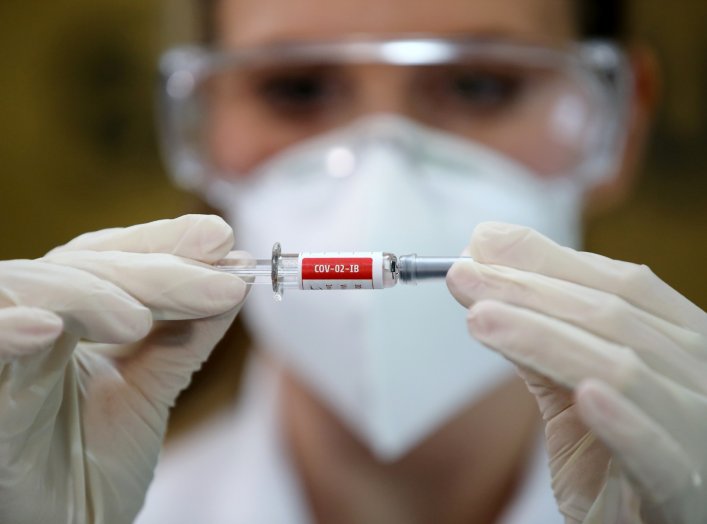
What Will Happen if the Coronavirus Vaccine Fails? A vaccine could provide a way to end the pandemic, but with no prospect of natural herd immunity we could well be facing the threat of COVID-19 for a long time to come. by Sarah Pitt

  There are  over 175  COVID-19 vaccines in development. Almost all government strategies for dealing with the coronavirus pandemic are base...